
Types of Industrial Textiles
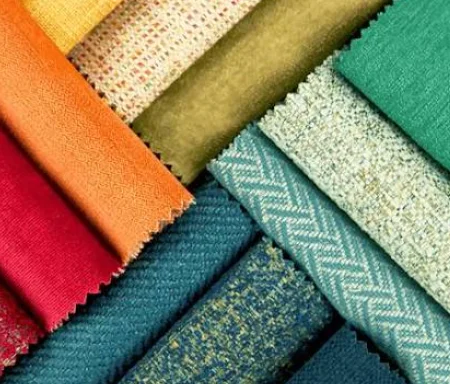
Industrial textiles are an important and sophisticated part of the global textile market. While fashionable apparel is generally sold in retail stores for immediate consumption by individuals, industrial textiles are designed for performance and are used as components in a variety of products for industry. Among the many industries that rely on industrial textiles are the construction, automotive, filter and aerospace industries. Products made from industrial textiles are used for reinforcement, insulation, protection and separation, among other applications. They are an essential component in many modern manufacturing processes. This article will discuss several of the industrial textile categories, describe the materials from which they are made and how they are made. It will also explore how industrial textiles are becoming an increasingly important component in efforts to promote sustainable development.
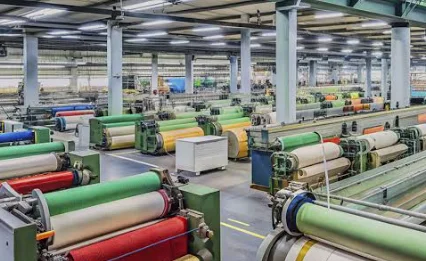
What Are the Main Categories of Industrial Textiles?
Industrial textiles are used in industry and can be distinguished by function, application area and composition. In every category, different textile products are used for specific purposes in industry. Most industrial textiles are sturdier than everyday fabrics and have chemical resistance and high mechanical strength.
Technical Textiles for Construction
Construction textiles include geotextiles, concrete reinforcement fabrics and roofing membranes. Geotextiles are used in road- and embankment- construction for stabilizing the soil, with high permeability in order to allow for water to run through while preventing erosion. Concrete reinforcement-fabrics made of polyester- or glass fibers increase the tensile-strength and also the crack-resistance of the concrete. Roofing-membranes are large surface-protection-systems with high-waterproofing and UV-protection for industrial-warehouses, stadiums etc.
Protective and Safety Textiles
Protective textiles are for thermal protection, flame retardance and chemical protection. Aramid fibers, such as Kevlar, are incorporated into protective clothing, including firefighters’ and workers’ apparel, due to their heat stability and tensile strength. In various industrial sites, including chemical plants and welding facilities, multilayer composite protective materials prevent damage from hot molten metal splashes and toxic vapors. These products have to meet a number of international safety standards for protective clothing, such as ISO 11612.
Automotive and Transport Textiles
The sector of automotive textiles is currently focusing on weight-reducing materials without any compromise regarding safety and comfort of use. In the automotive sector, various kinds of textiles are used for car seats, airbags, safety belts, tires and also for acoustic insulation of car cabins. Most of these materials are based on Polyester fibers, especially nonwovens which are used for sound absorption in the car cabin. In particular, airbag materials are made of high tenacity nylon yarns woven with a specific weaving strategy and controlled tension, in order to achieve a constant deployment speed of the airbag during impact.
How Do Material Choices Influence Industrial Textile Performance?
The choice of material for an industrial textile can affect its mechanical properties, chemical resistance and life span. Many of these choices are made by engineers that are balancing cost against technical criteria.
Synthetic Fiber-Based Textiles
In industry, synthetic fibers of high tensile strength are mostly used due to good environmental resistance. Here, the fibers of PET, PP, PA and aramid are most often used. For example, PET has good dimensional stability at elevated temperatures. PP is highly moisture resistant due to its non-polar structure. Aramids have good thermal resistance up to more than 400°C. Often the fibers are mixed to achieve multifunctional properties. For example, mixing up of durable polyester fibers with cotton fibers of good air permeability for protection clothing.
Natural Fiber-Based Textiles
While the majority of natural fibers are no longer considered for material applications, in certain fields they still are used because of their natural biodegradability. For example, in so-called temporary erosion control jute geotextiles are used for soil stabilization. After the period needed for the soil to be made stable enough, the geotextile simply decomposes. In automotive applications hemp composites are used as an eco-friendly reinforcement for lightweight panels, due to the low density of the hemp fibers and their 100 % renewable origin.
Composite Material Textiles
In composite materials, textiles can be combined with polymers and/or resins in order to reach the required mechanical characteristics. For space applications, such as aerospace structures, high stiffness-to-weight ratios can be achieved by using carbon fiber fabrics. For other applications, like wind turbine blades or pressure vessels, glass fiber reinforced composites can provide the required fatigue strength. All composites are produced in layers. The strength of a composite is orientated in the same direction as the design loads.
What Manufacturing Techniques Define Industrial Textile Quality?
Manufacturing methods have a direct effect on key aspects of textile products. How a textile is made affects its texture uniformity, porosity and its mechanical characteristics and resistance to operational stress.
Woven Fabrics
Woven structures offer consistent dimensions by using interlacing Warp and Weft yarns. The most popular weave used for Filtration media is a plain weave, allowing for consistent pore size. Other weave types such as twill offer flexibility, most notably for use on a conveyor belt. Satin weave offer a smooth surface for coated materials.
Nonwoven Fabrics
Nonwovens are fiber materials that are held together by heat, chemicals or mechanical entanglement, as opposed to woven or knitted fabrics. They are used in a wide range of disposable applications such as liquid and air filtration cartridges, hygiene products and medical wipes. However, they are also used in durable applications, such as automotive insulation, airbag covers and acoustic insulation mats, where their Needle-punched nonwovens have high thickness uniformity, making them suitable for soundproofing panels.
Coated and Laminated Fabrics
Coating is the process of applying layers of polymers, i.e. PVC, PU, silicone, on top of a base fabric in order to achieve the functionality of being impermeable or abrasion resistant. Laminated structures consist of multiple functional layers, which are consolidated together by applying force to merge the individual layers. A typical example for a laminated structure is a weatherproof yet flexible membrane, which consists of a breathable membrane which is laminated onto a strong base fabric. Such materials are used for the construction of tents or inflatable structures.
Why Are Filtration Textiles Crucial Across Industries?
Filtration textiles function as selective barriers. As such they retain certain particles while allowing other particles, as well as fluids and gases, to pass through them. These textile filters are indispensable in all areas such as environmental protection, in the pharmaceutical industry, mining, in the food industry and also in the treatment of waste water.
Air Filtration Media
Fine fiber nonwoven are used for airborne particle capture in air filters used in commercial ventilation systems such as in factories and clean rooms. In particular, high efficiency particulate air (HEPA) filters contain very fine fibers that are arranged randomly within the filter to maximize dust capture while providing good airflow.
Liquid Filtration Fabrics
In liquid processing industries—such as dairy production or oil refining—filter cloths woven from polypropylene resist chemical degradation while ensuring consistent flow rates under pressure differentials.
Dust Collection Bags
The fiberfilter for industrial dust collectors are made of needle-punched felts of aramid blends, they resist continuously to hot gas streams up to 200°C without damage. The surface finish of these filters also ensures a good release of the cake during the cleaning cycle.
How Do Smart Textiles Revolutionize Industrial Applications?
Progress in recent years to integrate electronics into fabric has led to the development of interactive textile-based products which can respond to environmental changes or transmit data in intelligent systems. These novel smart materials have transformed passive garments into functional active components.
Sensor-Embedded Fabrics
By weaving conductive yarns into base cloths such as cotton or hemp, a wearable sensor is created that can monitor strain or temperature on a machine’s components. This helps with predictive maintenance as early signs of wear and tear can be picked up before complete failure.
Energy-Generating Textiles
Piezoelectric fibers incorporated in conveyor belts can be used to convert mechanical vibrations into electrical energy to power small sensors along the line for setting up energy-autonomous industrial networks.
Adaptive Thermal Materials
The phase-change-coated fabric is designed to maintain temperature. It absorbs surplus heat during peak operation and releases it when things cool down. Such fabrics could be very useful for workers’ clothing in fluctuating climates.
What Role Do Industrial Textiles Play in Sustainability?
With current textile innovations sustainability has become the focal point for companies to work with circular solutions, reducing waste and consumption of energy over the entire product life cycle.
Recyclable Fiber Systems
PET-based industrial textiles can be processed into new fibers several times without loss of quality. This can be done with the help of systematic collection of post-industrial waste.
Bio-Based Polymers
Using Polylactic Acid (PLA), derived from corn starch, we offer the option of biodegradable packaging liners or agricultural mulch mats which have enough tensile strength to last for the short term needed for this type of application.
Energy-Efficient Production Processes
Spinning solutions of today’s market significantly decrease water consumption by more than 50% in comparison to conventional wet-processing lines by using closed cooling-circuits. These technologies are already being developed for carbon-neutral production processes.
FAQ
Q1. How do industrial textiles differ from consumer textiles? A. Performance attributes, such as tensile strength and chemical resistance, dominate the design of industrial textiles. In contrast, the main design criteria for consumer textiles are comfort and appearance.
Q2: Which fiber type dominates the global industrial textile market? A: Synthetic fibers such as polyester currently lead due to their cost efficiency and superior mechanical properties across diverse applications.
Q3. How long does a protective aramid fabric last? A. Aramid protective clothing retains its original properties for 3 to 5 years until, due to thermal degradation, its protective ability starts to decrease.
Q4. Are natural-fiber industrial textiles environmentally better than other industrial textiles? A. They have biodegradability advantages but need more land and so are only environmentally sustainable on a lifecycle assessment basis and not by virtue of their fiber having grown naturally in the first place.
Q5. What emerging trend will shape future industrial textile design? A. As emerging trend for industrial textile design in future, Integration of smart technologies into textiles for real time health monitoring of structures in order to redefine functionality of various industries.