Filtration Fabric Manufacturing
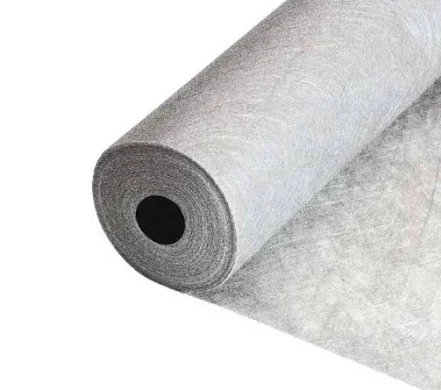
Filtration fabric manufacturing is at the core of many industries’ separation technology. Filter materials are manufactured in the form of filtration fabrics by means of material, mechanical and environmental design. As the quality of filtration fabrics is crucial to the operating efficiency of processes for water treatment, for the production of medicines, in the automotive sector and for air treatment, the high-quality manufacturing of filtration fabrics by means of appropriate fibers, of weaving or nonwoven production and of finishing treatments with the aim of increasing resistance and porosity, is of utmost importance. In many industries around the world production is switching to a ‘cleaner’ form and stricter controls on emissions are being introduced. In consequence, filtration materials of specialized quality are continually being developed which are even more efficient and more environmentally friendly.
What Materials Are Commonly Used in Filtration Fabric Manufacturing?
The selection of the material for a filtration fabric is essential for the fabric’s function in the long term. Different fibers have different mechanical and chemical properties, that allow them to be used in different applications.
Synthetic Fibers
The fibers commonly used in industrial filtration are the synthetic fibers. They are stable against heat, moisture and chemicals. Most common of them are polyester (PET), polypropylene (PP), nylon (PA) and polyphenylene sulfide (PPS). Polyester is for example used for liquid filtration because of its great dimensional stability even under pressure. Polypropylene is used because of its chemical inertness in corrosive environments. High-temperature gas filtration in power stations and incinerators is for example done with PPS filters. The fibers can be treated with surface coatings or by plasma-treatment in order to improve their hydrophobicity or to make them release better in case of dust.
Natural Fibers
In industrial applications natural fibers like cotton and wool are used only occasionally, in low-temperature applications or for disposable products that are quickly biodegradable. Their cellulose structure and absorbency make cotton a good filter medium for oil–water-separation filters, and wool with its crimped fibers is a coarse dust filter medium. However natural fibers are much less uniform than synthetic fibers, and more susceptible to microbial attack.
Composite Materials
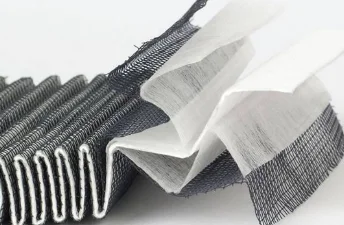
Filtration fabrics combined of synthetic and natural fibers or equipped with membranes like PTFE (polytetrafluoroethylene) are being used. Laminates enable multi-stage filtration by a single medium. Large particles are caught on the surface of the fabric, finer pores capture smaller particles within the fabric. This composite filter is very efficient and has a long service life.
How Is Filtration Fabric Manufactured?
The manufacturing process for the filters is dependent on the filter type; woven or nonwoven. Both have their own structural advantages and thus allow for varying degrees of flow rate and retention capability.
Woven Fabric Production
Woven filtration fabrics are produced using looms that interlace warp and weft yarns at controlled tensions. The weave pattern—plain, twill, or satin—determines pore geometry and mechanical strength. Plain weaves provide uniform pore distribution suitable for precision liquid filtration. Twill weaves offer higher flexibility for bag filters requiring frequent cleaning cycles.
Nonwoven Fabric Formation
Nonwoven fabrics are made by mechanical, thermal or chemical bonding of fibers in nonwoven production processes like needle punching, melt-blowing, spunbonding or hydroentangling. The production of melt-blown nonwovens results in microfibrous structures which enable very small pores, ideal for applications like air filtration masks or HEPA filters. Spunbond nonwovens can be used as basis layer to improve the tear resistance of melt-blown surfaces.
Finishing Treatments
After base formation, fabrics undergo finishing processes such as calendaring to adjust thickness, singeing to remove surface fuzz, or coating with resins for enhanced stiffness. Heat-setting stabilizes dimensions under operational stress. Hydrophobic coatings prevent clogging in liquid environments by reducing surface energy.
What Are the Key Performance Parameters of Filtration Fabrics?
Evaluation of filter performance involves a trade off between high permeability and high retention efficiency while maintaining mechanical integrity at increased pressure.
Filtration Efficiency
Efficiency expresses how well a filter membrane is able to catch particles of a certain size. This parameter depends on fiber diameter distribution, pore size distribution as well as depth structure. Filters of multi-layer design with electrostatic charge induction are able to reach even over 99% removal efficiency for submicron particles.
Airflow Resistance or Pressure Drop
Lower pressure drop requires less energy for backwash. By controlling the fiber packing density engineers can tune the porosity to ensure adequate flow whilst maintaining filtration capability.
Mechanical Strength and Durability
Filtration media are subject to wash cycles of varying frequency, including repeat cleaning and pulsed jet backwashing. In order to prevent deformation during such processes tensile strength and abrasion resistance tests are conducted. These tests measure the length of material to which the filtration media can be stretched before they tear, and the filtration media’s ability to withstand impact from particulate in dust collection applications.
How Do Environmental Regulations Influence Filtration Fabric Design?
Environmental policies are increasingly driving the choice of materials and the degree to which products can be recycled in this industry.
Emission Control Requirements
Industries facing stringent emission limits—such as cement plants or steel mills—require filter media capable of capturing ultrafine particulates below PM2.5 levels. Advanced synthetic blends with PTFE membranes meet these targets by combining chemical inertness with high-temperature tolerance.
Wastewater Treatment Standards
The release of microplastics from synthetic filters into effluent streams is strictly regulated in water purification applications. A new generation of filter materials of an permanent nature has been developed which are made of 100% biodegradable polylactic acid (PLA) fibers and offers similar tensile strength as conventional materials. After use, the materials disintegrate completely in a natural way.
Sustainability Initiatives
Circular economy design enables the filtered elements to be completely recyclled. The filtered elements are designed to be modular, with all the fabric layers being separable and 100% reusable after a clogging event. They are then completely refurbished and reprocessed for reuse.
What Innovations Are Shaping the Future of Filtration Fabric Manufacturing?
Advances in technology continue to push boundaries of performance with smart materials and digital technologies.
Nanofiber Technology
Nanofibers below 500 nm in diameter can be produced by electrospinning to create mats with extremely high surface area-to-volume ratios. Such mats are very efficient in capturing ultrafine aerosols while still allowing airflow, thus they are very suitable for the production of medical respirators as well as for cleanroom applications.
Functional Coatings
Surface-functionalized fabrics incorporate antimicrobial nanoparticles like silver or titanium dioxide to inhibit bacterial growth during wet filtration operations. Hydrophilic coatings accelerate water drainage in dewatering applications such as sludge treatment presses.
Digital Process Control
Our automation using AI-driven monitoring software can be used to continuously monitor and automatically adjust the fiber application rate in real time on all nonwoven production lines. The data we collect from the trend of the differential pressure of all filter units allows us to predict the time of required maintenance.
How Does Quality Control Impact Industrial Application Performance?
The Quality assurance has to check for the consistency of production of filters as filters are used under controlled conditions and as part of the Quality assurance program.
Laboratory Testing Protocols
The standard tests for filters in general measure specific parameters: air permeability (ASTM D737), burst pressure (ISO 13938-1) as well as the particle retention curve with the aid of calibrated dust aerosols or latex spheres in a corresponding fluid.
On-Site Validation
It is common for industrial users to carry out pilot scale trials prior to full scale implementation. It is very important to verify how the chosen fabric behaves in conjunction with the system’s dynamics, such as the turbulence of airflow and any variations in temperature within the ductwork.
Traceability Systems
Barcode tagging of every fabric roll, enables tracking of all stages from the polymer batch through to weaving and finally out to shipment. Many major manufacturers operate under the ISO 9001 quality management certification requirements and full traceability is a critical element of this certification.
FAQ
Q1: What makes a high-efficiency filtration fabric? A: A fine pore size distribution and stable airflow, while the fabric is still strong enough to withstand load cycles typical for industrial applications.
Q2: Can filtration fabrics be recycled after use? A: Some synthetic-based filtration fabrics can be mechanically shredded to produce secondary products, e.g. rags. Unfortunately however due to contamination, direct recycling is mostly not possible and would require a number of prior cleaning stages.
Q3. Why Nanofiber Layers are Preferred in Today’s Filter Cartridges? A. As nanofibers possess very large surface area to their mass density they provide best particle capture efficiency at minimum possible pressure drop.
Q4: Advanced filtration textiles are mainly used in several industries. A: In power and heating plants, in food processing, in pharmaceuticals, in the automotive industry and in the municipal wastewater treatment.
Q5. How long does the Industrial filter fabrics last until they need to be replaced? A. Service life time of the Industrial filter fabrics varies. Typically it can last several months in dirty dusty environment with abrasive particles and it can last 5 to 10 years and more in controlled environment, where the gas phase is filtered. All this, depends on the temperature, chemicals, which are in the gas, and how often the filter elements are being cleaned.