Why Textile Testing Matters
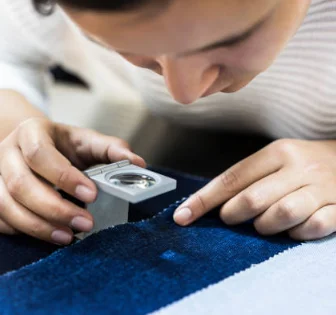
The testing of textiles is the backbone of any quality control measure that exists within the fabric and apparel manufacturing industry. All testing of textiles is designed to check for a host of properties to check that goods are suitable for end use and comply with safety regulations as well as legislative and industry requirements. To the textile manufacturing expert the process of testing is not a simple formality or aspect of a company’s quality control measures that they have to undertake from time to time in order to comply with legislation. No, in fact it is a strategic component that can impact upon a company’s brand image, their sustainability and also their ability to gain a competitive edge in the market place. It follows that the process of testing is affected at each level of the testing process by the materials that have been selected and the process of manufacture that has been undertaken to complete the finished test specimen.
What Is Textile Testing and Why Is It Essential?
It is important to understand the significance of textile testing in the industry before looking into individual tests to determine textile material properties. Textile testing includes physical, mechanical and chemical tests on fibers, yarns and fabrics to check for their performance, colorfastness and comfort. Results from the test reports can help textile manufacturers in choosing the right production method and sourcing the right material for them.
Definition and Scope of Textile Testing
Textile testing are systematic tests on textiles in order to check the relevant properties of a textile material. The textile testing comprises a large field of application for checking textile materials in the laboratory as well as during production on site. It covers a wide area ranging from the identification of fibers to tests of tensile, shrinkage, abrasion and burning behavior of test specimens.
Importance for Quality Control
When high-volume production is taking place, quality must be guaranteed on an ongoing basis. Through a series of textile tests it is possible to check each delivery for features such as strength, elasticity and colorfastness as well as for its dimensions. By not carrying out these tests in line with a series of fixed test methods, such as ISO or ASTM test methods, manufacturers are exposed to the risk of irregularities that could ultimately result in a product recall or serious damage to a brand.
Role in Regulatory Compliance
Textile products must comply with multiple international standards governing safety and environmental impact. Testing verifies conformity with regulations such as REACH in Europe or CPSIA in the United States. Non-compliance can result in shipment rejections or legal penalties—issues that rigorous testing helps prevent.
How Does Textile Testing Support Product Development?
Testing is not simply a matter of inspecting a finished product: throughout the various stages of a product’s development, test data is employed by engineers and designers to optimize product performance within specified applications, by varying material.
Material Selection Based on Performance Data
Quantitative tests are used to determine the properties of a fiber or blend in order to select the most suitable for certain applications. For example, the results from a moisture management test will inform the development of sportswear. The results from a flame resistance test will inform uniform manufacturers who are supplying to industries such as oil and gas.
Prototype Validation
At the early design stages prototype fabrics undergo simulations of early wear and tear to predict long-term behavior of the materials. Changes in weave density or in finishing can then be introduced before the start of mass production. These changes can prevent costly corrections during the first products’ life.
Enhancing Innovation Through Research
Our continued testing leads to innovations in fiber modifications as well as coating technologies. Our research divisions employ a variety of analytical tools, e.g. scanning electron microscopy (SEM) as well as Fourier-transform infrared spectroscopy (FTIR), to analyze the interaction on fiber surface level of fibers and finishes.
What Are the Main Categories of Textile Tests?
Because of the large variety of textile materials a wide range of tests are required to determine the many different properties of a material. Each test category is directed towards a specific group of properties of a material which are relevant for a certain end use.
Physical Tests
Structural integrity is measured by physical evaluations such as tensile strength tests, tear tests, bursting tests and Dimensional Change tests. These parameters are a measure of how a fabric will perform when subject to wear and/or cleaning.
Chemical Tests
Chemical analysis can identify possible contaminants in the products like formaldehyde residues or restricted azo dyes. In addition chemical analysis can identify fiber composition in fabrics through solubility tests or by burning of test samples. Such identification is very important for a country to control labeling frauds and to protect interest of its consumers.
Colorfastness Tests
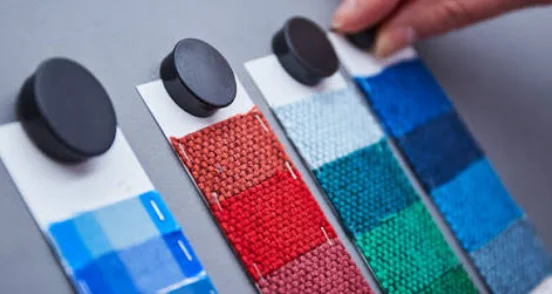
Colorfastness describes the lightfastness, washing fastness, rubbing fastness and sweat fastness of colors on fabrics. High and consistent colorfastness ensures the color on garments does not change and therefore satisfies the end customer. Return due to discolouration is also minimized.
How Do Laboratories Conduct Textile Testing Accurately?
The precision of textile testing is largely down to the testing environment and the testing method used. To guarantee the reproducibility of results from textile testing, accredited laboratories go through strict calibration procedures and documentation procedures.
Standardized Procedures
Many international organizations like ISO (International Organization for Standardization) and ASTM (American Society for Testing and Materials) have developed criteria for assessing the quality of textiles on an international basis. Most of the leading suppliers of textiles world-wide adhere to these criteria for comparison purposes.
Environmental Control During Testing
The temperature and humidity affect the elastic properties of fibers and their moisture regain rate. These factors are controlled in a laboratory in order to keep other variables to a minimum, and are typically maintained at a temperature of 21°C ± 1°C and at a relative humidity of 65% ± 2%.
Use of Advanced Equipment
Modern facilities, whether apparel manufacturers or contract testing laboratories, use very precise test equipment, such as the universal tensile testers for elongation testing, spectrophotometers to measure color, pilling testers to test the surface wear of fabrics, and various types of laundering machines that have been calibrated to duplicate repeat wash-dry cycles.
How Does Textile Testing Influence Sustainability Goals?
With Sustainability becoming the new global supply chain mantra, eco-friendly testing of textiles can help to verify sustainability claims on issues relating to recycling, biodegradability and reduced use of chemicals.
Assessing Environmental Impact
Life cycle assessment (LCA)-based tests can compare the energy requirements and environmental impacts during different stages of fabric processing and help the manufacturers design more environmentally friendly processes with lower carbon dioxide emissions.
Verifying Recycled Fiber Quality
When it comes to Recycled polyester (rPET) or Regenerated fibers from cellulose, it is important to check the purity level in order to achieve the same mechanical properties as virgin fibers. Our testing has not found any decrease in end use performance as a result of the recycled content.
Supporting Eco-Certification Programs
Testing can be used to gather the required evidence for certification within existing schemes such as the OEKO-TEX® Standard 100 and GOTS (Global Organic Textile Standard) allowing companies to gain credibility with environmentally conscious consumers via their brand name.
What Challenges Exist in Modern Textile Testing?
The world of textile evaluation is developing and using technology, but it is still encountering a number of operational problems; notably the speed of launch to market for many products and the changes in legislation.
Rapid Production Cycles
The fast fashion approach demands faster turnaround times from design approval to retail delivery. This can pose a challenge to the laboratory in need to produce high quantities of samples within a short timeframe, and do so efficiently and accurately.
Complexity of Multi-Fiber Blends
As fibers in modern textile materials are mostly of synthetic and natural origin and can display very different properties under the same test, there is a big challenge for the researcher to develop hybrid test methods.
Global Standardization Issues
Although there are international standards for glass, there are local differences in the glass types available for different markets and climate conditions. To achieve market harmonization, constant dialogue between industry associations and government will be required.
FAQ
Q1: What Is the Most Common Test Performed on Fabrics? A: Tensile strength testing is among the most frequent tests and methods used to test fabrics. This test measures the maximum force a fabric sample resists before breaking. The results of tensile testing provide crucial information on the strength of a fabric. This characteristic is one of the key properties when choosing a material for making end products such as upholstery or activewear. It is a good indicator of a fabric’s durability.
Q2: How Often Should Manufacturers Conduct Textile Testing? A: Manufacturers should conduct quality checks on an ongoing basis during all production stages. Therefore, before fiber is even procured for production, and at the end of the finishing stage, the manufacturer should test for possible deviations during the intermediate stages of production of assembled finished products, i.e., spinning, weaving/knitting, and finishing.
Q3: Can Small Businesses Access Professional Textile Testing Services? A: Yes, many accredited laboratories have designed their scaled service offerings for the small to medium scale producer. This allows such producers to get the testing and associated compliance verification that they require, without having to place a large number of test samples through the laboratory.
Q4: Do Sustainable Textiles Require Different Tests? A: Sustainable textiles are not tested differently for the basic mechanical tests. They however require additional tests that quantify the chemical safety profile and biodegradability of the fibers in order to check for compliance with the requirements of respective eco-certifications.
Q5: Why Do Some Test Results Differ Between Labs? A: Variations in test results may occur due to variations in the calibration of test and measurement equipment or in environmental control. As a result, the laboratories’ accreditation to ISO/IEC 17025 is important to check for consistency of results between labs.