Which Water Resistant Coating for Fabric Works Best for Your Textile Product?
Why Does a Water Resistant Coating for Fabric Matter in Global Textile Orders?
If you are sourcing a water resistant coating for fabric, you are not buying a short water-beading clip. You need a finish that fits the product, passes the buyer’s checks, and keeps the fabric hand close to the approved sample. For more fabric finishing options, see the coatings category.
Buyer Use Cases Start with Rain, Spills, and Wear
A jacket shell, stroller cover, sofa fabric, luggage lining, and workwear pocket do not meet water in the same way. Light rain calls for surface repellency, while a seat cushion may need spill resistance and easy wiping. Bag fabric also has to handle rubbing at seams and corners, so abrasion resistance cannot be ignored. Start from the actual use, then choose the chemical route.
Water Resistance Is Not the Same as Waterproofing
Water resistant fabric slows wetting and helps drops move off the surface. Waterproof fabric is a different claim because it blocks water penetration under pressure, often with a membrane or heavier back coating. Many buyers use these words loosely in first inquiry emails. Clarifying them early saves sampling time, especially when the price target is tight and the fabric still needs to feel soft.
Lab Data Reduces Sampling Risk
AATCC describes TM22 as a spray test for resistance to wetting by water. In sourcing work, it is mainly used to check how a water-repellent finish behaves at the surface. ISO 811:2018 covers hydrostatic pressure testing for resistance to water penetration, and it was confirmed as current in 2025. These two tests are not interchangeable, so a firm spec may need both. (members.aatcc.org) (iso.org)
How Does a Water Resistant Fabric Coating Work?
A fabric coating changes the way water meets the textile surface. It may stay mostly on the fiber surface as a finish, form a thin film, or work together with a back coating. The right choice depends on fiber, weave, dye shade, stretch, and the final garment or home textile design.
Lower Surface Energy and Better Beading
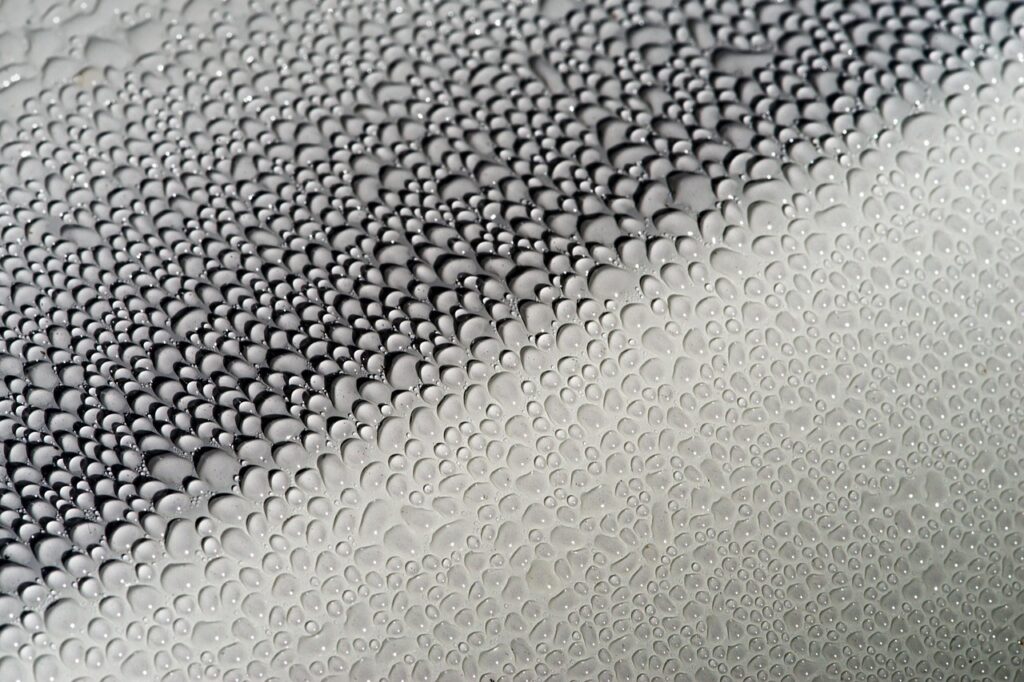
Most water resistant finishes lower surface energy, so water forms drops instead of spreading into the yarns. A new sample can bead well on a table. After sewing, washing, packing, and rubbing, the result may change. For this reason, buyers should not make a decision from one fresh lab dip only.
Binder Choice and Hand Feel
Binders help the finish stay on the fabric. If the binder level is too low, wash durability may be poor. If it is too high, the surface can become stiff, noisy, or a little tacky. On apparel fabric, that hand feel can stop a project even when the spray rating looks acceptable.
Fabric Construction Changes the Result
A dense plain weave usually sheds water more easily than a loose knit. Brushed fabric can hold drops in the nap, and stretch fabric may open small gaps when pulled. Dark shades can show coating marks more clearly. Good coating work is part chemistry and part control of the fabric itself.
Which Coating Chemistry Should You Choose?
No single chemistry fits every order. The right choice depends on water beading, durability, softness, cost, and compliance. A small travel pouch does not need the same recipe as outdoor workwear. Many failed samples start because the finish is built for a tougher use than the product really needs.
C0 Fluorine-Free Finishes for Everyday Water Repellency
C0 fluorine-free finishes are now used for casual apparel, bags, upholstery, and many promotional textiles. They can give solid water repellency for light rain and drink spills. They usually do not match fluorinated chemistries for oil repellency. Do not promise stain performance unless test data supports it.
Silicone and PU Routes for Higher Barrier Needs
Silicone systems can add water shedding with a soft and smooth touch. PU coatings can build a stronger barrier on the back side of fabric, which is useful when penetration pressure matters. The tradeoff is often breathability and drape. If the fabric must move with the body, check bending and noise along with the water data.
PFAS Controls Shape Buyer Requirements
PFAS have been used for water, oil, stain, and grease repellency in textiles, according to the U.S. EPA. The European Environment Agency reported in 2024 that textiles account for about 35% of global PFAS demand. It also estimated that one third of PFAS in the EU, 41,000 to 143,000 tonnes, is used in textiles. In daily order handling, the point is simple: ask early whether the buyer needs a PFAS-free statement. (epa.gov) (eea.europa.eu)
What Test Data Should You Ask for?
Testing should match the product claim. A hangtag that says water resistant, a workwear tender, and a sofa fabric claim may all need different proof. If no reliable public standard fits the exact claim, say that in the spec and agree on an internal method with the buyer before bulk production.
AATCC TM22 for Surface Wetting
AATCC TM22 is useful when you need a quick check of surface wetting. Water is sprayed on a taut specimen, and the wet pattern is compared with a standard chart. For production control, mills and buyers know this method well. It does not prove rainproof performance or resistance to water pressure.
ISO 811 for Water Penetration Pressure
ISO 811 is more relevant when water pressure matters, such as tent fabric, rainwear panels, protective covers, or coated outdoor textiles. The method measures how fabric resists water penetration under hydrostatic pressure. If a buyer asks for a hydrostatic head value, a spray rating alone is not enough. Put the required value and test condition in writing before sampling. (iso.org)
Wash Durability and Real Wear Checks
Ask for ratings before washing and after the agreed wash cycles. Also test seam areas, folded edges, and high-rub zones because these places often fail first. There is no reliable universal public number for how long every water resistant coating lasts. Curing, fabric build, detergent, tumble drying, and abrasion all change the final result. See also: Applications.
How Should You Specify the Finish Before Bulk Production?
A clear specification turns a good sample into repeatable production. Keep it short, but make it measurable. If the spec only says good water resistance, soft hand, no problem, the mill has too much room to guess. Guessing in coated fabric is usually expensive.
Define the End Use Before the Recipe
Write down the end product, fabric weight, fiber content, color range, coating side, wash target, and market. A polyester oxford bag fabric may accept a stronger finish. A cotton-rich shirt fabric needs a softer hand and careful curing to avoid shade change. These small notes help the mill choose the right route.
Set Measurable Targets and Tolerances
Use test names, minimum ratings, wash cycles, and inspection points. For example, you may request a surface wetting rating after home laundering, plus a hydrostatic pressure value for a back-coated fabric. Put tolerances in writing before price confirmation. It is a small step, but it prevents hard discussions later.
Check Color, Hand Feel, and Breathability
Water performance can cover side effects during approval. Some coatings deepen shade, reduce air flow, or change the fabric surface from dry to waxy. On black fabric, white crease marks may appear after folding. On activewear, a heavy finish can trap heat, so review the full fabric and not only the droplet test.
What Mistakes Should You Avoid When Buying Coated Fabric?
Most coating problems are not a mystery. They often come from unclear claims, weak testing, or late compliance checks. A short checklist before sampling can save weeks. It is basic textile work, but buyers remember it when delivery runs without trouble.
Chasing High Beading Without Durability
Strong beading on day one looks good in a photo. It may not survive abrasion, washing, ironing, or garment dyeing. Ask the supplier to test the fabric after it has been treated like the final product. If the coating is for a school bag, rubbing on the bottom panel matters more than a perfect showroom droplet.
Ignoring Restricted Substance Rules
The ZDHC MRSL lists chemical substances banned from intentional use in textile, apparel, and footwear processing, including coatings and finishing agents. It is not a legal replacement, but it gives suppliers and buyers one shared chemical-control language. For export orders, request current declarations before bulk fabric leaves the mill. This is easier to check early than to fix after shipment. (mrsl.roadmaptozero.com)
Skipping Pilot Runs on Dark or Stretch Fabric
A lab sample is small, but bulk fabric is not. Dark colors, spandex blends, brushed surfaces, and high-density weaves can behave differently during padding, drying, and curing. Run a pilot lot when the fabric is new, the shade is sensitive, or the buyer has strict hand-feel requirements. The pilot result gives both sides a safer basis for bulk approval.
FAQ
Q1: Is a Water Resistant Coating for Fabric Always Waterproof? A: No. Water resistant coating mainly reduces surface wetting. Waterproof performance needs penetration testing, and often a membrane or stronger back coating.
Q2: Which Test Is Better, AATCC TM22 or ISO 811? A: Neither test is better in every case. AATCC TM22 checks surface wetting, while ISO 811 checks resistance to water penetration under pressure.
Q3: Can You Use a PFAS-Free Finish for Outdoor Fabric? A: Yes, for many outdoor uses. You still need to confirm the water rating, wash durability, and whether oil or stain repellency is part of the claim.
Q4: Why Does the Same Coating Perform Differently on Two Fabrics? A: Fiber type, weave density, yarn texture, dyeing, brushing, stretch, and curing all affect the final water resistance.
Q5: What Should You Ask Before Ordering Bulk Coated Fabric? A: Ask for the coating type, target tests, wash cycles, restricted substance statement, hand-feel standard, shade approval process, and pilot-run result.