Why Is Non Woven Geotextile Fabric Better for Drainage and Soil Separation?
What Makes Non Woven Geotextile Fabric Different?
On site, drainage and base problems often show up at the line where soil meets water. A non woven geotextile fabric adds a porous layer at that point, so the system can separate soil, filter fines, move water, cushion sharp contact, and keep the base cleaner below the surface. For more civil works ideas, you can review the Applications section.
Needle Punched Fiber Network
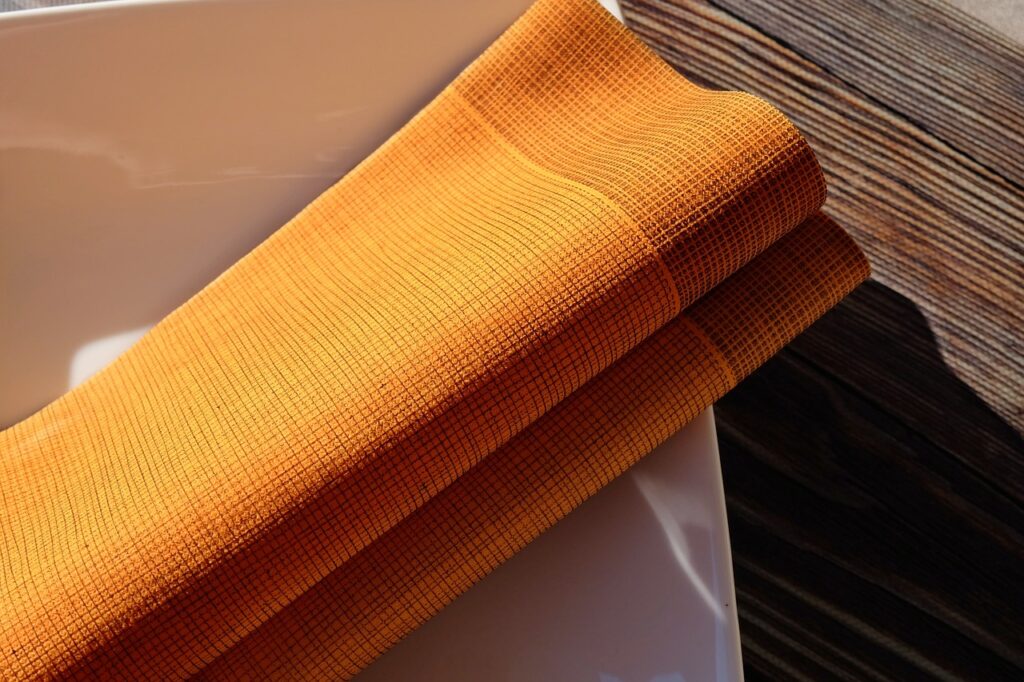
Non woven geotextile is usually made from polypropylene or polyester fibers pressed into a felt-like sheet. Needle punching locks the fibers together and leaves small paths for water to pass through the fabric.
This open fiber network helps the material sit well on uneven ground. It can wrap pipe trenches and lie under angular stone without the stiff handling you often get from woven yarn fabric.
Multiple Functions in One Layer
The International Geosynthetics Society lists common geosynthetic functions such as separation, filtration, drainage, barrier, erosion control, reinforcement, stabilization, protection, and stress relief. A non woven fabric is often chosen when filtration, drainage, and cushioning are needed in the same place.
That matters on wet jobsites because one roll can limit soil movement while still letting water pass. It is not a cure for every site issue, but it is a useful layer when the soil, stone, and water path are matched properly. (geosyntheticssociety.org)
Different Behavior from Woven Fabric
Woven fabric has good tensile strength and is often used for reinforcement or separation under heavy aggregate. Non woven fabric behaves more like a thick filter because its fibers run in many directions.
That random fiber mat usually gives better through-plane flow and a softer contact surface. If the project needs both strength and high flow, check the data sheet carefully, because the word geotextile covers many different products.
Where Does It Perform Best on a Jobsite?
The fabric works best when it is selected for the real site problem. A soft clay base, a silty drain trench, and sharp stone above a liner all need different checks for fabric grade, opening size, weight, and roll width.
Road Base Separation
Under access roads, parking yards, and temporary haul roads, non woven fabric keeps subgrade soil from mixing with the aggregate base. This is useful where fine-grained soil loses strength after rain or repeated traffic.
The fabric still needs proper support from the rest of the section. You need enough aggregate cover, correct compaction, and a shaped subgrade before the roll is placed.
French Drains and Trench Drainage
In a French drain, fabric wraps the stone envelope so fines do not move straight into the voids. Water should enter the trench while the surrounding soil stays in place.
A common site mistake is using a very tight fabric in silty soil and then expecting fast drainage. The soil gradation, trench stone, and fabric opening size need to work together, or the drain may slow down early.
Erosion Control and Slope Cover
On slopes, channels, and shore edges, non woven fabric can be installed under riprap or gabion stone. The fabric works as a filter layer, while the rock handles the force of moving water.
For small landscape swales, this detail may look simple. In civil work, it still needs a design check for flow velocity, soil loss risk, and stone size.
How Do You Choose the Right Fabric Weight and Specs?
Many buyers first ask for 150 gsm, 200 gsm, or 300 gsm fabric because weight is easy to quote. Weight is useful, but it does not prove that the fabric will drain well, filter the right soil, or survive installation damage.
Weight Is Only the Starting Point
GSM means mass per square meter. It gives a rough idea of thickness and puncture resistance, but it should not replace test values.
For export orders, ask for tensile strength, elongation, CBR puncture or static puncture, apparent opening size, permittivity, roll dimensions, and polymer type. This basic check helps avoid claims, delays, and unclear discussions after the rolls arrive.
AOS, Permittivity, and Permeability Match the Soil
FHWA road guidance gives useful filter design examples for nonwoven geotextiles. Apparent opening size can be checked against subgrade particle size, and the geotextile permeability should meet or exceed the adjacent base material.
The same guidance also shows a default permittivity value of 0.1 sec-1 in its pavement drainage discussion. In practice, the fabric should be matched to the soil and water path, not chosen only from a catalog grade. (fhwa.dot.gov)
Puncture Strength Handles Installation Abuse
The toughest time for the fabric is often installation day. Trucks turn, aggregate is dumped, boots drag edges, and a roll may even be opened with too much knife pressure.
For rough subgrades or heavy equipment, choose a grade with higher survivability. For lighter private works, a medium grade may be enough, but there should still be a sensible stone cushion between wheels and fabric, especially on weak soil.
Why Do Non Woven Fabrics Help Drainage Systems Last Longer?
Drainage systems usually fail because soil moves, voids fill, or a layer is damaged before it is covered. Non woven fabric helps control the contact between soil, stone, pipe, and liner, so the drain has a better chance of staying open.
Filter Bridges Stop Soil Migration
A good filter lets water pass while larger soil particles form a stable bridge at the fabric face. Once that bridge forms, smaller particles are held back more effectively.
If the fabric opening is too large, fines can wash through the layer. If it is too small, clogging may start early, so soil data and lab data are more useful than a quick look at the roll.
Cushioning Protects Liners and Pipes
Non woven fabric is also used as a cushion layer. In landfill and containment work, the soft textile can help protect geomembranes from point pressure caused by stone or an uneven subgrade. See also: Coatings.
The U.S. EPA describes municipal solid waste landfill systems with composite liners and leachate collection systems. In that type of work, geosynthetic layers need to work together rather than act as separate products. (epa.gov)
Good Installation Keeps the Fabric Working
Place the fabric on a prepared surface, overlap seams as specified, keep wrinkles out of stone placement areas, and cover it as soon as the site allows. Sun, wind, mud, and traffic do not help a roll that is left open for too long.
A careful installation may take more time at the start. It is still cheaper than opening a failed drain during wet weather and trying to find where the fines entered.
What Should Buyers Check Before Ordering?
For international sourcing, a clear inquiry is better than a low price with missing details. Non woven geotextile fabric can be packed, labeled, and shipped in different ways, so buyers should confirm project use, soil condition, test requirements, and delivery handling before placing the order.
Polymer Type and UV Exposure
Polypropylene is common because it is light, chemical-resistant, and cost-friendly. Polyester is also used, especially when certain strength or temperature requirements are part of the job.
Ask about UV resistance if the fabric may stay outdoors before burial. Geotextile is meant to work under cover, so leaving rolls in direct sun for a long time is poor storage practice, even when stabilizers are included.
Roll Size, Packaging, and Site Handling
Roll width affects labor on site. A wider roll reduces overlaps, but it may need better lifting equipment and more room for handling.
A narrower roll is easier for small crews and tight trenches. Before ordering, confirm:
- Roll width, roll length, and square meters per roll
- Core strength, wrapping film, and label language
- Container loading plan and unloading method at site
- Required test report, batch number, and production date
Test Reports and Conformance
Ask for a test report that matches the quoted grade. ASTM D4759 is a standard practice used for determining specification conformance of geosynthetics, so it is often mentioned when buyers and engineers check whether supplied rolls meet project requirements.
If a supplier cannot provide reliable data, do not cover the gap with guesses. It is better to clear the test values before shipment than to argue about roll performance after installation. (store.astm.org)
Is It a Good Fit for Landscaping and Private Works?
Yes, in many cases. Small projects face the same soil and water problems as larger civil works, only at a smaller scale. The risk is that landscaping buyers may treat every black fabric as the same product, but weed barrier, woven ground cover, and non woven geotextile are not interchangeable.
Gravel Driveways and Parking Pads
For gravel driveways, the fabric separates subgrade soil from aggregate. This helps reduce rutting caused by stone sinking into soft soil.
You still need enough base thickness and a proper drainage slope. Fabric under a thin layer of loose gravel will not carry heavy trucks by itself, and no fabric can fix a poor base design.
Retaining Walls and Hardscape Bases
Behind retaining walls, non woven fabric can wrap drainage stone and keep backfill fines away from pipe outlets. Under paver bases, it can separate sand or aggregate from clay.
Use it where water needs to move through the layer. If the job is only weed control in a dry garden bed, another product may be more suitable and lower in cost.
When Not to Use It
Do not use non woven geotextile as a waterproof liner. It is permeable, so water can pass through it.
Do not use it as a structural geogrid replacement when tensile reinforcement is the main design need. Also avoid chemically aggressive sites without checking polymer compatibility. A 2022 review in the journal Polymers lists geosynthetic uses across roads, canals, dams, landfills, retaining walls, drainage systems, coastal protection, and railways, but the right product still depends on site conditions. (pmc.ncbi.nlm.nih.gov)
FAQ
Q1: What Is Non Woven Geotextile Fabric Used for? A: It is used for filtration, drainage, separation, cushioning, erosion control, and protection in civil and landscape projects. Common sites include road bases, French drains, retaining walls, slopes, landfills, and gravel pads.
Q2: Is Non Woven Geotextile Fabric Waterproof? A: No. It is a permeable fabric made to let water pass while controlling soil movement. If you need a waterproof barrier, you should look at geomembrane or another liner system.
Q3: What GSM Should You Choose? A: GSM depends on the application, soil, equipment, and required strength. Do not choose by weight alone. Check AOS, permittivity, puncture strength, tensile strength, elongation, and project specifications.
Q4: Can You Use It Under Gravel? A: Yes, it is often used under gravel to separate aggregate from soft subgrade soil. For driveways or parking areas, combine it with enough compacted aggregate and proper drainage slope.
Q5: How Should You Store Rolls Before Installation? A: Store rolls on clean, dry ground, keep packaging intact, and limit direct sunlight before burial. Lift rolls with proper equipment and avoid dragging them across sharp surfaces.