
ISO standards for the textile industry in testing and quality control
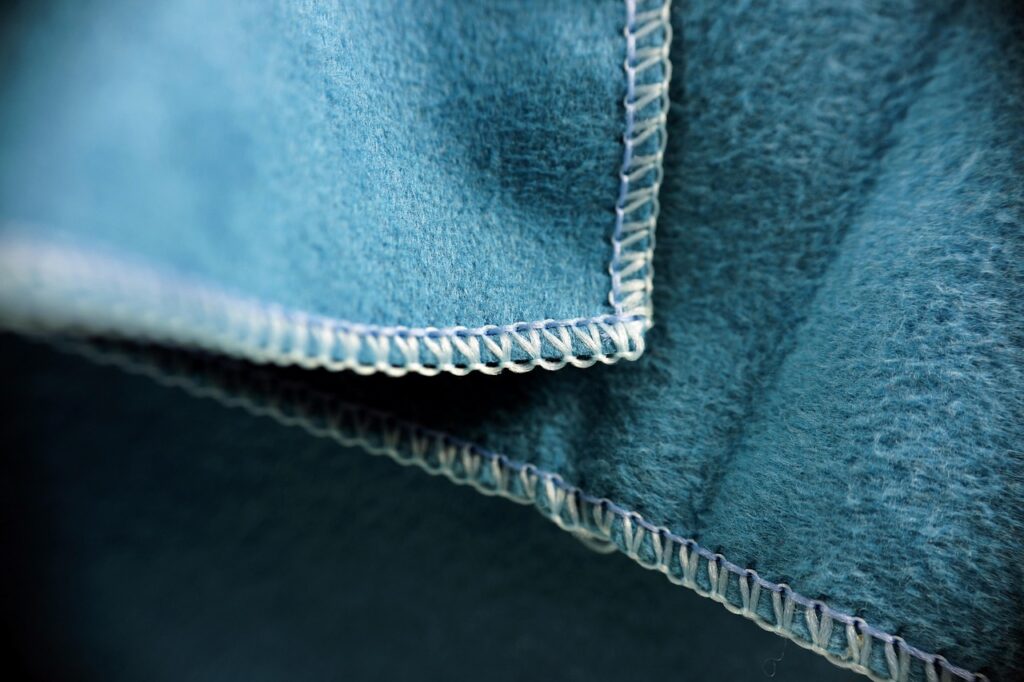
ISO standards used in the textile industry are not a single certificate or universal checklist. They include test methods, terminology documents, product specifications and management system standards that help buyers, mills, laboratories and regulators describe textile performance in a consistent way. In day-to-day sourcing and quality control, ISO standards may define how a fabric is conditioned before testing, how colour fastness or dimensional change is measured, how care symbols are assigned, and how laboratories demonstrate technical competence. The practical approach is to select standards according to product risk and buyer requirements, rather than collecting standard numbers without a clear testing purpose.
What ISO standards do in textiles
ISO textile standards create a common technical language for international supply chains. A fabric may be spun, woven, dyed, finished, cut and sold across several countries. Without agreed test methods, a buyer, supplier and third-party laboratory may use different conditions and still claim to have tested the same property. You can also explore more in Testing.
ISO’s public catalogue identifies ISO/TC 38 Textiles as the technical committee responsible for standardization related to fibres, yarns, threads, cords, rope, cloth and other fabricated textile materials, including related test methods, terminology and specifications. Its current scope also covers topics such as microplastics from textile sources, responsible sourcing of animal fibres, and ethical and environmental issues in the textile supply chain.
For industry users, ISO standards usually answer one of four practical questions:
- How should a test be performed? For example, washing, rubbing, abrasion, pilling or dimensional change.
- How should results be reported? For example, by stating the exact method, version, conditioning procedure and rating scale.
- How should a laboratory prove competence? ISO/IEC 17025 is commonly used for testing and calibration laboratory accreditation.
- How should a company manage quality or environmental processes? ISO 9001 and ISO 14001 are management system standards, not fabric performance tests.
More practical articles on fabric evaluation and inspection can be found in the textile testing section.
Core ISO textile testing standards to know
The table below is not a complete list of every ISO textile document. It highlights standards and standard families that often appear in fabric development, sourcing, quality control and laboratory reports. Before using any standard in a contract or test request, check the current edition, amendment status and exact part number.
| Use case | ISO standard or family | What it helps control | Practical note |
|---|---|---|---|
| Conditioning before physical testing | ISO 139:2005 with amendment 1:2011 | Standard atmospheres for conditioning and testing textile materials | Useful when moisture regain can affect strength, dimensions, mass or other physical results. |
| Colour fastness | ISO 105 series | Resistance of dyed or printed textiles to washing, rubbing, perspiration, light and other agencies | The exact part matters. ISO 105-C06 covers domestic and commercial laundering; ISO 105-X12 covers rubbing. |
| Domestic washing and drying procedures | ISO 6330:2021 | Reference washing and drying procedures used in textile testing | Often paired with other methods when evaluating shrinkage, appearance or performance after laundering. |
| Dimensional change after washing and drying | ISO 5077:2007 | Measurement of dimensional change in fabrics, garments and textile articles | Useful for shrinkage or growth claims, but the washing and drying procedure must also be specified. |
| Care labelling symbols | ISO 3758:2023 | Graphic symbols for textile care labelling | Connects technical test evidence with care instructions, but national labelling rules may still apply. |
| Pilling, fuzzing and matting | ISO 12945 series | Fabric tendency to form pills, fuzz or matted surfaces | Includes methods such as pilling box and modified Martindale, plus visual assessment guidance. |
| Abrasion resistance | ISO 12947 series | Abrasion resistance of fabrics by the Martindale method | Relevant for apparel, upholstery and workwear, but end-use requirements vary widely. |
| Nonwoven testing | ISO 9073 series | Test methods for nonwovens, including properties such as mass per unit area, tensile behaviour and air permeability | Important for wipes, medical-related materials, filtration layers and other nonwoven applications. |
How the standards connect across the textile product life cycle
Development and pre-production
During development, ISO standards help turn a design target into measurable requirements. A brand may need a cotton knit with controlled shrinkage, a polyester workwear fabric with higher abrasion resistance, or a printed fabric with acceptable rubbing fastness. At this stage, the buyer should identify the property, ISO method, acceptance level and test condition.
For example, saying that a fabric must pass colour fastness testing is too broad. The specification should state whether the concern is washing, rubbing, perspiration, light or another exposure. It should also state whether results are assessed for colour change, staining on adjacent fabric, or both.
Bulk production and shipment approval
In production, ISO methods support lot comparison and shipment decisions. When the pre-production sample and bulk lot are tested under the same method and conditions, differences are easier to identify. A test method by itself, however, does not define commercial acceptance. The buyer still needs a performance level, sampling plan and retest rule.
This distinction matters because ISO test methods often describe how to measure a property, not what grade is acceptable for every product. A fashion T-shirt, hotel towel, flame-resistant protective garment and upholstery fabric do not carry the same risk profile. Acceptance criteria should reflect fibre content, fabric construction, dyeing route, intended use, care method and market requirements.
Aftercare and consumer use
ISO 6330:2021 is important because many textile claims depend on laundering. The standard specifies domestic washing and drying procedures for textile testing, including different reference washing machine types and drying options. A dimensional change result is difficult to compare if the washing and drying procedure is not defined.
Care labelling is another downstream connection. ISO 3758:2023 provides a system of care symbols that indicate the most severe treatments that should not cause irreversible damage to the textile article during care. In practice, care symbols should be supported by suitable test evidence and checked against the legal requirements of the selling market. See also: Applications.
Management and laboratory standards are different from fabric test standards
A common mistake is to mix product testing standards with management system standards. ISO 9001:2015 is a quality management system standard. It can help a textile company control processes, document responsibilities, handle nonconformity and pursue continual improvement. It does not prove that a particular fabric has passed shrinkage, colour fastness or abrasion testing.
ISO 14001:2026 is the current ISO environmental management system standard at the time of writing in August 2026. It provides a framework for environmental management and improvement. For textile companies, it may support structured control of energy, water, chemicals, waste and compliance obligations, but it is still a management system standard rather than a product eco-label.
ISO/IEC 17025:2017 is especially relevant when test reports are used for buyer approval, disputes or regulatory evidence. ISO describes it as the international standard for testing and calibration laboratories. Accreditation bodies use it to assess laboratory competence, impartiality and consistent operation. When a report comes from an ISO/IEC 17025 accredited laboratory, buyers should still check whether the specific textile method is within the lab’s accredited scope.
How to choose the right ISO standard for a textile requirement
The best standard is the one that matches the performance risk. Before writing a test request, define the failure mode that would matter to the customer or regulator. The risk may be shrinkage after home laundering, dye transfer onto other garments, seam slippage, fabric wear, pilling, care label accuracy, or inconsistent laboratory results.
- Start with the product and end use. Apparel, home textiles, technical textiles and nonwovens have different performance risks.
- Select the property to measure. Avoid vague terms such as quality test unless the required property is named.
- Choose the exact ISO method and part. Many families, such as ISO 105 and ISO 12945, contain multiple parts for different exposures or apparatus.
- State the edition or require the current edition. Some buyers specify a fixed edition; others require the latest published edition. The contract should make this clear.
- Define acceptance criteria separately. A method tells the laboratory how to test. The buyer or regulation usually defines what result is acceptable.
- Check regional equivalents and legal requirements. EN ISO, BS EN ISO, DIN EN ISO or national adoptions may appear on reports. Care labelling and chemical compliance may also be governed by local law.
Common mistakes when applying ISO standards
- Using an incomplete standard number. ISO 105 alone is too broad because it is a series. The report should identify the exact part, such as ISO 105-C06 or ISO 105-X12.
- Ignoring conditioning requirements. Textile materials can be sensitive to humidity and temperature. Conditioning under ISO 139 helps improve comparability for many physical tests.
- Treating old reports as current evidence. A historical test report may not reflect the latest fabric construction, dye lot, finish, factory process or standard edition.
- Assuming certification equals product performance. A factory certified to ISO 9001 may have a quality management system, but the fabric still needs relevant product testing.
- Comparing different methods as if they are identical. Results from different ISO parts, national methods or buyer-specific protocols may not be directly interchangeable.
- Forgetting the accredited scope. A laboratory may be accredited for some methods but not for every textile test it offers.
Frequently asked questions
Is there one main ISO standard for the textile industry?
No. The textile industry uses many ISO standards. Some cover test methods for specific properties, some cover care symbols, some cover laboratory competence, and others cover management systems. The correct choice depends on the product, market and performance risk.
Are ISO textile standards legally required?
ISO standards are generally voluntary unless they are referenced by a regulation, contract, tender, buyer manual or certification scheme. A supplier should therefore check both the ISO method and the legal rules of the destination market.
What is the difference between ISO 9001 and ISO/IEC 17025 for textile testing?
ISO 9001 relates to an organization’s quality management system. ISO/IEC 17025 relates to the competence, impartiality and consistent operation of testing and calibration laboratories. For a textile test report, ISO/IEC 17025 accreditation is usually more directly relevant than ISO 9001 certification.
Why do test reports include different versions such as EN ISO or BS EN ISO?
These labels usually indicate regional or national adoption of an ISO standard, such as a European or British adoption. The technical content may align with the ISO document, but buyers should still check the edition, title and any national foreword or deviation.
How should a buyer write an ISO textile testing requirement?
A clear requirement should include the product, property, exact ISO method and part, edition rule, sample size or sampling plan, conditioning requirement, acceptance level, and whether the laboratory must be accredited for that method. This reduces disputes and makes results easier to compare across suppliers.