How to compare non woven paper manufacturers by process, material and compliance
What buyers mean by non woven paper
Buyers searching for non woven paper manufacturers are usually not looking for conventional paper mills. In most cases, they need paper-like nonwoven materials with a specific converting or end-use function. The distinction matters. Industry bodies such as INDA describe nonwovens as sheet or web structures bonded by mechanical, thermal or chemical methods, rather than by weaving or knitting. ISO 9092:2026 also treats nonwovens as a defined textile-related category and notes that some wet-laid materials can be difficult to distinguish from paper when the bonding method is unclear.
For sourcing, the safest starting point is not a supplier list. It is a clear definition of what the material must do: absorbency, softness, lint level, wet strength, barrier performance, filtration efficiency, flushability, embossing, printability or converting behavior. A producer that is well suited to hygiene wipes may be a poor match for filtration media, tea bag substrates, interlinings, medical packaging or industrial carrier sheets. The right manufacturer is the one whose forming, bonding and finishing route fits the intended application.

Start with the manufacturing process before comparing suppliers
The term “non woven paper” is broad, so process language should appear in every sourcing brief. Manufacturers often specialize by web formation and bonding technology. Each route gives a different balance of strength, absorbency, softness, porosity, cost and sustainability profile.
Wetlaid and cellulose-rich nonwovens
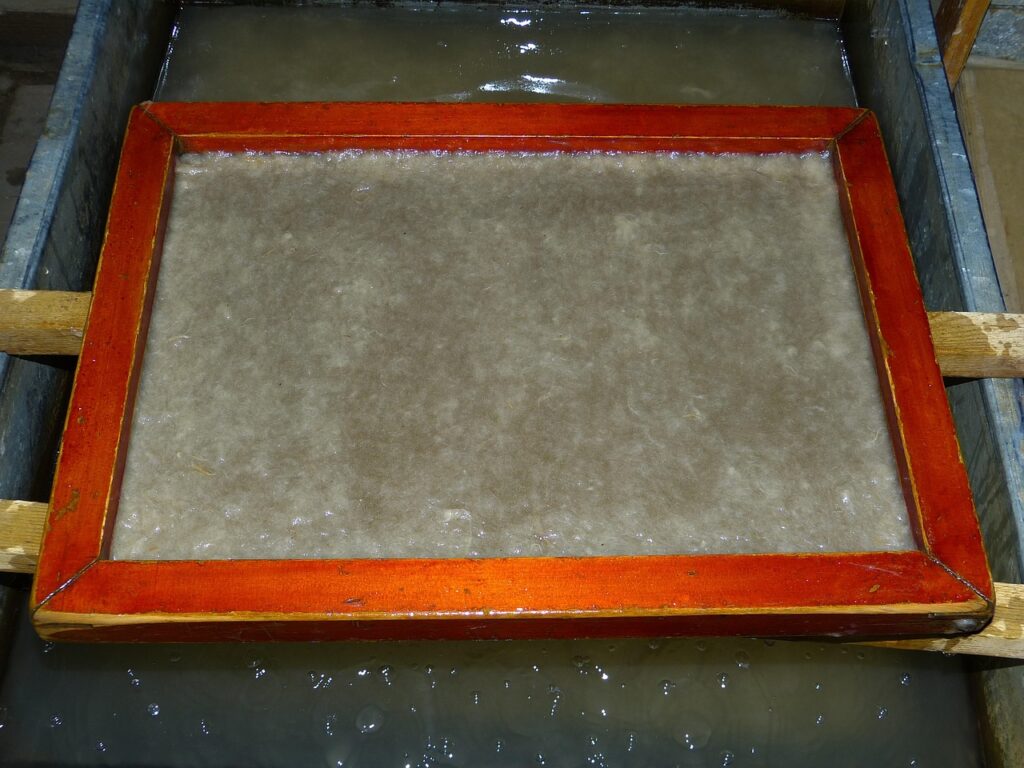
Wetlaid nonwovens are often closest to what buyers have in mind when they say nonwoven paper. Fibers are dispersed in water and formed into a web in a process that can resemble papermaking, but the final sheet may be engineered for textile-like strength, controlled porosity or absorbency. This route is common when buyers need thin, uniform, cellulose-rich sheets for wipes, filtration, battery separators, specialty packaging components or technical carrier materials.
Airlaid materials
Airlaid production uses air to form a web, often from pulp and synthetic or binder fibers. It is widely associated with absorbent cores, table-top products, napkins, pads and other products where bulk and liquid uptake are important. Buyers should ask whether strength comes from latex bonding, thermal bonding, hydrogen bonding or a composite structure, because that choice affects softness, dusting, liquid behavior and recyclability claims.
Spunlace materials
Spunlace, also called hydroentangled nonwoven, uses high-pressure water jets to entangle fibers. It is a common route for many wipe substrates because it can deliver softness and drape without relying only on chemical binders. If the target product is a wet wipe, cosmetic sheet, cleaning wipe or medical-related disposable, spunlace capability is usually more relevant than a general “paper” description.
Spunbond, meltblown and composite webs
Spunbond and meltblown technologies are polymer-based routes often associated with filtration, hygiene topsheets, protective products and composite structures such as SMS. These materials may look less paper-like, but they can be the correct choice when tensile strength, barrier performance or fine-fiber filtration matters more than cellulose feel.
Specification details that separate a useful quote from a risky one
Reliable non woven paper manufacturers should be able to discuss measurable specifications, not only application names. A sample described as “soft,” “strong” or “eco-friendly” is not enough for commercial purchasing. The request for quotation should state the target material, test method where available, roll format and converting conditions.
| Sourcing item | Why it matters | Evidence to request |
|---|---|---|
| Fiber composition | Determines hand feel, absorbency, strength, heat resistance and disposal route. | Fiber blend statement, restricted substance declaration and lot traceability. |
| Basis weight | A small gsm difference can change yield, cost and converting performance. | Target gsm, tolerance range and test method. |
| MD and CD tensile strength | Machine direction and cross direction strength affect slitting, folding, wiping and packaging. | Test report showing dry and, if needed, wet tensile values. |
| Absorbency or liquid strike-through | Critical for wipes, pads, hygiene layers and industrial cleaning substrates. | Application-specific lab report or agreed internal test data. |
| Porosity or filtration behavior | Needed for filter media, breathable layers and specialty papers. | Air permeability, pore size or filtration efficiency data where relevant. |
| Roll and converting quality | Poor winding can create waste even when the fabric itself meets specification. | Roll width, diameter, core size, splice policy, edge quality and defect map. |
| Certification scope | A certificate may cover only a material, color, factory, product class or validity period. | Certificate number, issuing body, covered article and expiry date. |
For skin-contact goods, buyers often ask about OEKO-TEX STANDARD 100 because the program tests textile articles for harmful substances and applies stricter requirements where skin contact is more intensive. However, the certificate should be checked by article and certificate number. It should not be treated as proof of every environmental or performance claim.
Market and compliance signals to include in 2026 sourcing plans
Market data can help buyers understand supply pressure, but it should not replace supplier verification. EDANA reported on March 31, 2025 that nonwovens production in Greater Europe increased by 2.6% in volume in 2024 to 2,976,400 tonnes and reached 85.1 billion square meters. EDANA also noted that this followed two years of production declines above 5% in 2022 and 2023. This is a useful signal that demand and production were normalizing in one major region, but it does not prove that every process or application segment has easy capacity.
Industry research firms such as Smithers have highlighted growth areas including filtration nonwovens and flushable nonwovens, while also noting that some segments can face structural oversupply. The sourcing implication is practical: a low price may reflect normal competitive capacity, or it may reflect a supplier trying to fill equipment that is not technically ideal for your product. Buyers should compare process fit before comparing price.
Compliance pressure is also becoming more detailed. For disposable wet wipes and moist toilet tissue, INDA and EDANA have published flushability guidelines and disposal communication practices, while ISO/TS 18671:2026 addresses test methodologies for compatibility with wastewater collection and treatment systems and appropriate labeling. If a finished product may be flushed, the substrate decision must be linked to claim testing and labeling. If the product is not designed to be flushed, the safer commercial position is usually to avoid language that implies flushability.
Packaging should be reviewed separately from the nonwoven substrate. The EU Packaging and Packaging Waste Regulation entered into force in 2025 and began applying from mid-2026, with requirements aimed at recyclability, recycled content for certain plastic packaging and reduced packaging waste. A nonwoven material certificate does not automatically make the packaging compliant. Packaging compliance also does not prove that the nonwoven itself is suitable for skin contact, food-adjacent use or medical applications.
How to compare quotations without choosing the wrong grade
Price comparison is often misleading when suppliers quote different widths, roll lengths, basis weights, fiber blends or inspection rules. Convert all quotes to a common unit before making a decision. For roll goods, buyers should compare cost per square meter and cost per kilogram, then estimate usable yield after slitting, splicing, trimming and rejected defects. See also: Applications.
- Normalize gsm first. A 45 gsm product cannot be compared directly with a 50 gsm product unless performance and yield have been tested.
- Clarify tolerance. A wide gsm tolerance may reduce the apparent price while increasing converting variation.
- Ask about splices and defects. Splice count, holes, stains, hard spots and edge cracks can matter more than headline price for automated converting.
- Separate sample quality from production quality. Lab samples and pilot rolls may not represent routine mass production.
- Confirm claim language. Terms such as biodegradable, compostable, plastic-free, flushable and recyclable require evidence under the target market’s rules.
- Check packaging and storage. Moisture-sensitive cellulose-rich rolls need packaging that protects roll shape and moisture balance during shipment.
When two suppliers appear similar, ask each one to produce a small trial roll under the expected commercial specification. Test the roll on the actual converting line or, if that is not possible, reproduce the critical stresses: unwinding speed, folding, liquid loading, heat sealing, embossing, printing, die cutting or stacking. A manufacturer that responds with process-level adjustments is usually a stronger technical partner than one that only offers a catalog grade.
A practical shortlisting workflow for buyers
A disciplined workflow reduces the risk of choosing a manufacturer based on incomplete information. For more procurement-focused textile topics, see the Sourcing section.
- Define the application. State whether the material is for wipes, filtration, packaging, hygiene, medical-adjacent use, interlining, labels, carriers or another technical use.
- Translate the application into performance targets. Include gsm, thickness, tensile strength, absorbency, porosity, softness, lint level, opacity and any required finish.
- Identify the likely process route. Decide whether wetlaid, airlaid, spunlace, spunbond, meltblown or a composite structure is most suitable.
- Request comparable documents. Ask each manufacturer for a technical data sheet, safety or restricted substance statement, certificate scope, recent test report and roll specification.
- Audit the claim risk. Any claim connected to skin safety, food contact, medical use, flushability, biodegradability or compostability should be backed by a recognized test method and market-specific review.
- Run a conversion trial. Use the same converting speed, liquid formula, packaging method and storage condition planned for commercial production.
- Negotiate based on total usable yield. Include freight, duty, packaging, trimming loss, rejected rolls, inspection cost and lead-time risk.
This workflow is especially important when the search term is broad. A manufacturer can be technically excellent in one category and unsuitable in another. The buyer’s task is to match the end-use requirement with the manufacturer’s real process window.
Common sourcing mistakes to avoid
The first mistake is treating “paper-like” as a specification. Hand feel is important, but it does not replace measurable data. The second mistake is accepting a certificate without checking whether it covers the exact article, factory and date. The third mistake is assuming that one successful sample proves mass-production stability. Nonwoven production is sensitive to fiber mix, web uniformity, bonding energy, moisture and finishing conditions.
Another common problem is confusing regulatory categories. A substrate for household cleaning wipes is not automatically suitable for baby wipes. A filtration layer is not automatically suitable for a respirator or medical device. A cellulose-rich material is not automatically biodegradable in the legal sense. Manufacturers can provide evidence, but final market claims often require brand-owner review, third-party testing and local regulatory advice.
Finally, buyers should not rely only on manufacturer rankings or directory listings. Directories can help identify potential suppliers; INDA, for example, describes an international nonwovens directory covering thousands of companies across many countries. But directories do not replace technical qualification, document review, sample testing and production follow-up.
Frequently asked questions
Is non woven paper the same as nonwoven fabric?
Not always. Many buyers use “non woven paper” to describe paper-like nonwoven sheets, especially wetlaid or cellulose-rich materials. In technical sourcing, it is better to specify the process, fiber blend and performance requirements instead of relying only on the name.
Which manufacturing process is best for wipes?
Spunlace is common for many wipe substrates because it can provide softness, drape and strength. However, airlaid, wetlaid and composite materials may also be suitable depending on absorbency, cost, liquid loading, lint level and disposal claims.
What documents should a manufacturer provide before bulk orders?
At minimum, request a technical data sheet, test report, fiber composition statement, roll specification, quality tolerance, certificate scope and lot traceability method. For regulated or claim-sensitive applications, ask for the exact test standards behind each claim.
Can a supplier claim a nonwoven material is flushable?
Only with appropriate testing and labeling review. INDA and EDANA have developed flushability guidelines, and ISO/TS 18671:2026 addresses wastewater compatibility test methodologies and labeling. If a product is not designed and tested for flushing, it should not be marketed as flushable.
How should buyers compare non woven paper manufacturers from different countries?
Use the same specification sheet, same sample size, same test methods and same quotation basis. Then compare total usable cost, lead time, communication quality, document reliability, production consistency and the manufacturer’s experience with the target application.