Woven geotextile fabric for roads, drainage, and soil stabilization
What woven geotextile fabric does
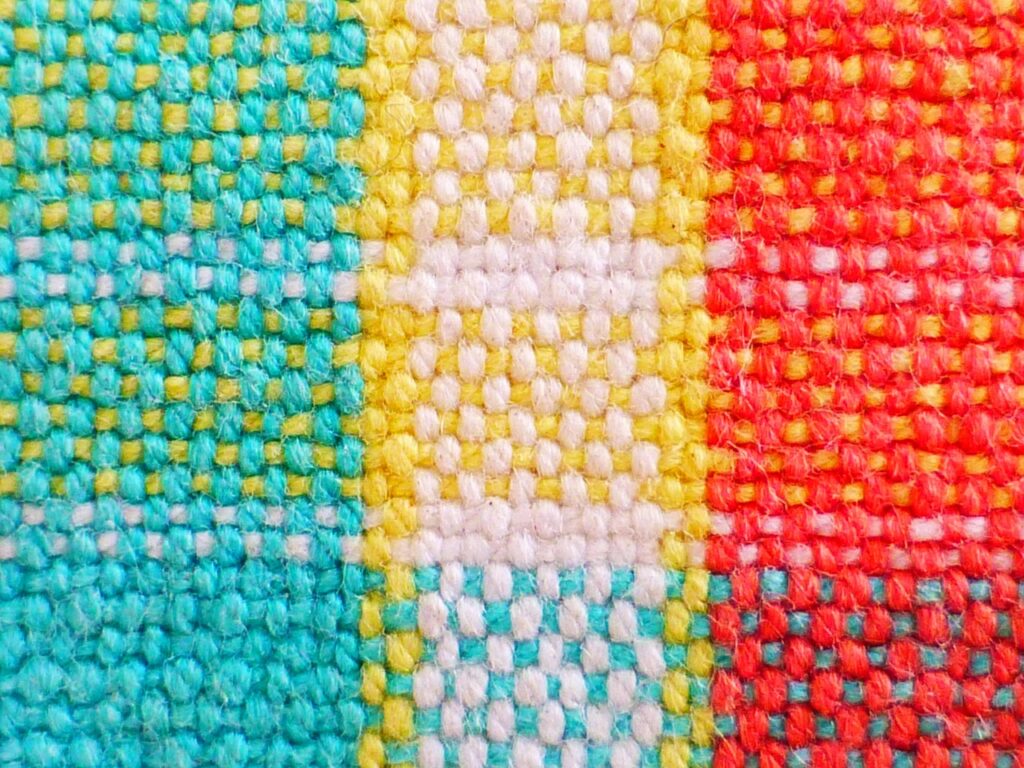
Woven geotextile fabric is a permeable textile used with soil, aggregate, rock, and other geosynthetics to improve the performance of civil engineering systems. Its role is not simply to add a fabric layer. It is specified to perform defined functions such as separation, stabilization, reinforcement support, filtration, and, in some designs, erosion control. In road bases, it helps prevent soft subgrade soil from contaminating aggregate. In drainage works, a suitable woven structure can pass water while limiting soil migration. In embankments and working platforms, tensile capacity can help distribute loads and reduce deformation when the overall design supports that function.
Function should drive the specification. A woven geotextile fabric should be selected for the soil, water, load, and construction conditions of the site, not by roll color, weight, or a broad product label. Public guidance from transportation agencies and standards bodies commonly classifies geotextiles by function because a fabric that works well as a separator may not be a reliable filter, and a high-strength woven product can still underperform if installation damage, clogging risk, or overlap details are not addressed.
Where woven geotextiles fit in civil engineering applications
Woven geotextiles are part of the wider geosynthetics category. They are made by interlacing yarns, tapes, or filaments into a stable textile structure. Compared with many nonwoven fabrics, woven types are often associated with higher tensile strength at lower elongation, thinner profiles, and more controlled openings. These characteristics explain why they are frequently considered for transportation, earthwork, hydraulic, and temporary works. For more application-focused textile topics, see the Huashi Digital applications section.
Road separation and base stabilization
One of the most common uses is placement between a weak subgrade and an aggregate base in paved roads, unpaved roads, haul roads, parking areas, airfields, and construction access routes. Without a separator, fine-grained subgrade soil can pump upward into the aggregate under traffic and moisture cycles, while aggregate can be pushed downward into soft soil. This can reduce effective base thickness, increase rutting, and weaken structural support.
A woven separator helps maintain the integrity of the aggregate layer. Where stabilization is also required, the fabric may contribute tensile resistance and help confine aggregate under load. It still does not replace pavement design. Subgrade strength, drainage, aggregate gradation, traffic loading, and construction quality remain central to long-term performance.
Drainage and filtration layers
Woven geotextiles can serve as filters when their apparent opening size, permeability, and clogging resistance are matched to the surrounding soil. In edge drains, underdrains, retaining wall drainage zones, and aggregate drainage layers, the objective is to allow water movement while preventing excessive migration of soil particles. U.S. highway guidance commonly treats filtration as a balance between soil retention and hydraulic flow.
This is also where specification errors often appear. A tightly woven slit-film fabric may be strong, but it may not provide enough hydraulic performance for some filtration applications. Conversely, an open woven monofilament fabric may offer better water flow, but it still has to meet retention and survivability requirements. Soil gradation and hydraulic gradient should guide the filter decision.
Erosion control and shoreline protection
Woven geotextiles are often used below riprap, gabions, revetments, and other armor systems. In these applications, the fabric separates soil from the stone layer and helps limit soil loss caused by wave action, flowing water, or rainfall runoff. The fabric is not the erosion control system by itself; it works with stone sizing, slope geometry, anchorage, and drainage relief.
For hydraulic applications, strength alone is not enough. Opening size, permeability, ultraviolet exposure during installation, puncture resistance from angular stone, and seam or overlap stability all affect performance. If the fabric clogs or tears, the armor layer can lose support even when the surface stone remains in place.
Reinforced slopes, embankments, and working platforms
Some woven geotextiles are used in reinforced soil structures, embankment foundations, and temporary working platforms over soft ground. Their contribution comes from tensile resistance and interaction with soil or aggregate. In some projects, geogrids or composite systems may be more appropriate, but high-strength woven geotextiles can be useful where both separation and reinforcement functions are required.
These applications require engineering checks beyond ordinary separation. Designers may need to consider tensile strength, strain compatibility, creep behavior, junction or seam performance, soil interaction, construction sequence, and long-term durability. A fabric chosen for a driveway or simple separator should not be assumed suitable for reinforced earth applications.
Why the woven structure matters
The word “woven” describes the manufacturing structure, not a single performance class. Woven geotextile fabric may be produced from polypropylene or polyester yarns, tapes, or monofilaments. Each construction creates different mechanical and hydraulic properties.
- Slit-film woven fabrics are commonly used for separation and stabilization where tensile strength and survivability are important, but filtration performance must be checked carefully.
- Monofilament woven fabrics tend to have more regular openings and can be suitable for certain filtration and drainage applications when matched to the soil.
- High-strength woven fabrics are designed for reinforcement-related applications where tensile capacity and long-term behavior are central design considerations.
- Composite systems may combine geotextiles with geogrids, geonets, geomembranes, or geosynthetic clay liners when one layer cannot perform all required functions.
Because two rolls can look similar, specifications should be based on tested properties. Relevant properties may include grab tensile strength, wide-width tensile strength, puncture resistance, permittivity, apparent opening size, ultraviolet resistance, mass per unit area, and seam strength. Not every project needs every test, but the required properties should match the intended function.
Woven vs nonwoven geotextile fabric
Many buyers and engineers compare woven and nonwoven fabrics because both are used in civil construction. The better choice depends on the function. Woven fabric is often preferred when tensile strength and dimensional stability are priorities. Nonwoven fabric is often preferred when cushioning, in-plane drainage, or filtration around irregular surfaces is more important. This comparison is a starting point, not a substitute for a project specification.
| Factor | Woven geotextile fabric | Nonwoven geotextile fabric |
|---|---|---|
| Typical structure | Interlaced yarns, tapes, or filaments | Fibers bonded by needle punching, heat, or chemical methods |
| Common strengths | High tensile strength, low elongation, stable separation layer | Good conformability, cushioning, filtration, and drainage capacity |
| Common applications | Road separation, subgrade stabilization, embankments, erosion control under armor | Drainage trenches, protection layers, filtration zones, geomembrane cushioning |
| Key caution | Some woven types are not ideal filters for fine soils or high-flow drainage | Lower tensile stiffness may not suit reinforcement-focused designs |
In practical terms, the question is not “Which fabric is better?” The better question is “Which fabric performs the required function under the expected soil, water, load, and installation conditions?”
Selection criteria engineers usually check
Public specifications such as AASHTO M 288 and terminology standards such as ASTM D4439 are often used as reference points in geotextile discussions. They reinforce a basic principle: define the application first, then select properties that support that application. A responsible specification normally considers the following criteria. See also: Coatings.
- Primary function: Determine whether the fabric is mainly for separation, stabilization, filtration, drainage support, reinforcement, erosion control, or a combination of functions.
- Soil conditions: Check gradation, plasticity, moisture sensitivity, subgrade strength, and risk of pumping or clogging.
- Hydraulic requirements: For filter applications, evaluate water flow direction, hydraulic gradient, apparent opening size, permittivity, and long-term clogging risk.
- Mechanical survivability: Consider aggregate size, angularity, compaction equipment, drop height, construction traffic, puncture resistance, and tear resistance.
- Durability: Review polymer type, chemical exposure, biological exposure, ultraviolet exposure before cover, and expected design life.
- Installation details: Specify overlaps, seams where needed, anchoring, wrinkles, cover thickness, and protection from damage.
- Quality documentation: Use test data, manufacturing tolerances, roll identification, and project acceptance criteria rather than visual judgment alone.
For small projects, these checks may be brief. For highways, landfills, hydraulic works, and reinforced soil structures, they may require formal engineering calculations and project-specific testing.
Installation details that affect performance
Even a correctly specified woven geotextile can underperform if it is installed poorly. The fabric should usually be placed on a prepared surface free from large protrusions, sharp debris, deep ruts, or standing water that conflicts with the design. Wrinkles should be minimized because they can create weak zones or uneven aggregate thickness.
Overlaps must be large enough for the subgrade condition and construction method. Soft, wet subgrades often require more conservative handling because traffic can shift the fabric before aggregate cover is placed. Where seams are used instead of overlaps, seam strength and installation quality become part of system performance.
Aggregate should normally be placed in a way that avoids dragging or tearing the fabric. Equipment should not travel directly on the exposed geotextile unless the specification permits it. Cover material should be pushed out carefully, and compaction should proceed in lifts that protect the fabric from puncture or displacement. On slopes and hydraulic works, anchorage at the crest, toe, and edges can be as important as the fabric properties themselves.
Common mistakes in woven geotextile specifications
Several recurring mistakes reduce the value of woven geotextiles in the field. The first is specifying by weight alone. Mass per unit area may help with identification, but it does not define filtration behavior, tensile stiffness, puncture resistance, or durability by itself.
The second mistake is treating all woven fabrics as filters. Some woven products are excellent separators but may have low water flow capacity or openings that are not suited to the soil. Filter design should consider both retention and permeability. If the fabric blocks water or allows excessive soil loss, the system can fail even if the fabric remains intact.
The third mistake is substituting woven and nonwoven fabrics without reviewing the intended function. A woven fabric selected for road stabilization may not replace a nonwoven cushion layer above a geomembrane. A nonwoven drainage fabric may not replace a high-strength woven reinforcement layer. Substitution should be based on tested properties and design intent.
The fourth mistake is ignoring construction damage. Angular aggregate, heavy compaction, turning trucks, and exposed storage can damage a fabric before the project is complete. Survivability requirements exist because the installed material must still perform after placement, not only in a laboratory test.
Frequently asked questions
Is woven geotextile fabric waterproof?
No. Geotextiles are generally permeable materials. A woven geotextile fabric may slow or control water movement depending on its structure, but it is not a waterproof barrier. When containment or seepage control is required, designers usually consider geomembranes, geosynthetic clay liners, or composite systems.
Can woven geotextile fabric be used under gravel?
Yes, it is commonly used under aggregate layers to separate gravel from subgrade soil and reduce contamination of the base. The project still needs proper grading, drainage, aggregate thickness, and overlap details. Fabric alone cannot correct severe drainage problems or inadequate base design.
Is woven or nonwoven fabric better for a French drain?
Many French drain applications favor nonwoven geotextiles because they conform well around stone and often provide good filtration and flow characteristics. However, some woven monofilament fabrics may be suitable when matched to the soil and hydraulic conditions. The decision should be based on filter criteria, not on fabric type alone.
How long does woven geotextile fabric last underground?
Service life depends on polymer type, exposure conditions, installation damage, chemical environment, loading, and whether the fabric is protected from sunlight after installation. Polypropylene and polyester geotextiles are widely used because they can be durable in buried civil engineering applications, but project specifications should define the required durability and testing basis.
Does woven geotextile fabric replace geogrid?
Not automatically. Woven geotextile fabric and geogrid can both contribute to stabilization or reinforcement, but they interact with soil and aggregate differently. Geogrids are often selected for interlock with aggregate, while woven geotextiles can combine separation with tensile resistance. Some designs use one, the other, or a composite approach depending on performance requirements.