Poly fleece fabric explained for apparel, blankets, and sourcing
What poly fleece fabric is
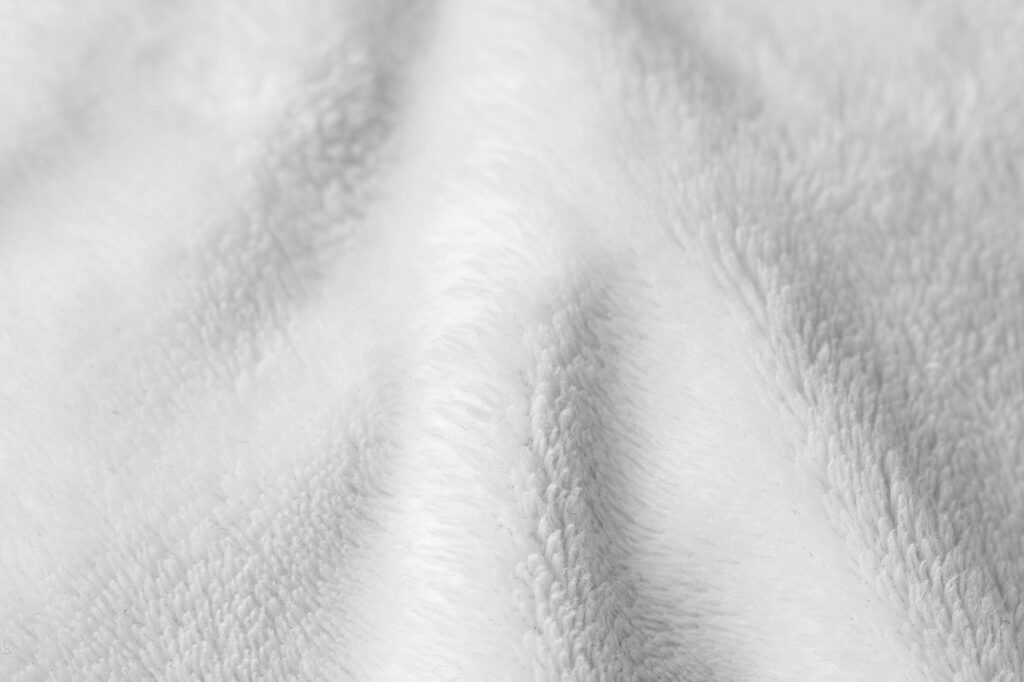
Poly fleece fabric is a soft, napped knit made wholly or mainly from polyester. Rather than depending only on heavy yarns for warmth, it uses a brushed or raised surface to hold still air close to the body. That combination explains its use in hoodies, jackets, linings, blankets, throws, robes, pet products, and outdoor mid-layers. It is usually lighter and faster drying than many cotton-rich fleece fabrics, but it is not automatically waterproof, windproof, pill-resistant, or low-shedding. The right specification depends on construction, GSM, pile height, yarn type, finishing, testing, and intended end use. For more fabric guides, visit the Materials section.
In textile sourcing, “poly” normally means polyester, while “fleece” refers to the soft raised surface, not sheep wool. A typical poly fleece starts with a knitted base, often made on circular knitting equipment. The fabric is then brushed, napped, sheared, and sometimes polished or anti-pill finished. Brushing lifts fibers from the yarns to form a fluffy nap; shearing makes that surface more even. Depending on the design, one side may be brushed for sweatshirt fleece, or both sides may be brushed for polar fleece and blanket fleece.
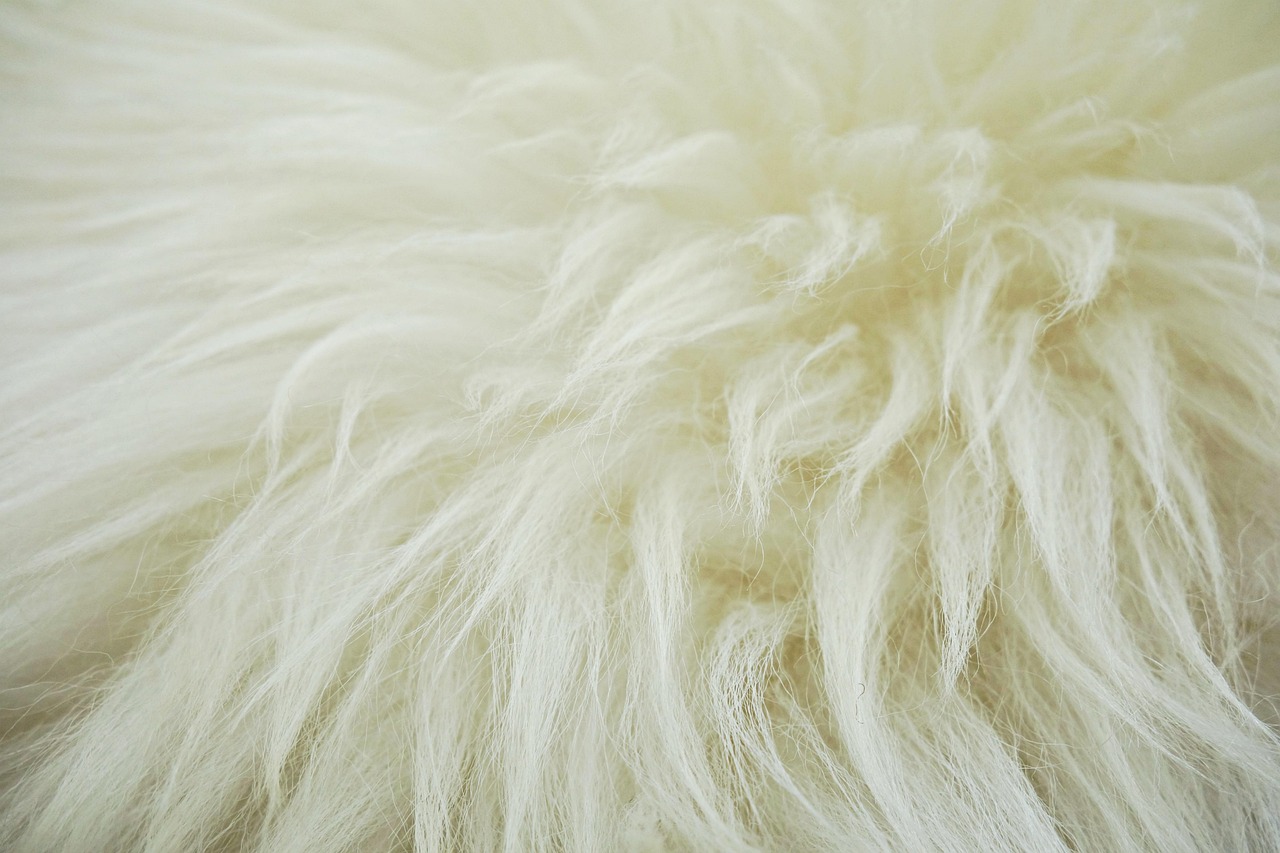
The raised surface is more than a hand-feel feature. U.S. Consumer Product Safety Commission guidance identifies fleece as an example of a raised-surface fabric because it has an intentionally raised fiber or yarn surface, such as pile, nap, or tuft. For apparel buyers, that distinction matters because exposed raised surfaces can affect flammability evaluation, linting, pilling, and fabric behavior during cutting, sewing, washing, and wear.
How poly fleece fabric is made
The production route is straightforward in principle but sensitive in execution. Polyester yarns are knitted into a stable base fabric. The fabric may be piece dyed, printed, or made from solution-dyed yarn, depending on color and performance requirements. After knitting and dyeing, mechanical finishing creates the fleece character. Raising or napping machines pull fibers outward from the fabric surface. Shearing trims the nap to a controlled height. Additional finishing may include anti-pilling treatment, softening, heat setting, moisture-management chemistry, embossing, bonding, lamination, or one-side brushing.
Each step changes performance. A dense knit base can improve durability and dimensional stability, although it may reduce air permeability. A taller pile gives a plusher hand and traps more air, but it can increase bulk and may shed more loose fibers if not properly stabilized. Aggressive brushing creates a softer surface, yet it can weaken yarn integrity when process control is poor. Heat setting helps control shrinkage and curling, especially when elastane or mechanical stretch is involved.
Fabric inspection should go beyond first touch. A roll that feels soft in a showroom may still perform poorly after washing if the nap mats, the face pills, the shade migrates, or the fabric loses width. For commercial programs, sample yardage should be washed, tumble dried where relevant, rubbed, stretched, and sewn before bulk approval.
Key properties and limitations
Warmth-to-weight
Poly fleece is widely used because it can feel warm without the weight of dense woven wool or cotton sweatshirt fabric. Its raised surface traps small pockets of air, which improves perceived insulation. GSM still matters, but it is not the only measure of warmth. Two 240 gsm fleece fabrics can feel very different if one has a compact low pile and the other has a lofty, dense nap. Knit structure, yarn fineness, brushing depth, and pile recovery all influence warmth.
Moisture behavior
Polyester is hydrophobic compared with absorbent fibers such as cotton. In practice, poly fleece generally absorbs little water into the fiber itself and dries relatively quickly after washing or light moisture exposure. This is one reason it is widely used in activewear layers and travel blankets. The limitation is that untreated polyester does not automatically move sweat away from the skin efficiently. Wicking finishes, channelled constructions, or grid fleece structures may be needed for high-output sports use.
Breathability and wind resistance
Standard fleece can be breathable because it is knitted and porous, but that same structure allows wind to pass through. A basic polar fleece pullover may feel warm indoors and cold in strong wind. For outerwear, mills and brands often pair fleece with a woven shell, a membrane, a bonded face, or a wind-resistant construction. The trade-off is that added wind resistance can reduce breathability and change drape.
Pilling, shedding, and appearance retention
Pilling occurs when loose fibers entangle into small balls on the surface. Fleece is exposed to this risk because its comfort depends on lifted fibers. Anti-pilling finishes, filament yarn choices, tighter knitting, controlled shearing, and proper heat setting can reduce the problem, but no finish makes a brushed surface indestructible. Brushed polyester also deserves attention for microfiber shedding. A 2021 PLOS ONE study on domestic laundry found that microfiber release varied widely by fabric type, construction, treatment, and washing conditions; mechanically treated polyester samples, including fleece and jersey, were among the higher-shedding groups in that study.
Common types of poly fleece fabric
| Type | Typical weight band | Common uses | Buyer notes |
|---|---|---|---|
| Microfleece | About 100–170 gsm | Light linings, base layers, baby blankets, travel accessories | Soft and light, but less insulating in windy or very cold conditions. |
| Midweight polar fleece | About 180–260 gsm | Jackets, pullovers, hoodies, throws, robes | A balanced option for warmth, cost, and bulk; check pilling after wash. |
| Heavy polar fleece | About 280–350 gsm | Blankets, winter jackets, workwear linings, outdoor accessories | Warmer and bulkier; cutting and seam thickness need attention. |
| Brushed-back fleece | About 240–350 gsm | Sweatshirts, joggers, hoodies | May be polyester, cotton-poly, or cotton-rich; outer face is often smoother for printing. |
| Sherpa or high-pile fleece | Often 280 gsm and above | Lining, blankets, collars, cozy outerwear | Very plush, but bulk, matting, and pile direction must be controlled. |
| Bonded fleece | Varies by layer package | Softshells, jackets, structured accessories | Evaluate peel strength, hand feel, breathability, and wash durability. |
These weight bands are practical industry ranges rather than universal standards. Mills may use different names for similar constructions, and the same term can vary by market. “Polar fleece,” “anti-pill fleece,” “coral fleece,” “sherpa fleece,” and “flannel fleece” are common commercial names, but buyers should still request the physical specification rather than rely on a sales term.
How to evaluate specifications before buying
A reliable fleece specification should include more than color and GSM. Start with fiber content: 100% polyester, recycled polyester, polyester-spandex, polyester-rayon, and cotton-poly blends will not behave the same. If recycled polyester is claimed, buyers should ask whether the source is pre-consumer, post-consumer bottle flake, or textile-to-textile feedstock, and whether chain-of-custody certification is required.
Global fiber data explains why this matters. Textile Exchange’s Materials Market Report 2025, using 2024 production data, stated that polyester remained the most widely produced fiber, making up 59% of total global fiber output. The same report said recycled polyester production increased from about 8.9 million tonnes in 2023 to about 9.3 million tonnes in 2024, but its market share slipped from 12.5% to 12% because virgin polyester grew faster. For sourcing teams, the practical conclusion is that recycled content claims still need documentation; availability alone is not proof.
Next, review construction and finishing. Important fields include GSM tolerance, usable width, knit type, yarn count or denier, pile height, one-side or two-side brushing, shearing level, anti-pilling method, stretch and recovery, dimensional change after washing, colorfastness to washing and rubbing, seam slippage or bursting strength where relevant, and fabric skew or bow. For printed fleece, add print method, color yield, crocking, and heat sensitivity. For sublimation, white or light 100% polyester fleece is usually the easiest base, but pile depth can soften image sharpness.
Testing expectations should match the product. A baby blanket, a reversible hoodie, a pet bed, and an outdoor mid-layer do not need the same test package. OEKO-TEX STANDARD 100, for example, is widely used for textiles tested for harmful substances and applies different product classes based on skin contact and use. That type of certification can support chemical safety screening, but it does not by itself prove warmth, pilling resistance, recycled content, or fitness for a specific garment design. See also: Applications.
Applications and design considerations
For hoodies and sweatshirts, brushed-back fleece is often chosen because the outside can remain smoother for screen printing, heat transfer, embroidery, or garment washing, while the inside feels warm and soft. Cotton-poly versions can offer a more natural touch and better moisture absorption. All-polyester versions dry faster and may suit sublimation or lightweight performance styles.
For blankets and throws, double-sided polar fleece is common because both surfaces are soft and the fabric can be cut and sewn efficiently. Edges may be hemmed, bound, overlocked, or blanket-stitched. Buyers should watch for shade consistency across rolls, pile direction, edge curling, and lint after the first wash. A plush first touch helps sell the product, but long-term softness after laundering is usually more important for repeat consumer use.
For jackets and outdoor layers, fleece is often used as a mid-layer rather than a stand-alone weather shell. It provides insulation and comfort, but normally needs a woven shell, coating, or laminated layer for rain or wind protection. Grid fleece and microfleece can reduce bulk under a shell, while high-pile fleece gives a fashion-driven cozy look. In all cases, pattern makers should allow for stretch direction, pile direction, seam thickness, zipper compatibility, and heat exposure during decoration.
For lining, poly fleece can add perceived warmth and softness to casual outerwear, gloves, hats, footwear, bags, and pet products. The main challenges are bulk at seams, lint migration, and friction against the wearer’s inner layers. A smoother tricot, mesh, or taffeta lining may be better when easy on-off movement is more important than a plush hand.
Sustainability and care factors
Poly fleece is durable, easy care, and accessible, but it is still a synthetic textile usually linked to fossil-based polyester unless verified recycled or alternative feedstock is used. The 2025 Textile Exchange data shows that recycled polyester volume is growing, yet bottle-based recycled polyester still dominates and textile-to-textile recycling remains limited. That makes design durability, lower-shedding construction, repairability, and longer use important parts of responsible material selection.
Care instructions can reduce damage during use. Washing fleece inside out, using cooler water, avoiding overloaded machines, limiting harsh abrasion, and drying at appropriate temperatures can help preserve the nap. High heat should be avoided because polyester can soften, deform, glaze, or melt under excessive temperature. Fabric softeners may change hand feel and moisture behavior, so they should be tested before being recommended for a finished product.
For suppliers and buyers, the most useful sustainability conversation is specific rather than promotional. Ask what percentage is recycled, what certification supports the claim, how the fabric performs after repeated washing, whether shedding has been assessed, and how defects are controlled in bulk production. A lower-quality fleece that pills quickly or is discarded early may not be preferable simply because it contains recycled feedstock.
Frequently asked questions
Is poly fleece fabric the same as polar fleece?
Not exactly. Poly fleece is a broad term for polyester-based fleece fabrics. Polar fleece is a common type, usually a brushed polyester fleece with a soft pile on one or both sides. All polar fleece is usually poly fleece, but not all poly fleece is sold as polar fleece.
Is poly fleece fabric waterproof?
Standard poly fleece is not waterproof. Polyester fibers absorb little water, so the fabric can dry quickly, but the knitted structure and raised pile allow water and wind to pass through. Waterproof or wind-resistant performance requires an added membrane, coating, bonded layer, or shell fabric.
What GSM is best for a fleece blanket or hoodie?
For lightweight linings, 100–170 gsm microfleece may be enough. For general hoodies and throws, 180–280 gsm is common. For heavier winter blankets or jacket linings, 280–350 gsm or more may be used. GSM should be judged together with pile density, recovery, pilling performance, and wash stability.
Does recycled polyester fleece perform differently?
It can perform similarly to virgin polyester when yarn quality, spinning, knitting, dyeing, and finishing are well controlled. However, performance should be verified by testing rather than assumed from the recycled claim. Shade, strength, pilling, hand feel, and dimensional stability can vary by supplier and feedstock.
How should buyers choose poly fleece fabric?
Start with the end use, then define weight, hand feel, stretch, brushing style, color, certification needs, and test standards. Approve lab dips and pre-production samples only after wash, pilling, colorfastness, shrinkage, and sewing trials. The best fabric is the one that matches the product’s use case, not simply the softest or heaviest option.