Polyester yarn guide for textile sourcing and material selection
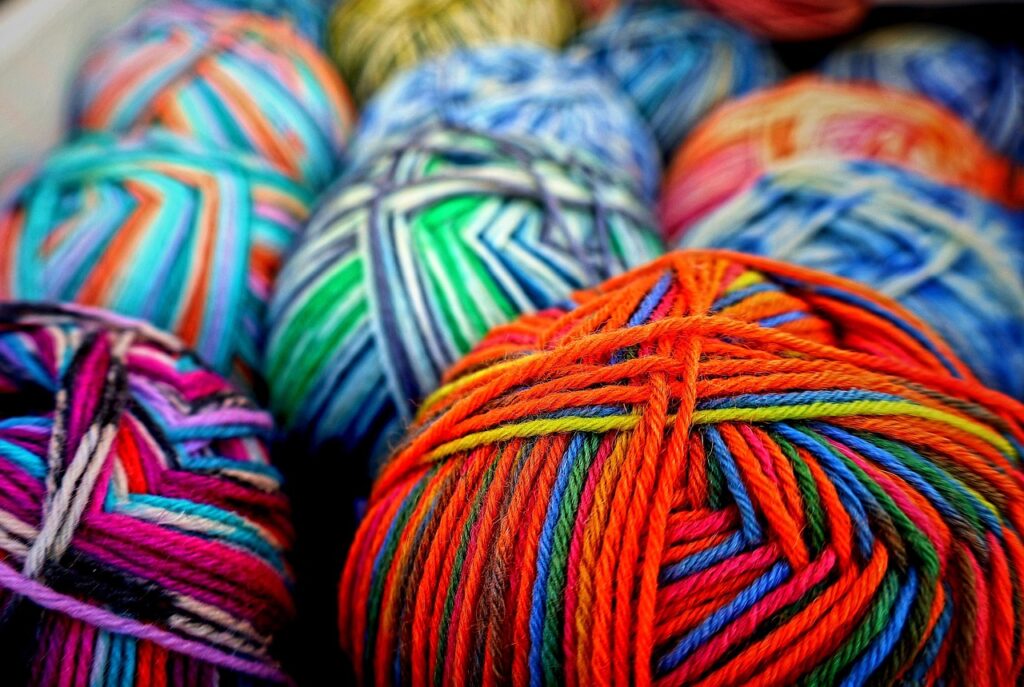
What polyester yarn means in textile sourcing
In textile sourcing, polyester yarn refers to yarn made from polyester polymer, most commonly PET, and used in knitted, woven, nonwoven and technical fabrics. The key point for buyers is that polyester yarn is not a single, uniform material. A smooth FDY for lining fabric, a crimped DTY for sportswear, a spun polyester yarn for cotton-like blends and a high-tenacity industrial yarn can perform very differently in production and in the finished textile.
Most buyers searching for polyester yarn are trying to answer practical questions: which yarn type fits the target fabric, which specifications affect production, how recycled polyester should be verified and what limitations need to be considered. This guide focuses on those sourcing decisions rather than promoting any single supplier. For broader material notes, visit the Materials section.
Main types of polyester yarn
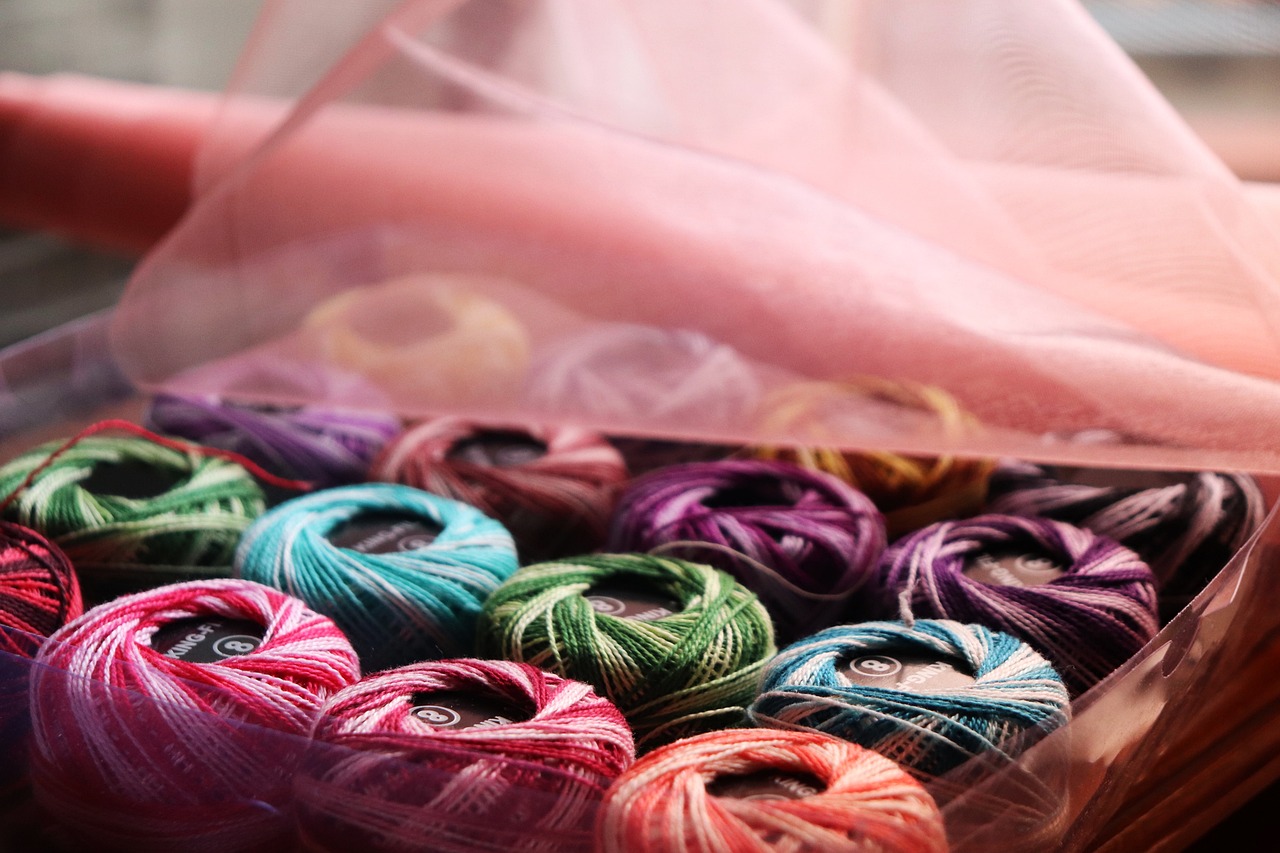
The first sourcing decision is whether the fabric needs continuous filament polyester, staple-spun polyester or a specialty construction. The yarn name on a quotation often indicates the processing route, surface character and likely fabric behavior.
| Yarn type | What it means | Typical fabric effect |
|---|---|---|
| POY | Partially oriented yarn, usually an intermediate filament yarn used as feedstock for texturing | Not usually the final yarn for fabric; important for DTY quality |
| FDY | Fully drawn yarn produced with drawing during spinning | Smoother, flatter, more lustrous fabric surface with good dimensional stability |
| DTY | Draw textured yarn made by drawing and texturing POY | Bulk, stretch, softer hand and better coverage in knits |
| ATY | Air textured yarn made with air-jet loops and entanglement | Spun-like texture, fuller hand and lower shine than flat filament |
| Spun polyester | Staple polyester fibers twisted into yarn | Cotton-like appearance, blend compatibility and softer fuzzier surface |
| Monofilament | A single continuous filament | Used where stiffness, openness or technical structure is required |
FDY and DTY are often compared because both can be used directly in fabrics. FDY tends to suit smooth woven fabrics, linings, ribbons and textiles that need sheen or clean definition. DTY is commonly selected for knitted apparel, fleece bases, stretch-like comfort without elastane and fabrics that need bulk or opacity. ATY can be useful when a filament yarn needs a more cotton-like or wool-like surface without using staple spinning.
Why polyester remains widely used
Polyester is widely used because it offers a practical balance of strength, dimensional stability, abrasion resistance, quick drying and cost efficiency. It also blends well with cotton, viscose, wool, elastane and other fibers, allowing mills to adjust hand feel, recovery, price and care performance. In apparel, polyester appears in sportswear, fleece, linings, dresses, uniforms and sewing thread. In home textiles, it is used in curtains, upholstery, bedding blends, fillings and decorative fabrics. In industrial textiles, polyester yarns are used where strength and resistance to stretching or moisture are important.
The scale of use is reflected in Textile Exchange data. In its 2025 Materials Market Report, Textile Exchange reported that global fiber production increased from about 125 million tonnes in 2023 to 132 million tonnes in 2024. The same report stated that polyester remained the most produced fiber, making up 59% of global fiber output, or about 78 million tonnes in 2024. For buyers, those figures explain why polyester is a central material in textile supply chains rather than a niche alternative.
Polyester still has limits. It is hydrophobic, so moisture management usually depends on yarn geometry, fabric structure and finishing rather than fiber absorbency. It is thermoplastic, so heat setting, ironing, calendaring and molding conditions need controlled parameters. It can generate static, and some constructions may pill if fiber length, yarn twist, fabric density or finishing are poorly matched. Polyester should therefore be evaluated against the end use, not treated as a performance guarantee based on fiber name alone.
Key specifications to compare before sampling
A useful polyester yarn specification should cover more than count and price. The same nominal denier can give different fabric results if filament count, luster, intermingling, shrinkage or finish differs. Before sampling, compare the details below.
| Specification | Why it matters | What to ask for |
|---|---|---|
| Linear density | Controls yarn thickness, fabric weight and cover | Denier, dtex, tex or count system used consistently |
| Filament count | Affects softness, opacity, drape and microfiber risk | Example format such as 75D/72F or 150D/144F |
| Luster | Changes appearance and dye visual depth | Bright, semi-dull, full-dull or cationic variants if applicable |
| Tenacity and elongation | Influence weaving, knitting, sewing and end-use strength | Test values and method, commonly aligned with ISO 2062 for yarn tensile testing |
| Shrinkage | Affects heat setting, dyeing and garment dimensions | Boiling water shrinkage or dry heat shrinkage test conditions |
| Intermingling or twist | Impacts yarn cohesion, loom performance and surface texture | Intermingling level, twist direction and twist per meter where relevant |
| Finish or oil pickup | Influences friction, static, knitting performance and downstream finishing | Finish type, oil percentage and compatibility with dyeing or coating |
| Lot control | Reduces shade bands and performance variation | Lot number, package weight, cone type and recommended storage |
ISO 2062:2009 specifies methods for determining breaking force and elongation at break of yarns from packages using constant-rate-of-extension testing. ASTM D1907 covers determination of yarn linear density by the skein method. These standards do not replace internal mill testing, but they give buyers and suppliers a shared technical reference when questions arise over yarn strength, count or consistency.
Sampling should also match the actual process route. A yarn that runs well in circular knitting may not perform the same way in high-speed weaving. A yarn selected for piece dyeing may behave differently from solution-dyed yarn. If the fabric will be brushed, raised, pleated, coated or printed, yarn evaluation should include those downstream steps instead of stopping at greige fabric appearance.
Recycled polyester yarn and claim verification
Recycled polyester yarn is usually made from recycled PET, often from post-consumer bottles, although textile-to-textile polyester recycling is developing. The main sourcing issue is that recycled content and circularity are not the same claim. A yarn can contain recycled PET and still come mainly from bottle feedstock rather than old textiles.
Textile Exchange reported that recycled polyester volume increased from about 8.9 million tonnes in 2023 to approximately 9.3 million tonnes in 2024, but its share of the polyester market declined slightly from 12.5% to 12% because virgin polyester grew faster. The same 2025 report stated that recycled polyester was still primarily made from plastic bottles, estimated at 98%, and that less than 1% of the global fiber market came from pre-consumer and post-consumer recycled textiles. For buyers, this means recycled polyester availability is real, while verified textile-to-textile circular supply remains limited.
Claims should be checked through documentation. Textile Exchange describes the Recycled Claim Standard and Global Recycled Standard as third-party certification systems for recycled materials and chain of custody. GRS also includes additional processing, chemical, environmental and social requirements compared with a recycled-content-only claim. In practical sourcing, ask whether the yarn has a valid scope certificate and whether the specific shipment can be supported by a transaction certificate or equivalent chain-of-custody document.
It is also important not to confuse different certifications. OEKO-TEX Standard 100 is a product safety standard for harmful substances and can apply from yarn to finished product. It is useful for chemical-residue assurance, but by itself it does not prove recycled content, lower carbon impact or textile-to-textile origin. A robust recycled polyester yarn specification separates fiber content, recycled-content verification, chemical safety testing and performance testing. See also: Applications.
Environmental and performance limits to consider
Polyester yarn decisions increasingly include environmental risk, especially microfiber shedding and end-of-life handling. The European Environment Agency has reported that synthetic textiles are estimated to discharge 0.2 to 0.5 million tonnes of microplastics into the oceans each year. It also cites research estimating that about 35% of microplastics released to oceans globally originate from washing synthetic textiles. These figures do not mean every polyester fabric sheds equally, but they show why construction and durability matter.
Yarn-level choices can influence shedding risk, although fabric construction and laundering conditions also play major roles. Lower-quality staple yarns with weak cohesion, loosely constructed brushed fabrics and poorly stabilized surfaces may shed more visibly than compact, well-set fabrics. Filament count, texturing intensity, twist, intermingling and finishing should be evaluated together with abrasion and wash testing. It is safer to specify measurable requirements than to use broad claims such as low-shed without a test method.
Coloration is another decision point. Conventional polyester commonly uses disperse dyeing, often at elevated temperature and pressure. Solution-dyed polyester, where pigment is added before extrusion, can reduce later dyeing steps and may improve certain colorfastness outcomes, but it limits shade flexibility and usually requires volume planning. Buyers should weigh color range, minimum order quantity, lead time, shade repeatability and finishing route before choosing solution-dyed yarn.
How to choose polyester yarn for fabric applications
The best polyester yarn choice depends on the fabric brief. For activewear knits, DTY is often preferred because it adds bulk, stretch recovery and opacity. For smooth linings or satin-like woven fabrics, FDY can provide a flatter surface and higher sheen. For fleece, brushed knits or soft casualwear, DTY or spun polyester may be used depending on the target hand feel and pilling standard. For sewing thread, embroidery and industrial stitching, tenacity, elongation control, heat resistance during high-speed sewing and lubricant finish become more important than fabric drape.
For home textiles, curtains and decorative fabrics may use FDY, DTY, ATY or blended spun yarn depending on drape, opacity, print definition and flame-retardant requirements. Upholstery needs closer attention to abrasion, pilling, colorfastness to light and dimensional stability. Bedding blends often use polyester to improve durability and drying speed, but comfort depends heavily on yarn fineness, fabric construction and finishing.
A practical selection process can follow five steps. First, define the end use and the fabric performance target, not just the fiber name. Second, choose the yarn family: FDY for smoothness, DTY for bulk, ATY for texture, spun polyester for staple-like hand or high-tenacity yarn for strength. Third, compare measurable specifications such as count, filament number, shrinkage, tenacity, elongation and finish. Fourth, request lab dips, greige fabric trials and after-finish testing from the same yarn lot where possible. Fifth, confirm claim documentation if the yarn is recycled, certified, solution-dyed, flame-retardant or marketed with any environmental statement.
Frequently asked questions
Is polyester yarn good for clothing?
Yes. Polyester yarn can be suitable for clothing when the yarn type and fabric construction match the end use. It is valued for durability, wrinkle resistance, quick drying and easy care. Comfort depends on fineness, texture, knit or weave structure, moisture-management design and finishing.
What is the difference between FDY and DTY polyester yarn?
FDY is a fully drawn filament yarn with a smoother, flatter character. DTY is draw textured yarn, usually made from POY, with crimp, bulk and stretch-like behavior. FDY is often selected for smooth woven surfaces, while DTY is widely used in knits and fuller fabrics.
Is recycled polyester yarn the same as virgin polyester yarn?
Recycled polyester yarn can be engineered to meet many of the same fabric requirements as virgin polyester, but buyers should verify tenacity, elongation, shade consistency, dyeing behavior and contamination control. Recycled content should be supported by chain-of-custody documentation rather than only a product description.
Does polyester yarn shrink?
Polyester generally has better dimensional stability than many natural fibers, but yarn and fabric can still shrink or change dimensions under heat, dyeing, finishing or laundering. Shrinkage testing should specify the method and conditions because results differ between boiling water, dry heat and finished-garment washing.
Is polyester yarn breathable?
Polyester fiber itself is hydrophobic, but breathability and moisture comfort are fabric-level properties. A lightweight open knit, microdenier yarn, capillary channel design or wicking finish can improve comfort, while dense fabrics or coatings may reduce air and moisture movement.