How to choose the best geotextile fabric for a gravel driveway
The short answer for most driveway projects
The best geotextile fabric for gravel driveway work is usually a woven polypropylene geotextile installed between the prepared soil subgrade and the aggregate base. Its main function is separation: it keeps gravel from sinking into the soil and helps prevent fines from pumping up into the stone. For a typical residential driveway over reasonably firm ground, a durable woven separation fabric is often the most practical choice.
Where the subgrade is soft, wet clay or silt, specify a higher-survivability woven geotextile and review the base design as a whole. In those conditions, more aggregate, geogrid or improved drainage may be needed; fabric alone should not be expected to carry the load. For drainage trenches or areas where filtration is the main requirement, a needle-punched nonwoven geotextile may be more suitable. Ordinary weed barrier is not a substitute for driveway geotextile.

What geotextile fabric actually does under gravel
A gravel driveway starts to fail when its layers stop working as separate layers. Vehicle loads push stone downward, fine soil moves upward, and water weakens the subgrade. Once the aggregate base is contaminated with clay, silt or organic soil, it loses drainage capacity and becomes more prone to rutting. A geotextile layer helps by forming a durable boundary between the soil and the aggregate.
Public roadway guidance from the Federal Highway Administration describes geotextile separators as layers that prevent intermixing between aggregate and subgrade while also meeting filtration and survivability requirements. The International Geosynthetics Society describes four related functions in unpaved roads: separation, reinforcement, stabilization and drainage. For driveways, separation is usually the first priority, because even a strong stone base performs poorly if it gradually disappears into soft soil.
Filtration is the next concern. The geotextile should allow water to pass while limiting the migration of soil particles. This is why apparent opening size, permittivity and permeability are more useful selection criteria than a simple fabric weight label. Stabilization and reinforcement become more important where the driveway crosses weak, saturated or seasonally soft ground. In those cases, the fabric may help reduce deformation, but performance still depends on aggregate thickness, compaction and drainage.
Woven, nonwoven, geogrid and landscape fabric compared
Geotextile fabric is often treated as one product category, but driveway performance depends on matching the material to the job it must do. The table below outlines the practical differences.
| Material | Best use under a gravel driveway | Key strengths | Limitations |
|---|---|---|---|
| Woven geotextile | Most residential gravel driveways and access lanes where separation and stabilization are needed | High tensile strength, good puncture resistance, keeps aggregate and soil apart | Must be matched to soil and water conditions; not a drainage system by itself |
| Needle-punched nonwoven geotextile | Drainage layers, French drains and wet areas where filtration is the main function | Good filtration and water movement through the fabric; conforms well to irregular surfaces | May stretch or deform more than woven fabric under wheel loads if not properly specified |
| Geogrid with geotextile | Soft subgrades, repeated rutting, heavier vehicles or long driveways with weak sections | Geogrid confines aggregate while geotextile prevents soil migration | Higher material and installation cost; still requires suitable aggregate thickness |
| Landscape weed fabric | Light decorative beds, not structural driveway bases | Low cost and easy to buy | Usually lacks the strength, puncture resistance and hydraulic properties needed below vehicle-loaded gravel |
The key distinction is that driveway fabric is a civil engineering separator, not just a weed-control sheet. Weed growth on a gravel driveway is often caused by windblown soil and organic matter collecting above the gravel, so a weak fabric under the base will not solve that problem. Structural performance starts at the soil-to-aggregate interface.
A practical selection checklist
Start with soil strength and water
Soil condition should drive the fabric choice. If the exposed subgrade is firm, drains reasonably well and does not rut deeply under construction traffic, a woven separation geotextile is usually enough. If the subgrade is clayey, silty, wet or seasonally weak, the project becomes more of a stabilization problem. FHWA roadway guidance commonly uses a California Bearing Ratio around 3 as a dividing line: firmer subgrades are often treated as separation applications, while softer, wetter subgrades require stabilization thinking.
For a homeowner or small contractor, field signs are often easier to use than lab values. If a pickup truck leaves shallow impressions but the surface stays intact, separation may be the main need. If tires create deep ruts, water stands in the excavation, or foot traffic pumps mud, choose a stronger fabric, increase base thickness, improve drainage and consider geogrid over the geotextile.
Match survivability to construction abuse
A fabric can have the right hydraulic concept and still fail if it tears during installation. AASHTO M 288 is widely used in highway work to classify geotextiles by application and survivability. For driveways, the practical lesson is straightforward: heavier construction equipment, sharper aggregate, softer subgrade and thinner initial cover all call for a tougher geotextile. Ask suppliers for grab strength, puncture resistance, tear strength, apparent opening size and permittivity rather than buying only by color or roll weight.
Do not buy by ounces or grams alone
Fabric weight can be a useful quick comparison within the same product family, but it does not fully describe performance. A woven geotextile and a nonwoven geotextile with similar mass per area can behave very differently because their fiber structures are different. A driveway specification should start with function: separation under vehicle loads, filtration against the site soil and survivability during placement of angular stone.
Recommended choices by driveway condition
There is no single fabric that is best for every gravel driveway. The right recommendation changes with the subgrade, traffic and drainage. Use this table as a decision guide before discussing exact product properties with a supplier or contractor.
| Driveway condition | Better fabric choice | Why it fits |
|---|---|---|
| Firm sandy or granular subgrade with normal cars and light trucks | Woven separation geotextile | Maintains the boundary between soil and aggregate without overcomplicating the section |
| Clay or silt subgrade with moderate seasonal moisture | Robust woven separation and stabilization geotextile | Reduces aggregate loss and helps control pumping of fines into the base |
| Soft wet spots, deep rutting or repeated delivery truck traffic | High-survivability woven geotextile, often combined with geogrid and thicker aggregate | Fabric provides separation while geogrid and aggregate thickness improve load distribution |
| Drainage trench beside or below the driveway | Needle-punched nonwoven filter fabric | Filtration and water movement are more important than tensile reinforcement |
| Decorative gravel over stable ground with little vehicle loading | Light geotextile may be acceptable, but not for structural sections | The risk is lower, but ordinary weed fabric should not be treated as a road-base separator |
If the driveway is long, steep, used by heavy vehicles or built over very weak soil, fabric selection should be part of a broader base design. The question is not only which geotextile to buy. It is also how much aggregate is needed, whether water has a reliable outlet, and whether the section needs geogrid, geocell, underdrain or subgrade improvement.
Installation details that matter as much as fabric type
Many driveway problems blamed on poor fabric are actually installation problems. Before placing fabric, remove loose organic material, roots, debris, sharp objects and large protruding rocks. Shape the subgrade so water does not sit in a flat bathtub under the gravel. A slight crown or cross-slope helps move water toward the edges, while ditches or edge drains may be needed where surrounding grades direct water into the driveway. See also: Coatings.
Place the geotextile smooth, taut and wrinkle-free. Federal lands highway specifications for geosynthetics require smooth placement, adequate overlap, avoidance of longitudinal overlaps under wheel paths, repair of torn or punctured areas and protection from excessive ultraviolet exposure before burial. In driveway work, those requirements translate into several practical rules:
- Overlap adjoining sheets generously, commonly around 24 inches for separation and stabilization work, and increase overlap on soft or uneven ground.
- Keep seams out of the main wheel paths when possible.
- Pin or temporarily weight the fabric so wind does not fold it during stone placement.
- Do not drive equipment directly on uncovered fabric.
- Place aggregate from the edge or from already covered areas, then spread it carefully.
- Maintain enough initial stone cover before construction vehicles run over the fabric; roadway specifications often use a 6-inch minimum lift as a practical reference.
- Patch tears with the same type of fabric and sufficient overlap before covering.
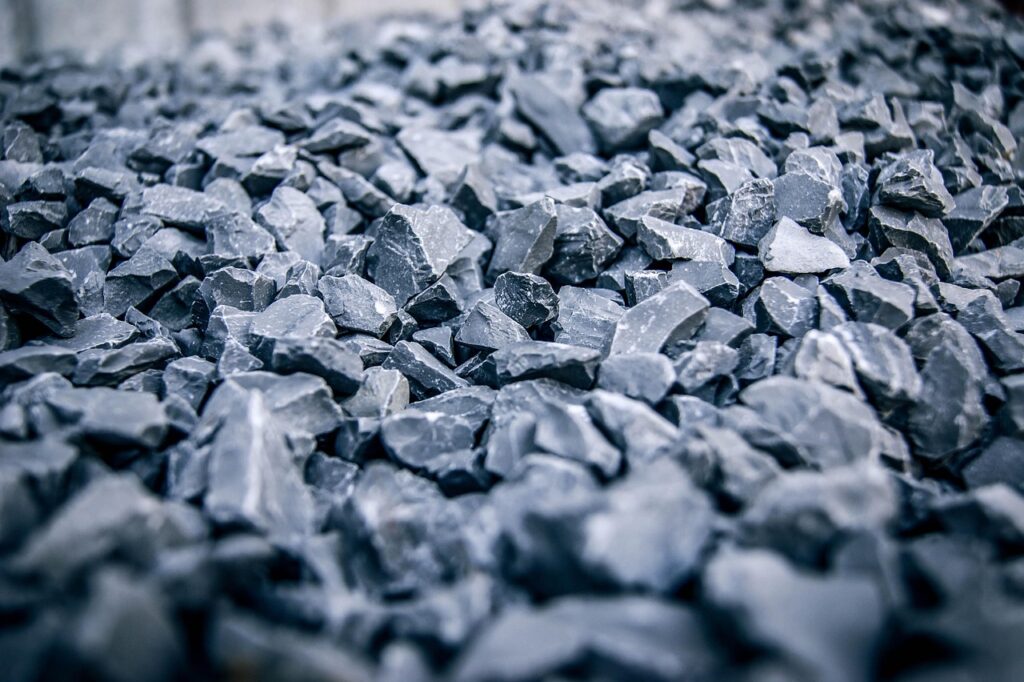
Aggregate choice also matters. Angular crushed stone locks together better than rounded gravel. A well-graded base material compacts into a stable platform, while a clean open-graded stone drains well but may require careful design so it does not move under tires. Many driveway sections use a compacted base course below a surface layer of smaller stone. The fabric belongs at the soil-to-aggregate interface, not near the surface where grading tools can snag it.
Where geotextile fabric will not solve the problem
Geotextile fabric is valuable, but it is not a cure for every gravel driveway failure. It will not replace adequate drainage, sufficient aggregate thickness or a stable outlet for water. If runoff from a roof, road or hillside flows directly into the driveway, fabric under the base will not prevent washouts. If the driveway is too thin, the fabric may become exposed during grading or snow removal. If the site contains very soft organic soil, deep mud or expansive clay movement, more detailed subgrade treatment may be required.
Geotextile also does not eliminate maintenance. Gravel driveways still need periodic grading, replenishment of surface stone, edge control and vegetation management. The right fabric can slow the loss of aggregate into the subgrade and help the base stay cleaner and more stable for longer.
Frequently asked questions
Is woven or nonwoven geotextile better for a gravel driveway?
For most vehicle-loaded gravel driveways, woven geotextile is the better starting point because separation and strength are the main needs. Nonwoven geotextile is often better for drainage and filtration details, such as wrapping a French drain or separating drainage stone from soil. On wet sites, both functions may be needed in different parts of the same driveway system.
Can I put geotextile fabric over an existing gravel driveway?
Sometimes, but it is usually better to place fabric at the soil-to-aggregate interface. If fabric is placed too close to the surface, grading, plowing or tire action can expose and tear it. For a failed driveway, the more reliable repair is often to excavate or regrade the weak section, expose a stable subgrade, place the fabric, then rebuild the aggregate base.
How much should geotextile overlap under a driveway?
For separation and stabilization work, a 24-inch overlap is a common conservative reference from roadway specifications. Softer soils, uneven subgrades and heavy construction traffic may justify more overlap or sewn seams. The key is to prevent sheets from pulling apart during stone placement and compaction.
Does geotextile fabric stop weeds in gravel?
Not by itself. A structural geotextile sits below the aggregate and helps separate soil from gravel. Weeds can still grow in dust, silt, leaves and organic matter that collect on top of the driveway. Good surface maintenance, proper gravel depth and keeping organic debris off the driveway are more important for weed control.
How deep should gravel be over geotextile fabric?
The required depth depends on soil strength and traffic. As a practical minimum during installation, keep enough aggregate over the fabric so equipment does not tear it; roadway specifications commonly refer to at least a 6-inch lift before operating equipment above geosynthetics. Soft ground or heavy vehicles generally need a thicker aggregate section.
Bottom line
For a typical residential driveway, choose a woven geotextile designed for separation and stabilization, install it directly above a prepared subgrade, overlap it properly and cover it with enough compacted angular aggregate. Use nonwoven geotextile where filtration and drainage are the main functions, and consider geogrid or thicker aggregate where the subgrade is soft or traffic is heavy. For more textile application insights, visit the Applications section.