
Industrial Coating Applications
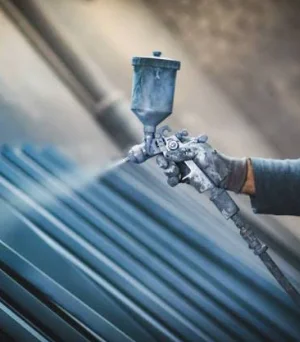
The term industrial coatings are primarily used to describe a wide range of paint and coating materials used to protect infrastructure and products from deterioration by corrosion, wear and environmental damage. While many coatings have a visual function, all industrial coatings are engineered materials designed to extend the life of the coated asset. This article provides an introduction to the materials and the main fields of application, and then goes on to look at the key performance factors for industrial coatings in oil and gas, marine, automotive and construction markets. As coatings evolve towards ever greater levels of sustainability, their performance is increasing as well, and a growing number of modern systems now also provide several functions.
What Are the Primary Functions of Industrial Coatings?
Industrial coatings are offered in a number of different products, each with their own variety of functions and protections offered to users in different industries. The industrial coating design is typically dependent on the ingredients found in the industrial coating, the surface to which the coating will be applied, and other environmental factors where the coating will be used.
Corrosion Protection
The primary function of industrial coatings is to prevent corrosion. Since steel structures of chemical plants as well as offshore platforms are exposed to moisture, to salt spray as well as to chemicals, the risk of corrosion is high and must be prevented by suitable protective systems. Most commonly, these are based on so-called zinc-rich primers as well as on epoxy-based top coats. In order to achieve long lasting corrosion protection in heavy industries such as the oil refining industry as well as in the shipping industry, multi-layer coating systems are the standard.
Abrasion and Wear Resistance
Parts and components used in manufacturing facilities and in mines are subject to friction and wear caused by moving parts and by abrasive materials. Parts coated with ceramic filled paints and with polyurethane paints have high abrasion resistance. Such coatings are used to line the inside of conveyor chute sections. Even after several years, the coating may show only a slight loss of material. This results in less down time for maintenance and an increase in the parts’ reliability.
Chemical and Thermal Resistance
Chemical plants require coatings that resist acids, alkalis, solvents, or extreme temperatures. Fluoropolymer-based coatings like PTFE or FEP are commonly used for tanks and pipelines because they maintain integrity under aggressive chemical exposure. Similarly, heat-resistant silicone coatings protect exhaust systems or furnaces operating above 400°C.
How Do Different Types of Industrial Coatings Compare?
The choice of coating system is generally related to the substrate, the environment to which it will be exposed and the desired lifespan of the coating. Each coating has its own particular advantages for different applications.
Epoxy Coatings
Epoxy coatings dominate industrial use due to their strong adhesion and chemical resistance. They cure into hard films suitable for steel structures, pipelines, or storage tanks. However, epoxies can chalk under UV exposure; hence they’re often top-coated with polyurethane for outdoor durability.
Polyurethane Coatings
Polyurethane coatings have a very good gloss retention and weatherfastness. As clear coatings for example in automotive production lines or as decorative coatings for aerospace components, they combine very good protection with color strength and appearance. Due to the good elastic recovery of the coatings they are also very resistant to substrate movement and thus to cracking.
Zinc-Rich Primers
The self sacrifying paint zincprimer corrodes first then the steel. The zincprimer is used in many bridgepainting jobs and in the offshore industry. In combination with epoxy-intermediates and polyurethane-topcoats very durable coating systems are produced with a service life of 20 years and more.
Where Are Industrial Coatings Most Commonly Applied?
Industrial coatings are applied in nearly every type of industry where metal and / or concrete are used and are exposed to harsher weather and operating conditions.
Oil and Gas Infrastructure
Pipes that are used for the transportation of crude oil and natural gas, on land as well as on sea, are coated on the inside with a pipe lining in order to prevent wear and to reduce friction. On the outside a pipe coating is applied in order to prevent corrosion of the soil. On offshore platforms, special multi-layer epoxy coatings are used that are reinforced with glass flakes. These coatings are impermeable and are able to withstand penetration of seawater.
Marine Vessels and Ports
To protect ships’ hulls from attachment by seawater biofouling, such as barnacles, hulls are covered with anti-fouling coatings. Most anti-fouling coatings contain a biocide that kills any attaching fouling. Some newer hull coatings are made with foul-release materials, typically made from silicone, which allow fouling to attach but be released with a minimum of force to prevent, such as with, decreased ship speed. These coatings, particularly those made with foul-release materials, also facilitate long periods of hull cleanliness and reduce fuel consumption due to decreased hull drag.
Construction and Heavy Equipment
Everything that is made of concrete such as bridges, silos, cranes and excavators are painted with protective coatings in order to protect them from UV-radiation and mechanical stress. Polyaspartic topcoats are becoming more and more popular as they can harden in a very short period of time, even at low temperatures. This makes them very suitable for field applications where a fast completion is desired.
How Is Surface Preparation Critical to Coating Performance?
The surface preparation prior to the application of a coating system will determine the strength of the adhesion to the substrate as well as the durability of the coating.
Abrasive Blasting Techniques
Abrasive blasting removes sand, rust, grease, paint, and other surface contaminants. The SSPC-SP10 Near-White Blast Cleaning standard describes a surface cleaned to near white in order to prime properly.
Chemical Cleaning Methods
For non-ferrous metals like aluminum or stainless steel, acid etching or solvent wiping ensures surface activation without mechanical damage. Proper cleaning eliminates oils that could interfere with coating bonding.
Surface Profile Measurement
After blasting, technicians evaluate the surface roughness profile by either using replica tape or digital gauges to verify that the surface profile is compatible with the coating manufacturer’s specifications, typically 50–100 microns for most epoxies.
How Are Environmental Regulations Influencing Industrial Coating Formulations?
The global market for formulations is changing as the world becomes more sustainable.
Reduction of Volatile Organic Compounds (VOCs)
There is now an increasing trend to use, on new applications, waterborne epoxies and high-solids polyurethanes, both of which comply with environmental legislation, such as EPA Rule 66, in the United States, while releasing far less VOCs into the air than traditional solvent-borne paints.
Use of Renewable Raw Materials
Makers are experimenting with bio-based resins such as those made from soybean oil and lignin byproducts from wood processing, in order to decrease the use of fossil resources without lowering mechanical performance compared to petrochemical-based materials.
Waste Minimization Practices
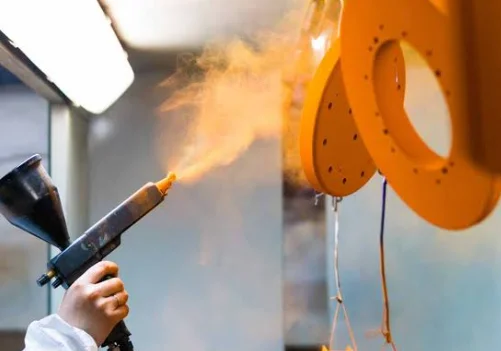
New methods of application for industrial painting, such as electrostatic spraying or plural-component mixing, enable a reduction of up to 30 % in terms of waste from overspray, increasing efficiency and also safety at work.
What Are the Emerging Technologies in Industrial Coatings?
There have been many advances in technology over the last few decades and as these have developed so the role of industrial coatings has also changed from simply being protective to numerous other applications.
Smart Self-Healing Systems
The microencapsulated healing agents within the polymer matrix are released in their entirety by mechanical damage to the matrix to autonomously heal microcracks. In this way the service life of a structure can be increased without the need for maintenance.
Nanocomposite Enhancements
Nanoparticles such as silica or graphene improve scratch resistance while maintaining thin-film transparency for specialized electronics housings or optical-grade equipment enclosures used in cleanroom environments.
Thermal Spray Metallization
For extreme wear parts such as aircraft turbine blades and hydraulic pistons, a number of thermal spray processes are used to apply metallic alloys, deposited by a plasma jet and forming a very hard wear resistant coating, much harder than paint.
FAQ
Q1: How long does an industrial coating last? A: Industrial coatings can last from 10 years up to 25 years and longer, prior to major refurbishment, depending upon severity of exposure and upon planned maintenance.
Q2. Can industrial coatings be applied over existing paint layers? A. Yes, only after proper inspection. Degraded paint layers must be removed because adhesion failure of new coatings typically originates from weak interfaces beneath new coatings.
Q3: How thick should an industrial coating be applied? A: Typical dry film thickness ranges from 150–500 microns depending on exposure category defined by ISO 12944 standards for corrosion protection levels C2 through C5-M environments.
Q4: Are waterborne coatings suitable for marine applications? A: Yes; modern waterborne epoxies meet stringent salt spray test criteria and can be coated in a controlled humidity environment to assure complete crosslinking.
Q5: What are the verification tests for coating performance? A: The standard test methods to verify coating performance are for example adhesion pull-off test (ASTM D4541), salt spray test for corrosion (ASTM B117), impact test (ASTM D2794), gloss retainion test (ASTM D523) and more. These tests are carried out in authorized test labs all over the world.