Surface Coating Selection Guide
Surface coating of materials is used for the purpose of protecting them against corrosion, wear and damage through environmental influences. For the selection of an appropriate coating, not only the type of substrate as well as the area of application have to be taken into consideration, but also the expected range of service. A decision on the basis of cost, service life and application capability is best made by using a technical comparison in conjunction with experience. This guide enables experts to carry out a comparison of coating systems in a structured manner.
What Are the Primary Factors Affecting Surface Coating Selection?
Selecting a surface coating is more than color – engineers must choose the correct coating to function over the lifetime of the coated part under varying environmental, chemical and mechanical stresses.
Substrate Material and Surface Preparation
Substrate is probably the biggest factor influencing adhesion strength as well as coating compatibility. Steel must be blast cleaned or phosphated in order to achieve appropriate levels of coating adhesion. Aluminum typically requires anodizing or chromate conversion prior to painting in order to provide a surface suitable for coating. Failure to adequately prepare the surface of items to be coated leads to premature coating failure regardless of the coating that was applied. An example of this type of problem in marine service is the development of blisters from tiny surface contaminants that cause problems in a matter of months.
Environmental Exposure Conditions
Performance of protective coatings can be affected by a number of external factors including temperature fluctuations, UV radiation, humidity and chemical vapors. Coatings for use on protective coating of offshore structures will be found to be different from those used for protecting machinery located indoors. Typically an epoxy coating would be found to perform well in chemical plant environments due to its resistance to attack from solvents and acids, however in exposed situations it can ‘chalk’ under sunlight unless covered with a polyurethane topcoat.
Desired Functional Properties
Performance goals determine formulation choice—abrasion resistance for mining tools, anti-fouling for ships, or electrical insulation for electronics. The required property often drives the decision between organic polymer coatings and inorganic ceramic or metallic layers.
How Do Different Types of Surface Coatings Compare?
Various types of coatings have different characteristics that stem from their makeup and from how they harden. Choosing a coating typically involves matching the advantages of a certain coating with the needs of the user, as no coating can possibly be the best solution for every task.
Organic Polymer Coatings
Epoxy coatings, Polyurethane coatings, Acrylic coatings and Alkyd coatings. They are flexible, are resistant to corrosion and form a film. Among these Epoxy coatings adhere well to metal surfaces but tend to turn yellowish due to UV light. On the other hand, Polyurethane coatings are able to retain their gloss for a longer time but cost more. In most industrial plants a dual-layer coating of Epoxy primer + Polyurethane topcoat is used, not only to be durable but also aesthetically pleasing.
Metallic Coatings
Three coating methods create sacrificial corrosion barriers including Zinc plating, Galvanizing and Thermal spraying. Galvanized steel is a very common material used in the construction industry for example due to its protective properties against corrosion, particularly when the surface is scratched. Other coatings such as Aluminum for example provide good heat reflectivity for components that are used at high temperatures, for example as exhaust system components.
Ceramic and Conversion Coatings
There are a number of specialized surface coatings used. For example, there are ceramic coatings, such as alumina or zirconia, which are very hard and can be used at temperatures in excess of 1000°C. They are used to coat turbine blades or parts of engines. There are also a number of so-called conversion coatings that chemically change the surface of a metal. Examples of such coatings include phosphate coatings that increase the adherence of paint to steel surfaces, and anodic films that increase the corrosion resistance of aluminum surfaces.
Why Is Surface Preparation Critical Before Applying a Coating?
Even the best coatings fail when applied to surfaces that have not been properly prepared. The ability of a coating to adhere to a surface is affected by two factors: cleanliness of the surface and the surface’s profile geometry.
Cleaning Methods
Contaminants such as oil, rust or other dusts create a barrier on the surface between the coating film and the substrate. By removing grease with solvent cleaning, removing rust scales with abrasive blasting and degassing and removing oxide layers with acid pickling of surfaces, the surface cleanliness must be matched to the sensitivity of the surface for preparation. For instance, blasting too aggressively can deformation occur to thin aluminum sheets.
Surface Roughness Optimization
Controlled surface roughness provides coatings with physical attachment points. An example for optimal coating adhesion is an Sa2½ sand blast finish (ISO 8501-1) for coating of steel structures such as bridges or pipelines with an epoxy primer.
Environmental Control During Application
High humidity levels above 85% can cause condensation on metal surfaces, which can cause problems with adhesion or even result in pinholes after curing. The temperature also should not fall below the manufacturer’s recommended levels as low temperatures affect the rate of evaporation of solvents and the curing reaction.
Which Testing Methods Validate Coating Performance?
Testing verifies that the coatings selected will meet the expected service life before they are put into service on a large scale.
Adhesion Tests
Cross-cut tests (ASTM D3359) or pull-off tests (ASTM D4541) determine the coating to substrate bond strength. Poor results are typically a result of surface preparation and not a coating formulation issue.
Corrosion Resistance Tests
Salt spray testing, typically conducted using the ASTM B117 test method, can accelerate corrosion to potentially attain long term exposure results in a short time frame of days to weeks. A high-performance marine coating should attain a minimum of 1000 hours of salt fog exposure testing.
Mechanical Property Evaluation
Hardness (ASTM D3363), abrasion resistance (Taber test), and impact strength provide insight into durability under physical stress. These metrics are crucial for industrial machinery where coated parts endure repetitive contact or vibration.
How Does Application Method Influence Final Coating Quality?
The application technique affects the layer thickness as it is applied in relation to other layers, to the substrate to which it is adhered, and to the overall use of the material in question.
Spray Application Techniques
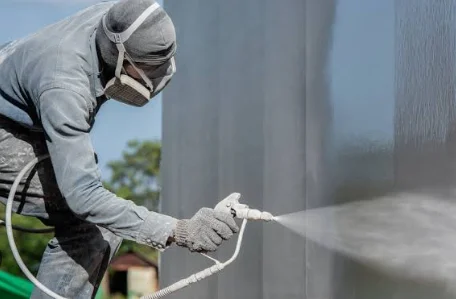
Airless spray systems are best used for large surfaces that require consistent film thickness, such as ship hulls and large storage tanks. While these systems may not be the most efficient when it comes to transfer efficiency, there are other options on the market, such as electrostatic spraying, which charges the paint particles and allows them to transfer more efficiently to a grounded metal surface. For applications such as automotive manufacturing lines, this is the preferred method.
Dip Coating and Electrodeposition
Dip coating involves submerging the part completely in a paint bath – allowing for full coverage of even the most complex part geometry such as wire mesh or other fasteners. The electrodeposition process (E-coat) uses an electric current to deposit a uniform film on the surface of the part. This process is most commonly used for automotive bodies that will receive a top coat paint finish.
Powder Coating Processes
Powder coatings rely on electrostatic attraction followed by heat curing into solid films without solvents—reducing VOC emissions significantly compared to liquid paints. They produce tough finishes ideal for appliances or outdoor furniture subject to scratching.
What Are Emerging Trends in Surface Coating Technology?
Innovation is increasingly focused on the issues of sustainability, smart products and the integration of nanotechnology in various industries.
Environmentally Friendly Formulations
Waterborne coatings are used to replace solvent based coatings in order to reduce volatile emissions but to achieve comparable performance using advanced resin chemistry, for example acrylic emulsions crosslinked with polyisocyanates.
Smart Self-Healing Coatings
Release of healing agents from microcapsules in scratches automatically repair damage to barrier protecting coating and provides growing field of applications in aerospace maintenance.
Nanostructured Protective Layers
Nanocomposite coatings contain silica nanoparticles. These very hard particles do not affect transparency, while titanium dioxide nanolayers add the necessary photocatalytic self-cleaning capabilities to coatings applied to architectural glass façades exposed to pollution in cities.
FAQ
Q1: What determines the lifespan of a surface coating? A: Life of a surface coating is determined by severity of service environment and by frequency of maintenance. Marine-grade epoxies have been found to last over ten years and more where periodic inspection and maintenance cycles are in place.
Q2. Can one type of coating be used for all materials? A. No, because there is not one system that can be used for all substrates. For example, different metals require different types of coatings than do plastics, because of differences in polarity and in coefficients of thermal expansion.
Q3: How thick should protective coatings be applied? A: Typical dry film thickness for protective coatings are for decorative finishes 50 µm and more for heavy-duty anti-corrosive linings up to 300 µm, depending on the required exposure class according to ISO 12944.
Q4. Powder coatings are more durable than liquid paint or are they? Yes generally they are as they form a very dense crosslinked network when cured that is very resistant to chipping. However they are less flexible at very low temperatures.
Q5: What are the most common causes of premature coating failure? A: The most common cause of coating failure is poor surface preparation. This is followed by failure due to incorrect curing conditions, which can result in coating retaining moisture or the intercoat adhesion layers becoming weak.