Aramid Fabric Manufacturing Guide
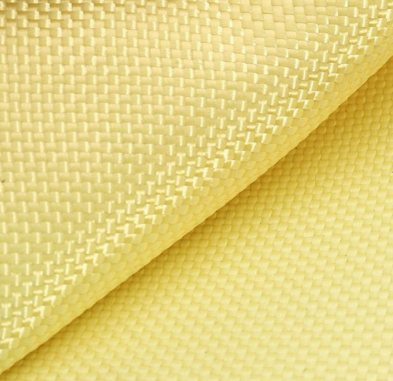
Aramid fibers are high-performance synthetic fibers with high strength, heat resistance and durability. These fibers are used in a wide variety of applications and are a main component in the manufacturing of aerospace, defense, automotive and protective clothing products. In this guide we explain the production of aramid fibers, why they are better than other materials and the challenges that manufacturers in this field are facing in finding a cost-effective product with the desired properties. The production of aramid fibers involves advanced polymer chemistry, precise spinning processes and a strict quality control.
What Defines Aramid Fabric’s Unique Characteristics?
Aramids are part of the larger group of aromatic polyamides, or fibers. Their molecular makeup has been found to possess high amounts of tensile strength as well as excellent thermal stability. This combination allows amarid fibers to function in a variety of environments where typical fibers would fail.
Chemical Composition and Molecular Structure
The back bone of the aramid fibers is a chain of aromatic rings joined by amide bonds. The rigid molecules make the fibers resistant to heat and chemicals. In contrast to fibers made of nylon or polyester, the long molecules in aramid fibers are largely aligned in fiber direction, thus they have very high mechanical strength.
Thermal Resistance and Flame Retardancy
Aramid fabrics do not melt or drip at temperatures above 400° C. Instead, they will char but will be self-extinguishing. This inherent flame retardancy is why Aramid fabrics are used in protective clothing for fire fighting and military applications where high temperature exposure can occur. The fabrics are also often used in combination with other flame retardant coatings.
Mechanical Strength and Durability
Aramids have high tensile strength. This material property makes them robust against tearing and abrasive wear. Even when under stress aramid fabrics retain their integrity for long periods of time and as such find application in ballistic protection such as body armor and space composite components.
How Is Aramid Fabric Manufactured?
Producing aramid fabric is a multi-step process from making a polymer through to spinning the fibers into yarns, and then weaving them into a fabric. It is essential that each stage is carefully controlled to guarantee the fabric’s performance characteristics.
Polymerization Process
The manufacturing process for aramid fibers begins with the reaction of polycondensation of aromatic diamines with aromatic diacid chlorides in a solvent. During the reaction, long-chain polymers are formed, which are then dissolved in a solvent to form a spinning solution. The very viscous solution has to be filtered very carefully before it can be spun into fibers.
Spinning Techniques: Wet vs Dry-Jet Wet Spinning
For para-aramids like Kevlar, typically used in wet spinning, the polymer solution is extruded from spinnerets into a coagulation bath, where the fibers are instantaneously fixed. Dry-jet wet spinning can, however, be modified to improve molecular orientation by drawing the filaments prior to their immersion into the bath. This results in increased tensile properties of the fibers.
Heat Treatment and Drawing
After spinning, fibers are heated to drive off solvents and to bring about crystallization of the fiber. The fibers are then stretched in a controlled fashion to align the polymer chains in the fiber. This step can produce very brittle fibers if stretched too much, or weak fibers of poor strength if not stretched enough.
Why Does Quality Control Matter in Aramid Fabric Production?
Quality control is essential to ensure consistent quality across different production batches. Products made of fabric used in critical applications such as bulletproof vests or aircraft parts need to meet strict quality standards.
Minor changes in the polymer used or in the fibre orientation can cause significant differences in the results obtained from tests on composite materials.
Fiber Uniformity Testing
Understand the fiber diameter distribution. Microscopic inspection can show up variations in filament diameter. Fibers of unequal diameter contain natural weaknesses that can fail in use or processing.
Thermal Degradation Analysis
Differential scanning calorimetry (DSC) is used to test thermal stability of polymers by recording their decomposition temperature. High performance aramids have a mass loss of less than 500°C.
Mechanical Property Evaluation
Tensile testing of drawn fibers is performed in order to obtain modulus and elongation at break of samples tested under controlled conditions. The results obtained are consistent with a good chain orientation which has been obtained during spinning and drawing.
What Are the Main Industrial Applications of Aramid Fabrics?
Aramid fabrics offer exceptional strength, high temperature resistance and lightweight properties, making them an ideal choice for many industries that are exposed to stress, and require reliability.
Protective Clothing Industry
Aramid fabric layers are included in the thermal insulation of protective clothing for firefighters, racing drivers and industry workers. Due to its low flammability, aramid does not lose its insulating properties, even after a long period of exposure to fire. Its incorporation into garments does not affect their flexibility.
Aerospace and Automotive Composites
Aramid reinforced composites are often used in aerospace structures or vehicle panels as they are lightweight but still have good stiffness. This type of composite is very capable in absorbing a large amount of impact energy and thus is superior to carbon fiber in many crash situations.
Ballistic Protection Systems
Layers of Aramid fabrics in multiple plies form flexible armor panels which can stop high velocity missiles. Because of their energy absorption capacity Aramid fabrics are the world’s standard for personal protective equipment.
How Do Environmental Factors Affect Aramid Fabric Performance?
The long-term stability of VCT may be affected by the environmental exposure to which it is subject. The degree to which this affects VCT depends on several factors, including the amount of exposure to UV radiation and the amount of moisture absorbed by the coating. It is highly durable.
UV Radiation Exposure
Exposure to sunlight for extended periods of time causes the aramid molecular bonds to deteriorate on the surface of the product. Manufacturers treat their products with UV-blocking finishes or even integrate pigments that absorb specific wavelengths of harmful light in order to achieve a longer service life when the products are exposed to the outdoors.
Moisture Absorption Behavior
Aramids are hygroscopic and will absorb water in the air to small amounts, which may affect dielectric constant but will not normally affect mechanical performance unless allowed to become saturated for long periods.
Chemical Resistance Profile
Strong acids, for example sulfuric acid, can damage fiber surfaces by hydrolysis during fabrication or maintenance cycles and thus need a special treatment.
What Are the Current Trends in Aramid Fabric Development?
Future developments of nonwoven technologies are likely to be driven by demands for more sustainable nonwovens that are multifunctional, while at the same time maintaining the performance criteria required by industry.
Bio-Based Precursors Research
Studies have started to look at renewable monomers produced from biomass feedstocks to synthesize polyamides that have reduced environmental impact compared to petrochemical derived feedstocks, while attempting to maintain the quality of the resulting materials.
Hybrid Composite Integration
The manufacturers are combining the aramids with carbon fibers or glass fibers in a matrix system to form hybrid composites that offer a balance of stiffness to weight for next generation of transport systems.
Nanotechnology Enhancements
Surface modification using nanocoatings can either make fabrics more hydrophobic or more conductive, depending on the user’s requirements. Examples of application include anti-static clothing and smart textiles that contain sensors that measure temperature. These measure changes in temperature whilst in use.
FAQ
Q1. What is the difference between para-aramid fibers and meta-aramid fibers? A. The linear molecular structure of para-aramid fibers provides high tensile strength. In contrast, meta-aramid fibers have cross-linked molecular structures. These fibers have thermal insulation as their main function instead of mechanical load-bearing capacity.
Q2. How easy is it to dye aramid fabrics? A. Due to the crystal structure of aramid fibers and their chemical inertness, fabrics made from them have a very low dye uptake. However, aramid fibers can be colored using special cationic dyes, or by using plasma treatments.
Q3: How long does aramid protective gear last? A: The service life of aramid protective gear is between five and ten years and depends on the frequency of use, the area of application and the maintenance by the end user.
Q4: Is recycling possible for used aramid materials? A: Yes—mechanical shredding followed by re-spinning into nonwoven mats allows partial recovery though mechanical properties may reduce compared with virgin material batches.
Q5. What are the global standards for testing aramid fabrics? A. Typically testing aramid fabrics are governed by standards such as ASTM D7269 for tensile testing, and ISO 20743 for flame retardancy testing. These allow for testing and sales to global markets.