Poly mesh fabric explained for performance, sourcing, and end use
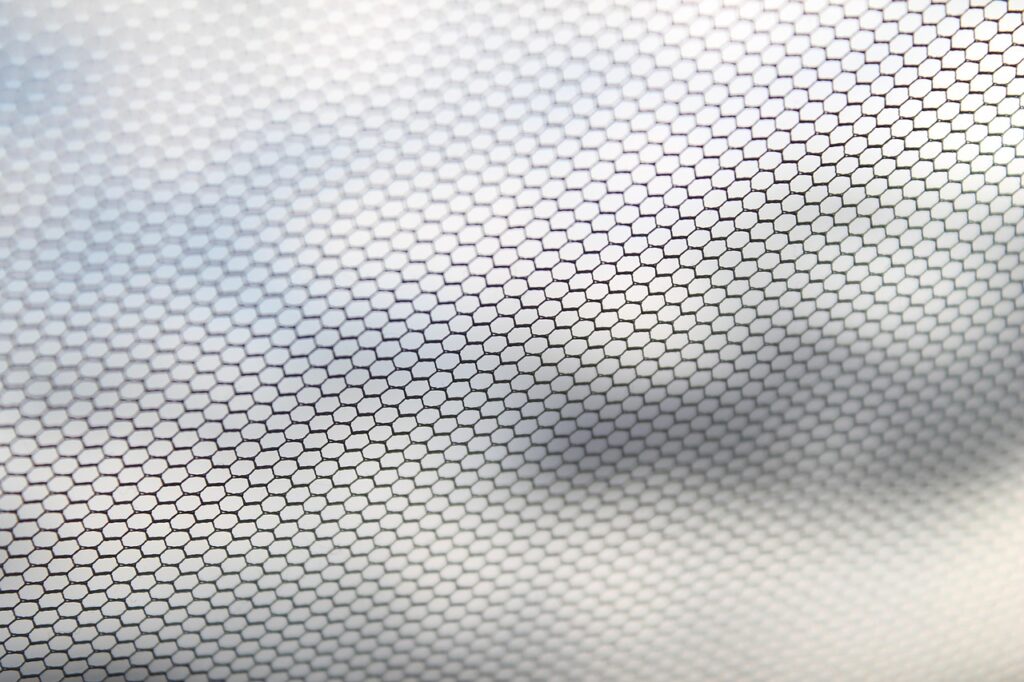
Poly mesh fabric is an open-structure textile made mainly from polyester yarns. Its value is not just that it is breathable. Performance depends on the fiber, yarn form, mesh opening, fabric weight, finishing, and the tests required for the intended product. In apparel, footwear, bags, linings, filtration, and outdoor accessories, buyers need to specify the construction rather than rely on the word mesh alone. A lightweight sportswear mesh, a stiff bag mesh, and a precision industrial mesh can all be polyester-based, but they are not interchangeable. For related textile material guides, see the materials library.
What poly mesh fabric means in textile specification
In commercial textile language, poly usually refers to polyester. Mesh describes a fabric structure with regular openings that allow air, moisture vapor, or particles to pass through. Poly mesh fabric is therefore best understood as polyester mesh fabric, not as one standardized product.
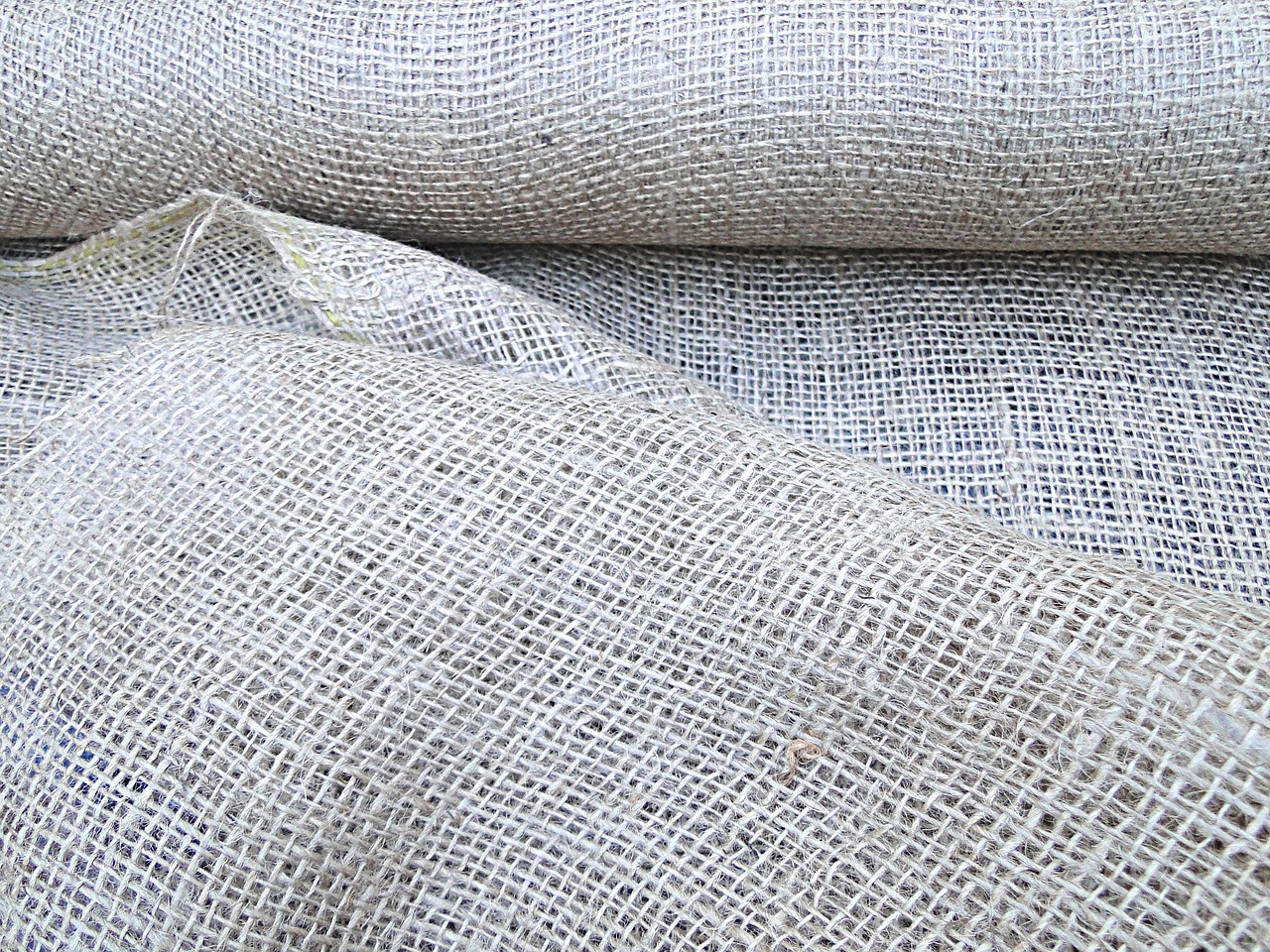
The term may refer to knitted, warp-knitted, raschel, tricot, woven, or specialty engineered mesh. Knitted mesh is common in sportswear, linings, footwear uppers, laundry bags, and breathable panels because it can combine openness with flexibility. Woven polyester mesh is often selected when a more stable grid, flatter surface, or controlled aperture is required.
This distinction matters in sourcing. A purchase order that says 100% polyester mesh identifies the fiber content, but it does not define air permeability, stretch, hand feel, snagging resistance, strength, aperture size, or finishing. A useful specification should describe both composition and structure.
Why polyester is widely used for mesh fabrics
Polyester is widely used in mesh because it offers a practical balance of cost, availability, dimensional stability, quick drying, and compatibility with heat-setting and finishing processes. According to Textile Exchange’s Materials Market Report 2025, which covers 2024 production, global fiber production reached about 132 million tonnes. Polyester accounted for about 59% of global fiber output, or roughly 77.7 million tonnes. That scale helps explain why polyester mesh is readily available across apparel, home textile, footwear, packaging, and technical textile supply chains.
Polyester fibers are hydrophobic compared with absorbent fibers such as cotton or viscose. The fiber itself takes up relatively little water, so polyester mesh can dry quickly when the structure allows moisture to spread and evaporate. The open geometry of mesh also improves ventilation compared with dense woven or knitted fabrics made from the same fiber.
Polyester is still not the right answer for every application. It can build static, hold oily stains, soften or deform under excessive heat, and show pilling or snagging depending on yarn and construction. Outdoor products may need careful review of UV exposure, dye selection, and finishing. Skin-contact activewear may require moisture-management finishing, odor-control evaluation, and pilling tests instead of broad performance claims.
Construction variables that change performance
The performance of poly mesh fabric is controlled more by construction than by the fiber name alone. Two fabrics may both be 100% polyester mesh, yet feel, stretch, breathe, and wear very differently.
Knit, warp knit, and woven mesh
Knitted polyester mesh usually offers more flexibility and drape. Warp-knit and raschel structures can create stable open patterns with good production efficiency, which is why they are common in linings, sports panels, shoes, and bags. Woven mesh is typically more dimensionally stable in the length and width directions, making it useful for screens, structured pockets, banners, and some industrial uses.
Yarn form and fabric weight
Monofilament polyester yarn can produce a firmer, more open, and more transparent mesh. Multifilament yarn generally gives a softer textile hand and better comfort for apparel. Textured yarn may improve bulk and coverage. Fabric weight, usually expressed as grams per square meter, affects opacity, strength, drape, and drying speed. However, a higher GSM does not automatically mean better durability if the mesh openings or yarn bonding are not suitable for the application.
| Variable | What it affects | What buyers should clarify |
|---|---|---|
| Mesh opening | Airflow, transparency, particle passage, visual style | Aperture size, open area, and acceptable tolerance |
| Yarn type | Hand feel, stiffness, snagging, strength | Monofilament, multifilament, textured yarn, or spun yarn |
| Fabric weight | Drape, opacity, strength, drying time | Target GSM and tolerance range |
| Stretch | Fit, recovery, comfort, deformation risk | Mechanical stretch or elastane content |
| Finish | Wicking, softness, flame resistance, water repellency, anti-static behavior | Finish type, durability after laundering, and test method |
Common uses and performance priorities
Poly mesh fabric appears in many textile categories because an open structure can solve different product problems. In apparel, the priority may be ventilation and quick drying. In bags, it may be visibility and drainage. In industrial uses, it may be controlled particle passage or dimensional stability.
| Application | Why poly mesh is used | Key specification points |
|---|---|---|
| Sportswear and activewear panels | Airflow, low weight, fast drying | Air permeability, stretch recovery, pilling, colorfastness, skin comfort |
| Footwear uppers and linings | Ventilation, shape support, design texture | Abrasion, tear strength, bonding performance, dimensional stability |
| Laundry bags and storage bags | Drainage, visibility, low water retention | Seam strength, hole size, snagging resistance, wash durability |
| Garment linings and pocketing | Lightweight structure and breathability | Softness, shrinkage, color migration, abrasion against outer fabric |
| Outdoor and shade accessories | Ventilation and reduced weight | UV resistance, colorfastness to light, coating durability, tear strength |
| Industrial screens and separators | Controlled openings and chemical resistance | Aperture tolerance, tensile strength, thermal behavior, contamination control |
The same mesh should not be moved from one category to another without review. A soft apparel mesh may not have the dimensional stability required for a screen, while a stiff monofilament mesh may feel uncomfortable against skin. End-use testing is the practical link between a fabric description and actual performance.
Poly mesh fabric compared with nylon and cotton mesh
Polyester mesh is often compared with nylon mesh because both are synthetic, strong, and quick drying. Nylon can offer high toughness and abrasion resistance in many constructions, which is why it is used in backpacks, outdoor gear, and reinforced components. Polyester often performs well where lower moisture uptake, dimensional stability, and colorfastness to light are priorities. The better choice depends on yarn, denier, finishing, and test results, not fiber reputation alone.
Cotton mesh serves a different purpose. It can feel softer and more natural for casual apparel or household uses, but it absorbs more moisture and usually dries more slowly. Cotton mesh may also require closer control of shrinkage and dimensional change after washing. For products that need airflow plus quick drying and lower water retention, polyester mesh is often more practical.
Blends are possible, but they can complicate labeling, dyeing, shrinkage control, and recycling routes. In the United States, Federal Trade Commission textile labeling rules require covered textile products to disclose generic fiber names and percentages by weight, along with country of origin and business identity information. For a product sold as polyester mesh, fiber-content accuracy is therefore not only a sourcing detail; it can also be a compliance issue. See also: Applications.
Testing and sourcing checks before ordering
Reliable sourcing of poly mesh fabric starts with measurable requirements. Common textile standards help buyers and suppliers use the same technical language. ASTM D737 is widely referenced for air permeability of textile fabrics. ASTM D3776 is used for mass per unit area. Tensile and tear strength may be checked using appropriate ASTM or ISO methods, depending on the product. ISO 12945 methods address fabric propensity to pilling, fuzzing, and matting. Colorfastness may be tested through relevant ISO 105 or AATCC methods, depending on the market and buyer requirement.
A practical specification sheet should include these points:
- Fiber composition and percentage by weight.
- Fabric construction, such as warp knit, raschel knit, circular knit, or woven mesh.
- Yarn type, count, denier, filament type, and whether elastane is included.
- Fabric weight, width, thickness, mesh opening, and tolerance ranges.
- Target performance tests, including air permeability, tensile strength, tear strength, pilling, abrasion, shrinkage, and colorfastness.
- Finishing requirements, such as moisture management, soft hand, anti-static treatment, flame resistance, water repellency, or UV resistance.
- Care instructions and expected durability after washing or exposure.
- Packaging, roll length, shade control, and acceptable defect criteria.
For technical uses, the specification should go further. Aperture consistency, thermal limits, chemical exposure, edge stability, and contamination requirements may be more important than softness or drape. For apparel, comfort and wash durability may matter more than exact pore size.
Sustainability and care considerations
Polyester mesh should be evaluated in both performance and environmental context. Textile Exchange reported in its 2025 materials report that recycled polyester represented about 12% of polyester production in 2024, down slightly from about 12.5% in 2023 because virgin polyester output grew faster. Recycled polyester is commercially important, but virgin fossil-based polyester still represents most polyester production.
Recycled polyester mesh can reduce reliance on virgin feedstock when properly verified, but it should not be treated as automatically circular. Much recycled polyester used in textiles comes from PET bottles rather than textile-to-textile recycling. Buyers who need stronger sustainability claims should request traceability documentation, recycled-content certification where applicable, and the same physical testing required for virgin polyester mesh.
Microfiber release is another concern. The European Environment Agency identifies wearing and washing synthetic textiles as a recognized source of microplastics. For mesh fabrics, shedding behavior can vary with yarn type, fabric construction, finishing, cutting, brushing, and laundering. More durable yarns, stable fabric structures, reduced abrasion, appropriate washing practices, and filtration technologies can help reduce release, but no single care instruction solves the issue completely.
A balanced sourcing approach is to use polyester mesh where its performance advantages are genuinely needed, avoid overspecifying virgin material when recycled options can meet the requirement, and confirm durability so the product can last through its intended service life.
Frequently asked questions
Is poly mesh fabric breathable?
Yes. Poly mesh fabric is usually breathable because the structure contains openings that allow air to pass. The degree of breathability depends on mesh size, fabric thickness, yarn density, finishing, and garment design. Air permeability testing gives a more reliable answer than visual inspection alone.
Is poly mesh fabric waterproof?
No. Polyester fiber is hydrophobic, but an open mesh structure allows water to pass through. A waterproof textile normally requires a coating, membrane, laminate, or very dense construction. Poly mesh is better described as quick drying or water shedding, not waterproof, unless additional barriers are specified and tested.
Does poly mesh fabric stretch?
Some poly mesh stretches, especially knitted mesh. Woven mesh usually stretches less unless the structure is designed for movement or elastane is added. For apparel and footwear, stretch and recovery should be measured because excessive growth can affect fit and appearance.
Is recycled polyester mesh equal to virgin polyester mesh?
It can be engineered to meet similar requirements, but equality should not be assumed. Recycled polyester mesh should be checked for yarn quality, shade consistency, tensile strength, pilling, shrinkage, and traceability. The correct comparison is based on test results and end-use requirements.
How should buyers specify poly mesh fabric?
Buyers should specify fiber content, construction, yarn type, GSM, width, mesh opening, stretch, finish, color, test methods, tolerances, and intended application. A clear specification reduces sampling delays and prevents confusion between lightweight apparel mesh, bag mesh, footwear mesh, and technical mesh.