
Fabric Wholesale Market Trends
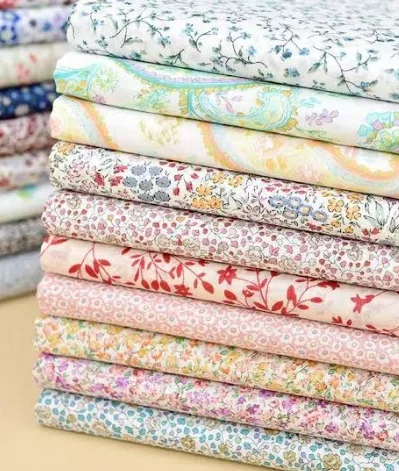
The global fabric wholesale market is currently undergoing a fundamental change. The key drivers behind this development are sustainability, digitalization as well as changes in the consumer behavior. Wholesalers, who adapt to an eco-friendly production, transparent sourcing as well as online distribution, are today gaining the upper hand on the market. In the next decade, the development of the global fabric wholesale market will be characterized by digitalization as well as by the implementation of a circular economy in the textile trade.
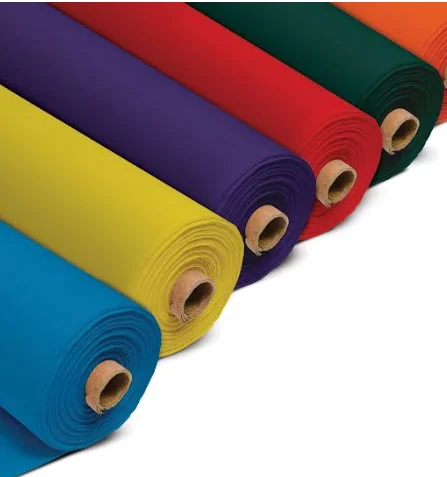
What Are the Current Global Trends in Fabric Wholesale?
Wholesale fabric industry has recently been undergoing changes as a result of a set of factors. These include new materials promoted by eco-friendliness trend, speeding up of e-commerce and changes taking place in the world of supply chains. The industry players, i.e. manufacturers and wholesalers of fabrics, are having to adjust to these changes.
Sustainable Material Adoption
In the wholesaler sector particularly, there is a growing focus on the use of so called “eco-friendly” fabrics, made of organic cotton, recycled polyester or bamboo fibers for example. But the reason for this shift is not merely due to increasingly stringent environmental regulations. Instead, it is the buyer’s demand for sustainable, transparent textile products that is becoming more and more pronounced. Suppliers highlight certificates such as GOTS or OEKO-TEX in order to be able to make eco-friendly claims about their products. In doing so, the focus is moved away from the use of virgin raw materials, and towards the needs of fashion brands, who are seeking ethical sourcing.
Digital Transformation in Distribution
E-commerce platforms have become tools of trade for fabric wholesalers allowing them to exploit digital catalogs with virtual swatches and live inventory information enabling speedier transaction with buyers world over. As online B2B marketplaces have de-mono-polyzed access to trade by removing barriers to entry for the small-scale producers enabling them to compete with others from around the globe, without setting up their physical show-rooms.
Regional Supply Chain Rebalancing
Wholesalers in the interim are forced to look for new production locations outside of China or India in the wake of Geopolitics and logistics interruptions to the market. New production locations, in Southeast Asia, Turkey and in Africa will be cheap for production and logistics to Europe for wholesalers will be closer than ever before. While these decentralization measures boost resilience, their quality control needs to be organized anew.
How Is Sustainability Redefining the Fabric Wholesale Market?
Sustainability has moved from being a marketing message for many businesses within the fabric wholesale industry to a central business strategy. Businesses are being forced by both regulatory changes and their customers to become environmentally responsible and account for their sustainability within their supply chain.
Circular Economy Integration
Some of the larger textile distributors have recently introduced circularity initiatives, like fabric recycling and take-back programs. Some wholesalers are already working with brands from the garment sector to reprocess post-consumer textiles into new fabrics, in this way waste is being put to an end and new value creation is taking place in a largely linear system of production.
Transparency and Traceability Systems
A few major textile suppliers in the industry are piloting blockchain technology to create a fabric passport that traces the articles back to their original fiber and even down to specific rolls of finished fabric. Using the technology to document information such as amount of dye used, amount of water used for production, and articles’ carbon footprint allows for the most transparency for retailers who are trying to develop more sustainable supply chains and report ESG metrics that are becoming increasingly required to be disclosed by fashion brands.
Eco-Friendly Processing Technologies
New innovations in dyeing and finishing technologies enable to reduce the ecological footprint while maintaining the quality. Thus, wholesalers can fulfill demands of international customers regarding cleaner production by using production methods that are in line with compliance standards.
How Are Technological Innovations Influencing Fabric Wholesale Operations?
Technology plays a major role in helping to increase efficiency, allow for greater customisation and enable for greater response within the wholesale fabric market. By using automation and data analytics companies are now able to carry out much more accurate demand forecasting, manage stock levels better and respond to customer enquiry in a much timelier fashion.
AI-Driven Demand Forecasting
By analyzing purchasing behavior across seasons, artificial intelligence can provide a more precise prediction of future demand than classical methods. For example, a predictive analysis can already determine the right colors or fibers for future products months in advance of the production cycle in order to avoid overstocking.
Smart Inventory Management
By using RFID tagging in your production of fabric rolls you can track them in real time throughout the entire warehouse and shipping network. This increases the accuracy of your order fulfillment and prevents errors due to labelling mistakes or even theft. Our customers from the wholesales sector are able to process their bulk orders in a timely manner.
Virtual Sampling Solutions
With high-resolution digital imaging it is now possible to carry out virtual sampling. Potential buyers can see the texture of fabrics on-line without having to order physical swatches. As designers working from home are able to make their decisions much faster and save international shipping on samples, virtual sampling is also cost-saving.
What Economic Factors Are Driving Price Fluctuations in Fabric Wholesale?
Price volatility continues to affect the wholesaler’s task of trying to balance the cost of the raw materials against the pressure from the global buyers to offer the lowest possible price.
Raw Material Cost Variability
Cotton price is influenced by weather related events in major production countries such as India or USA. Synthetic fibers are also influenced by petroleum markets, hence any increase in crude oil price impacts the cost of polyester fibers.
Currency Exchange Dynamics
Because textile trade is largely a cross border trade, the profit of textile manufacturers are affected significantly by exchange rate. Even when production efficiency is improved, a strong local currency can make a country’s export less competitive.
Freight and Logistics Costs
As we navigate the post-pandemic world, freight rates continue to be elevated off of historic levels caused by the inability to obtain sufficient containers as well as continued port congestion. As wholesaler we are eating into part of these costs not passing 100% along to our customers. And that’s because of our longstanding business relationships with many of the apparel manufacturers that we work with.
How Do Consumer Preferences Shape Wholesale Fabric Demand?
Consumer behavior can also influence wholesale trends for fashion brands that are sourcing fabrics based on retail insights from the consumer behavior.
Preference for Natural Textures
Linen, hemp and even unbleached cotton are becoming increasingly popular as consumers come to realize that there are many more authentic, more comfortable fabrics than those which have been mass-produced for years. In keeping with many of the current lifestyle trends, including the rise of the ‘minimalist’ movement, these fabrics are also much more durable than their counterparts and are therefore less likely to contribute to the growing problem of disposability.
Rise of Functional Fabrics
Performance textiles, whether they are moisture-wicking knit textiles or sunlight resistant blended fibers, are currently receiving increased orders from the sportswear sector. This is largely in response to the growth of active lifestyles worldwide.
Customization Expectations
A growing number of fashion brands are asking wholesalers for exclusive prints or for the opportunity to create limited editions of weaves. To respond to these requests, wholesalers must now be in a position to produce flexible numbers of articles. Thanks to digital printing, small production runs can now be competitive.
What Challenges Do Fabric Wholesalers Face Amid Global Shifts?
Wholesalers are confronting the operational challenges of compliance with regulations, of a highly competitive market and the lack of specialists in areas such as textile chemistry or logistics management despite the existing growth potential.
Compliance Complexity
Mid-sized companies struggle to monitor various environmental standards across several export countries. Chemicals, as well as labor practices, are monitored by monitoring how many of any chemicals are used in production as well as maintaining records of labor practices.
Competitive Saturation
Because online platforms are characterized by low entry barriers for suppliers of similar products, competing on price at marginally different levels is intensified. For such brands, however, differentiation by service is critical.
Skilled Labor Shortage
Increasing automation within mills and warehouses is creating greater technical demands than are currently able to be met by skilled technicians capable of operating advanced machinery and integrating digital systems. A number of countries and regions are experiencing shortages in these areas and are finding that efforts to modernize are being constrained as a result.
FAQ
Q1: What drives growth in the Fabric Wholesale Market? A: Growth in the Fabric Wholesale Market is driven by sustainability, digital and functional fabrics, that are used in the Fashion and Home Furnishing wholesale market.
Q2. Which Regions Dominate Global Fabric Production? A. The Asia-Pacific region still dominates global fabric production with a large number of production sites based in manufacturing clusters in China, India, Bangladesh, Vietnam and Pakistan and strong export infrastructure in place.
Q3: How Are Wholesalers Responding to Sustainability Demands? A: Wholesalers invest in traceable sourcing systems, adopt eco-friendly processing technologies and work with recycling solutions together with apparel brands that are looking for circular solutions.
Q4: What Role Does Technology Play in Modern Fabric Distribution? A: Modern fabric distribution is enabled by technology. By using AI forecasting tools, an RFID-based inventory management system, a virtual sampling interface and an automated order management system, fabric distributors are able to work more efficiently and increase their speed-to-market.
Q5. Can digital marketplaces replace trade fairs? A. Although online platforms are the primary way for buyers to discover initial suppliers for their online business, physical trade fairs still play an important role for checking and feeling fabrics. For many years now, a hybrid business model has been developed and is now common place within the industry as a whole.