How to evaluate upholstery fabric manufacturers for reliable furniture sourcing
What buyers should expect from upholstery fabric manufacturers
Choosing upholstery fabric manufacturers should not start and end with the lowest quotation. For furniture brands, importers, interior suppliers, and sourcing teams, the safer question is whether a supplier can turn a design brief into repeatable fabric with verified performance data, stable color control, realistic lead times, and documentation for the destination market.
A capable supplier should be able to explain fiber content, yarn and weave or knit construction, finishing, abrasion results, colorfastness, flammability relevance, chemical restrictions, minimum order quantity, sample-to-bulk controls, and claims such as recycled content or PFAS-free finishes. The aim is to reduce the risk that a fabric looks acceptable at sample stage but creates problems in production, compliance review, or customer use.
This guide focuses on sourcing questions that help separate capable upholstery fabric manufacturers from suppliers that rely mainly on catalog photos and generic descriptions. For more procurement context, visit the Sourcing section.
Start with an application-based fabric specification
Before contacting mills, converters, or trading companies, buyers should define where and how the upholstery will be used. A sofa fabric for residential living rooms does not need the same performance profile as contract seating in hotels, restaurants, offices, healthcare waiting areas, or public lounges. Outdoor seating adds another layer of risk because ultraviolet exposure, moisture, mildew resistance, cleanability, and coating durability become more important than they are for indoor decorative use.
A practical specification should include the intended end use, target price range, fiber preference, visual direction, hand feel, weight, width, backing requirement, cleaning code, color palette, expected order volume, shipping market, and any required test reports. The more complete the specification, the easier it is to compare upholstery fabric manufacturers on actual capability rather than sales language.
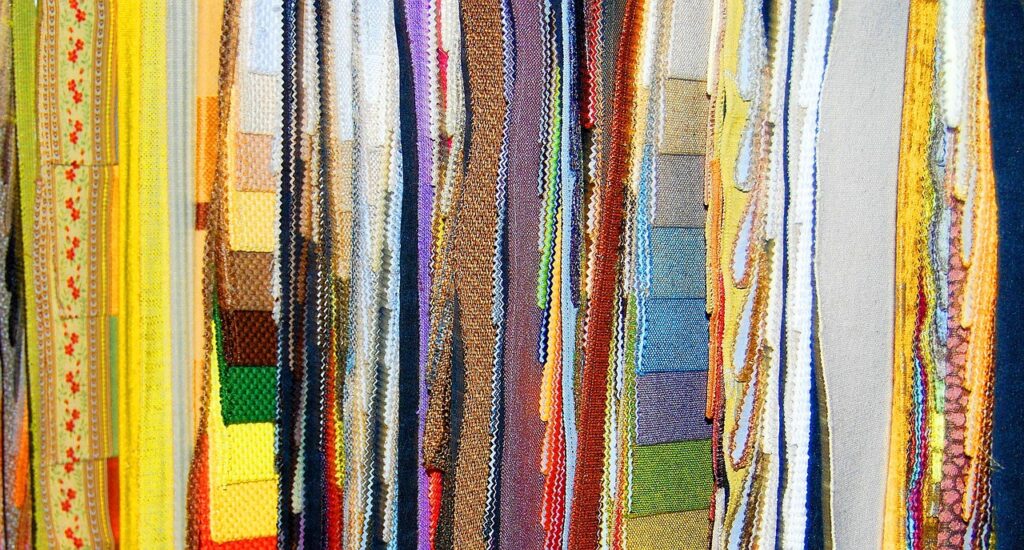
Buyers should also state whether the project needs woven fabric, knit fabric, suede-like microfiber, velvet, chenille, jacquard, coated fabric, faux leather, solution-dyed outdoor fabric, recycled polyester fabric, or a custom-developed construction. Each category carries different risks. Chenille can offer a soft hand, for example, but may need careful pilling and snagging checks. Coated fabrics may support cleanability requirements, but coating adhesion and hydrolysis should be reviewed. Jacquards often require tighter yarn and color control than plain weaves.
Check whether test data matches the real use case
Reliable upholstery fabric manufacturers should provide current technical sheets and, when needed, third-party test reports for the exact article, color, finish, and construction being sourced. Reports for a similar quality can help during early screening, but they should not be treated as proof for bulk production unless the supplier explains the relationship between the tested sample and the proposed shipment.
| Performance area | Why it matters | What to ask the supplier |
|---|---|---|
| Abrasion | Helps estimate resistance to surface wear under laboratory conditions. | Which method was used, such as Wyzenbeek or Martindale, and was the result for this exact fabric? |
| Pilling | Shows whether fiber balls may form on the surface after friction. | Which pilling method and rating scale were used? |
| Crocking | Measures color transfer by rubbing, especially important for dark shades. | What are the dry and wet crocking ratings? |
| Lightfastness | Indicates how color may resist fading under light exposure. | What test method and exposure conditions were used? |
| Physical strength | Supports seam durability, tearing resistance, and fabrication stability. | Are tear strength, tensile strength, seam slippage, or coating adhesion reports available? |
| Chemical safety | Helps buyers assess restricted substances and market access risks. | Are OEKO-TEX STANDARD 100, restricted substance, PFAS, or other chemical declarations available? |
According to ACT, the Association for Contract Textiles, its voluntary performance guidance for woven indoor upholstery uses 15,000 Wyzenbeek double rubs or 20,000 Martindale cycles as a low-traffic/private-space benchmark, and 30,000 Wyzenbeek double rubs or 40,000 Martindale cycles as a high-traffic/public-space benchmark. ACT also cautions that abrasion results above its high-traffic guideline are not proof of proportionally longer service life. This is important because some suppliers promote very high rub counts as if they guarantee durability, while actual performance also depends on fiber, yarn structure, weave, finish, furniture construction, maintenance, and end-user behavior.
ASTM International’s description of ASTM D4157, the oscillatory cylinder method often associated with Wyzenbeek testing, also notes that abrasion resistance is affected by many variables, including fiber properties, yarn structure, fabric construction, finishes, and test conditions. In practical sourcing terms, buyers should not compare two fabrics only by the largest number on a data sheet. A balanced review of abrasion, pilling, seam behavior, cleanability, and appearance retention is more useful.
Review compliance by destination market
Upholstery fabric sourcing becomes more complex when fabric will be used in finished furniture sold across multiple markets. Fabric manufacturers may provide component-level data, but the furniture brand, importer, or final product manufacturer usually still needs to confirm finished-product compliance.
For the United States, the Consumer Product Safety Commission states that the federal upholstered furniture flammability standard went into effect on June 25, 2021, and that label enforcement began on June 25, 2022. The CPSC standard, codified at 16 CFR Part 1640, adopts California TB 117-2013 for upholstered furniture flammability. The rule applies to upholstered furniture manufactured, imported, or reupholstered on or after the relevant compliance date, not simply to fabric rolls in isolation.
For chemical restrictions, buyers should pay particular attention to stain-resistant and water-repellent performance claims. PFAS regulation is changing in several jurisdictions. As one example, the Maine Department of Environmental Protection lists textile articles and upholstered furniture containing intentionally added PFAS among product categories affected by sales prohibitions beginning January 1, 2026, subject to definitions and exceptions. This does not mean one state rule automatically applies everywhere, but it shows why upholstery fabric manufacturers should be able to discuss finish chemistry, declarations, and alternatives rather than only saying a fabric is “performance” or “easy clean.”
OEKO-TEX STANDARD 100 is another common reference in textile sourcing. It is a label for textiles tested for harmful substances, and OEKO-TEX states that certified items are tested against a broad list of regulated and non-regulated substances. However, it should not be confused with a durability rating, an organic certification, a flammability approval, or proof that a fabric is suitable for every upholstery application.
Compare manufacturer types before comparing quotations
The phrase upholstery fabric manufacturers can refer to several supplier models. A vertical mill may control yarn preparation, weaving or knitting, dyeing, finishing, and inspection. A weaving mill may rely on outside dyeing and finishing partners. A converter may design and market fabric while outsourcing greige production and finishing. A trader may aggregate stock lines from several factories. None of these models is automatically better or worse, but each creates different sourcing risks.
Vertical producers may offer stronger process control, especially for repeat programs, but they may require higher minimums or longer development time. Converters may provide broader design variety and faster trend response, but buyers should confirm where testing, finishing, and quality responsibility sit. Traders can be useful for small orders or urgent stock needs, yet traceability and repeatability can be weaker if the upstream source changes without notice.
When comparing quotes, buyers should ask exactly what is included. A low price may exclude backing, stain-resistant finishing, anti-pilling treatment, special packing, color lab dips, third-party testing, inspection, or documentation. It may also rely on a narrower fabric width, lower finished weight, different yarn count, or a substitute fiber blend. A fair comparison needs the same construction, finish, width, color requirements, test package, payment term, and shipment term. See also: Applications.
Use sampling to test process control, not just appearance
Sampling is the first operational test of a supplier. A professional upholstery fabric manufacturer should provide clear sample labels, article numbers, fiber content, width, weight, finish description, available colors, production minimums, lead time, and care or cleaning guidance. If samples arrive without traceable information, bulk-order control may also be weak.
Buyers should run a structured sampling process:
- Request hanger samples or swatches for visual screening.
- Ask for larger cuttings when hand feel, drape, nap direction, or pattern scale matters.
- Use lab dips or strike-offs for custom colors before bulk dyeing.
- Keep an approved master sample sealed and dated for later comparison.
- Confirm acceptable shade tolerance under agreed light sources.
- Check whether different lots can be mixed in one furniture production run.
- Require pre-shipment inspection for color, width, weight, surface defects, rolling, labeling, and packing.
For pile fabrics such as velvet and some chenilles, nap direction should be controlled from sampling onward. For patterned fabrics, repeat size, skew, bowing, and cutting waste should be reviewed before costing. For coated fabrics, buyers should ask about storage conditions, roll pressure marks, odor, hydrolysis risk, and whether the coating is suitable for the intended climate and cleaning method.
Evaluate sustainability claims with evidence
Sustainability claims in upholstery textiles can be useful, but only when they are specific and documented. Broad claims such as eco-friendly, green, non-toxic, or sustainable do not tell buyers enough. More useful claims identify the fiber, certification, chain-of-custody model, chemical restriction, recycled content percentage, dyeing process, water or energy management claim, or material substitution.
Textile Exchange’s 2025 Materials Market Report provides useful broader context for fiber sourcing, although it is not upholstery-specific. The report states that polyester accounted for 59% of global fiber production in 2024, while recycled polyester represented about 12% of polyester production. It also states that recycled polyester remained primarily bottle-based rather than textile-to-textile. For upholstery buyers, the sourcing implication is clear: recycled polyester claims should specify the percentage, feedstock type, certification if applicable, and whether the claim applies to the fabric face, backing, coating, or total fabric.
For cotton, viscose, wool, linen, recycled synthetics, and blends, buyers should ask what documentation is available and what it actually covers. A certificate may cover a mill, a yarn, a dyeing process, or a finished fabric article, depending on the program. The safest habit is to request the certificate number, scope, validity period, transaction documentation where relevant, and the exact relationship between the certificate and the fabric being purchased.
Build a supplier scorecard for repeatable decisions
A scorecard helps the sourcing team avoid choosing upholstery fabric manufacturers based on one attractive sample or one persuasive quote. It also helps non-technical colleagues understand why a more expensive fabric may be lower risk if it has better documentation, stronger repeatability, and clearer compliance support.
| Category | What good performance looks like |
|---|---|
| Technical clarity | Complete fabric sheet with construction, weight, width, finish, test methods, and care guidance. |
| Testing discipline | Current reports for relevant performance areas, with methods and dates clearly shown. |
| Compliance support | Ability to provide market-specific documentation and explain limits of component-level claims. |
| Sampling control | Traceable samples, lab dips, approved standards, and documented shade tolerance. |
| Production reliability | Realistic lead times, lot control, defect classification, and inspection readiness. |
| Commercial transparency | Clear MOQ, price validity, payment terms, packing method, and responsibility for testing costs. |
| Claim evidence | Specific documentation for recycled content, chemical restrictions, certifications, or special finishes. |
The best choice is usually not the supplier with the longest catalog. It is the supplier whose data, samples, quality process, and communication remain consistent from first inquiry to bulk shipment. For buyers building long-term furniture programs, that consistency is often worth more than a small unit-price difference.
Frequently asked questions
What is the most important test when choosing upholstery fabric?
There is no single test that proves an upholstery fabric will perform well. Abrasion is important, but buyers should also review pilling, crocking, lightfastness, tear strength, seam behavior, cleanability, flammability relevance, and chemical restrictions for the target market.
Are higher Wyzenbeek or Martindale numbers always better?
No. Higher abrasion numbers can be useful up to a point, but they do not guarantee longer real-life service. ACT specifically warns that results above its high-traffic guideline should not be treated as an indicator of product lifespan. End use, maintenance, furniture design, yarn structure, and finishing all matter.
Should buyers choose a mill, converter, or trading company?
It depends on the project. Mills may offer stronger production control, converters may offer more design flexibility, and traders may help with small or urgent orders. The key is to confirm traceability, testing responsibility, repeatability, and who is accountable if bulk goods differ from the approved sample.
Does OEKO-TEX STANDARD 100 mean a fabric is suitable for upholstery?
Not by itself. OEKO-TEX STANDARD 100 relates to harmful-substance testing for textiles. It does not replace upholstery performance tests such as abrasion, pilling, colorfastness, seam strength, or market-specific flammability requirements.
What should be confirmed before placing a bulk order?
Confirm the approved sample, color tolerance, test reports, finish, width, weight, packing, labeling, inspection plan, production lead time, shipment term, payment term, and responsibility for any required retesting. These details should be written into the purchase order or supplier agreement.