How to Improve Textile Quality

The quality of textiles produced by manufacturers is key to their ability to compete in the market place and provide confidence to customers world-wide. Good quality fabrics are not only better for end use but also give the manufacturer a better image and enable them to promote their products as sustainable. The quality of textile production can be improved by controlling the fiber used, by developing the processes used to make up the fibers into fabric and by adopting more advanced methods of testing. In this issue we examine the technical and the practical aspects of quality.
What Determines Textile Quality?
The quality of textiles can be influenced by many factors, starting from raw material selection and going through processing stages. Every variable affects the textile end product in terms of its texture, strength and appearance. There is a potential for every variable to be quantified and its impact assessed.
Fiber Properties and Composition
Natural fibers like cotton, wool, or silk each possess unique mechanical and chemical characteristics that influence durability and comfort. For example, long-staple cotton produces smoother yarns with fewer weak points than short-staple varieties. Synthetic fibers such as polyester or nylon can be engineered for specific tensile strength or moisture resistance. Blending natural and synthetic fibers often enhances textile quality by combining softness with resilience.
Yarn Structure and Twist
The degree of twist in a yarn affects its strength as well as its elasticity. Higher twist in a yarn will increase its tensile properties but could reduce the softness of the fiber. Regular spinning also ensures that there are no irregularities in the yarn and it does not have weak spots and allows for even dye uptake. For certain technical applications like performance clothing and medical textiles, controlling the count of the yarn and the direction of the twist is very important as the yarn would behave uniformly under stress.
Fabric Construction Parameters
Fabric performance can be influenced by weave density, knit construction and fabric finish treatments. Tighter weave density increases abrasion resistance but may impair breathability. Double knit construction can impart greater dimensional stability than single knit constructions. Process engineers design to manipulate these variables to meet end use requirements for items such as drape, stretch recovery and pilling resistance.
How Can Raw Material Selection Improve Textile Quality?
Quality textile products start with the correct selection of raw materials. No amount of advanced technology can ever compensate for poor quality of input fibers.
Cotton Grading and Staple Length
High-grade cotton with uniform staple length yields stronger yarns with fewer neps. Mills sourcing extra-long-staple (ELS) cotton can produce premium shirting fabrics with exceptional smoothness. Fiber maturity also matters; immature fibers tend to break easily during spinning, leading to higher waste rates.
Wool Fineness and Crimp
Finer merino wool offers greater softness and warmth than coarser grades of wool. The natural crimp of wool fibers also gives wool garments their elastic qualities and helps them to recover from wrinkles better than any other fiber. Sorting of fleece into various micron counts enables the spinner to create blends of his choice for the desired ‘hand’ and insulation qualities.
Synthetic Fiber Modification
Modern synthetic fibers have been engineered to deliver performance; some are even made into microfibers to replicate the feel of silk whilst others are hollow to offer improved insulation and others are made from bicomponent fibers that self-crimp after being subjected to heat – all this can be achieved by manufacturers working closely with their polymer suppliers to modify the fiber morphology to suit the required textile properties.
What Role Does Process Control Play in Maintaining Textile Quality?
Even with the use of the highest-quality raw materials, their value can be lost if there is no strict control of the production process, from spinning and weaving through to dyeing and finishing.
Spinning Consistency Monitoring
The yarn’s evenness is continuously monitored online. The system can immediately respond to any variations that are greater than tolerance by adjusting the drafting rollers or the spindle speed. By constantly monitoring the yarn’s linear density and keeping it as consistent as possible, it prevents defects such as streaks and fabric barre that can occur in later processing stages.
Weaving Tension Regulation
Uneven warp tension can cause problems with weave pattern, broken ends. High-tech weaving facilities that use so-called electronic let-off systems on their looms of up to 30 inches wide can monitor the tensile force of thousands of warp threads simultaneously. To achieve this, the let-off system needs to be calibrated on a regular basis in order to prevent problems with edge curling or in the finishing process by means of unequal shrinkage.
Dyeing Temperature Uniformity
Colour variations on dyeing can occur due to uneven temperature on dyeing machines. By installing multiple thermocouples it is possible to control the dyeing bath to a precise temperature of ±1°C. Circulation on dyeing is also crucial to ensure that the dye penetrates evenly into the fiber on the cross section of the fabric. A good circulation system will ensure that the dye enters the fiber evenly across the width of the fabric.
Why Is Testing Essential for Textile Quality Assurance?
Quantifying and proving that the product meets the specifications before it is shipped to customers and users.
Physical Performance Tests
Methods such as ASTM D5034 or ISO 13934-1 are used to test parameters such as tensile strength, tear resistance, abrasive resistance and shrinkage and are used to check if the fabric can withstand wear and tear without breaking down.
Colorfastness Evaluation
The quality of the dye fixation is checked by a series of test methods that simulate washing, rubbing, sweating and light fastness (ISO 105 series). If the colorfastness is not sufficient, the color can fade or even bleed, leading to consumer complaints, which can seriously harm a brand’s reputation.
Microscopic Defect Analysis
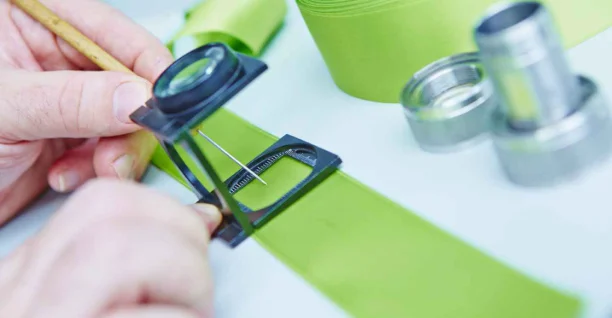
Advanced imaging can reveal surface defects not visible to the human eye such as fiber fraying, micro-pilling start points and foreign particles from finishing bath. Detection early enough in production to allow time for corrective action to prevent large scale production losses.
How Do Finishing Techniques Enhance Textile Quality?
Finishing is the process of transforming raw fabrics to their finished state, either by altering certain properties of the fabric surface or by applying protective coatings to it.
Mechanical Finishes for Texture Control
Calendaring, raising and sanforizing are just three of the many processes that go into making different types of fabric finishes. Calendaring uses heated rollers to compress the fabric and create a smooth glossy surface. Raising creates the fuzzy surface found on items such as flannel by brushing fibers up from the bottom of the fabric. Cotton is sanforized to prevent shrinkage in dry cleaning or washing. Each process can have two aims: looks and function. Over calendaring can lead to loss of tensile strength in a fabric for example.
Chemical Finishes for Protection
Wrinkle recovery is improved by finishing treatments; water repellency is imparted by fluorocarbon coatings; growth of bacteria and mildew is inhibited by antimicrobial finish treatments on sportswear fabrics. Chemical residues must meet environmental criteria for safety to comply with requirements of markets world-wide and to fulfill the criteria of ecological tests, e.g. stipulated by OEKO-TEX® certifications.
Functional Coatings for Performance Fabrics
In high-performance sectors—outdoor gear or medical textiles—coatings deliver specialized features like UV protection or flame retardancy. Plasma treatments modify fiber surfaces at molecular scale without altering bulk properties, achieving durable effects with minimal chemical use.
How Does Sustainability Intersect with Textile Quality?
Sustainability is no longer at odds with quality; it reinforces quality by promoting resource efficiency and tracking in production systems.
Eco-Friendly Fiber Sourcing
Growing organic cotton reduces pesticide residue but the fiber quality is similar to conventional fiber, if ginned and spun properly. Recycled polyester from post-consumer bottles such as water bottles, has consistent fiber diameter like synthetic fibers and can be spun into fine denier fibers provided all the filtration stages are properly set.
Water Conservation in Dyeing Processes
Our low-liquor-ratio dyeing machines have been shown to reduce water consumption by up to 70% without compromising on color depth. Our digital printing technology on the other hand removes the need for excess wash-off stages as pigments are fixed to the fabric surface using heat curing.
Lifecycle Durability Considerations
Texiles can be designed with extended life in mind and even be strengthened with more robust seams or dye made fade resistant, reducing the environmental impact of each use. As a brand incorporating repair services into their offering, not only will be enhance their credentials in being sustainable, you will also ensure customer loyalty by enabling garments to be used for longer than would be typical in the face of fast fashion.
FAQ
Q1: What is the most critical factor affecting quality of textile? A: The most important factor is fiber selection. Fiber selected has a biggest impact in determining the strength of fabric as well as surface smoothness and quality, affected by subsequent processing.
Q2: How often would you suggest you would calibrate textile machinery? A: High speed machinery i.e. air-jet loom and continuous dye range should be calibrated at least on a quarterly basis to ensure that the process is controlled within specified limits.
Q3. Are the eco-friendly dyes less colorfast than conventional dyes? A. No, not necessarily. Modern low-impact reactive dyes have the same fastness properties as conventional reactive dyes, as long as the fixation parameters are optimized during the processing stages.
Q4: Can recycled fibers match virgin material performance? A: Yes, provided contamination removal is thorough during re-polymerization; high-grade recycled polyester often equals virgin fiber tensile strength within ±5%.
Q5. What are the preferred testing standard for assessing the strength of fabric used globally. A. ISO 13934-1 (Strip Method) as this standard allows the results to be consistent and be tested in any lab, using the same method of testing and specimen preparation.