2×2 twill weave explained for fabric structure and performance
What 2×2 twill means
2×2 twill, also written as 2/2 twill, is a woven structure in which each yarn passes over two yarns and then under two yarns in the opposite direction. The next pick or end is offset, creating the diagonal line that distinguishes twill from plain weave. Because the repeat has two floats on each side, 2×2 twill is often described as a balanced twill. This balance can give the fabric a smoother surface, a more flexible hand, and a clearer diagonal texture than plain weave, while usually remaining more stable than longer-float twills such as 3/1 or satin-based constructions.
For fabric buyers, designers, and textile students, the point is practical. Understanding 2×2 twill helps explain why two fabrics made with similar fibers and yarn counts can behave differently after weaving, dyeing, finishing, and use.
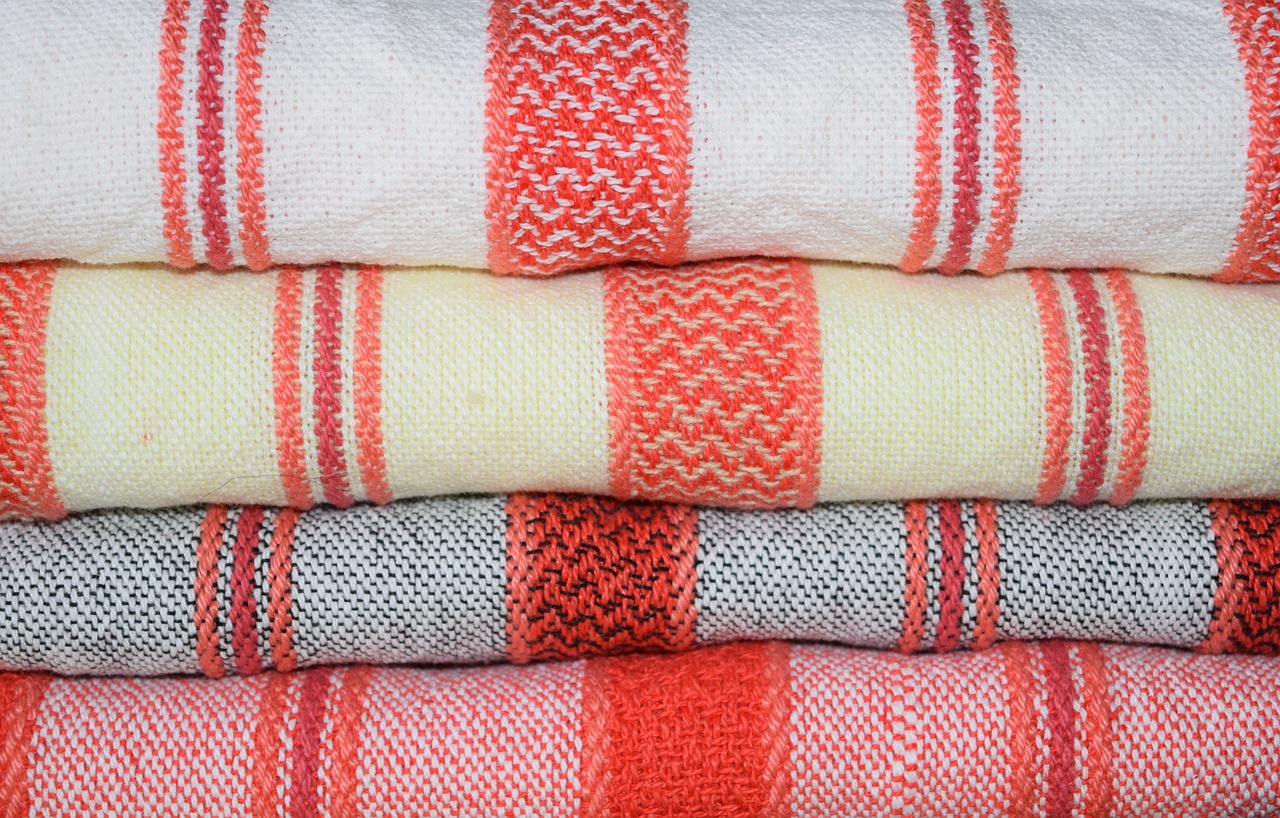
Within the broader family of woven structures, twill sits between the high interlacing frequency of plain weave and the long-float smoothness of satin. Public weaving education materials from organizations such as CottonWorks and textile museums commonly describe 2×2 twill as an over-two, under-two balanced structure, while general textile references describe twill as a weave family identified by diagonal ribs or wales.
How the 2×2 twill repeat is built
A basic 2×2 twill repeat is normally shown on four ends and four picks. In one common reading, a weft yarn passes over two warp yarns and then under two warp yarns. On the following pick, the interlacing point shifts by one end. Repeating that offset creates a diagonal path across the cloth face.
The same structure may be described from the warp direction or the weft direction, so notation should be read carefully. In many educational diagrams, dark and light squares show whether the warp is lifted or the weft is visible at a crossing point. The drawing convention may vary by source, but the structural idea is the same: a two-yarn float is followed by a two-yarn float on the opposite side.
Two details are especially important:
- Float length: The longest uninterrupted visible span is two yarn crossings in a standard 2×2 twill. This is longer than plain weave but shorter than many satin and 3/1 twill constructions.
- Step: The diagonal appears because each successive pick or end shifts the interlacing point. Without that regular step, the fabric may still have floats, but it will not read as a regular twill line.
In a straight 2×2 twill, the diagonal can rise to the right or to the left depending on the threading, lifting plan, and viewing direction. This is why terms such as right-hand twill and left-hand twill appear in fabric descriptions. Direction can affect the visual character, but performance still depends on yarn, density, fiber, finishing, and end use.
Why 2×2 twill changes fabric behavior
The main performance difference between 2×2 twill and plain weave comes from interlacing frequency. Plain weave interlaces at every crossing, creating a firm structure that can feel comparatively crisp. 2×2 twill has fewer interlacings and short floats, allowing the yarns to move slightly more freely. In a comparable fabric, that can improve drape and create a smoother touch.
Surface appearance
The diagonal line is the first visible feature. It may be subtle in low-contrast, matte yarns, or highly visible when yarn twist, color contrast, or light reflection emphasizes the wale. A balanced 2×2 twill usually has a more even face-and-back relationship than an uneven twill, although finishing can make one side look more prominent.
Hand and drape
Because the yarns are not locked at every crossing, 2×2 twill can feel more pliable than a comparable plain weave. This is one reason twill structures are common in apparel fabrics, uniforms, suiting, overshirts, and other applications where the fabric needs both body and movement. Weave alone, however, does not determine softness. Fiber type, yarn count, twist level, fabric weight, finishing chemistry, and mechanical finishing may change the hand more dramatically than the weave repeat.
Density and coverage
Short floats can improve visual coverage because yarns sit over more than one crossing before moving below the opposite yarn system. Compared with plain weave made from the same yarns, a twill may sometimes be woven at a closer sett. This can produce a compact fabric with good body. Still, there is no universal density number for all 2×2 twills. Cotton, wool, polyester, viscose, and blended yarns behave differently, and loom setup also matters.
Durability and abrasion considerations
Twill fabrics are often associated with strength and durability, and many durable fabrics belong to the twill family. It is not accurate, though, to say that every 2×2 twill is automatically stronger than every plain weave. A longer float may be smoother and more flexible, but exposed floats can also be more vulnerable to snagging or surface abrasion if the yarn, density, or finish is poorly matched to the application. For workwear or upholstery, abrasion testing and seam performance matter more than the weave name alone.
2×2 twill compared with plain, 2/1 twill and 3/1 twill
The most useful way to evaluate 2×2 twill is to compare it with neighboring weave structures. The table below summarizes typical structural differences. It is a guide for interpretation, not a substitute for laboratory testing or physical swatch review.
| Weave structure | Basic interlacing idea | Typical visual effect | Common performance tendency |
|---|---|---|---|
| Plain weave | Over one, under one | Fine grid with no twill diagonal | Firm, stable, and relatively crisp |
| 2×2 twill | Over two, under two with a step | Balanced diagonal wale | Smoother and more flexible than similar plain weave |
| 2/1 twill | Over two, under one or the reverse | Uneven twill face | More face emphasis from one yarn system |
| 3/1 twill | Over three, under one or the reverse | More pronounced face-side effect | Smoother face, longer floats, and potentially more surface exposure |
| Satin or sateen | Longer floats arranged to reduce obvious diagonals | Smooth, lustrous surface | High smoothness but often less interlacing stability |
Denim is a useful example of why terminology matters. Denim is widely known as a twill fabric, but many denim constructions use 3/1 or 2/1 twill rather than 2×2 twill. Calling a fabric twill does not define the exact repeat. A purchase specification should state whether the fabric is 2×2, 3/1, broken twill, herringbone twill, or another variation.
How to identify 2×2 twill in a fabric sample
Visual inspection can often identify a twill fabric, but confirming 2×2 twill requires checking the repeat. A hand lens or pick glass helps. Follow one yarn across the fabric and count how many opposite-direction yarns it floats over before going under. If the sequence is consistently two over and two under, and the interlacing point steps diagonally in the next row, the fabric is likely a 2×2 twill.
When evaluating a sample, check both the face and the back. A balanced 2×2 twill should not be as strongly one-sided as a 3/1 warp-faced construction, but color, yarn size, and finishing may make the two sides look different. Brushing, sanding, calendaring, resin finishing, or coating can obscure the original weave, so fabric analysis should not rely only on surface appearance. See also: Applications.
For specification, avoid writing only twill if 2×2 is required. A clearer specification may include:
- Weave: 2×2 twill or 2/2 twill
- Fiber composition and blend ratio
- Warp and weft yarn counts
- Ends per inch and picks per inch, or metric density equivalents
- Fabric weight, such as gsm or oz per square yard
- Finishing requirements, such as dyed, brushed, water-repellent, or sanforized where applicable
- Performance tests required for the end use, such as abrasion, tear strength, shrinkage, or colorfastness
This level of detail helps prevent confusion between a true 2×2 twill and other twill variants that may look similar in a small swatch.
Where 2×2 twill is useful and where it may not fit
2×2 twill is useful when a fabric needs visible texture, moderate flexibility, and a balanced face. It can work well in apparel fabrics that need body without excessive stiffness, including trousers, overshirts, jackets, uniforms, and certain wool or wool-blend suitings. It is also suitable for some home-textile and craft applications where the diagonal structure is part of the desired appearance.
The structure may be less suitable when maximum dimensional stability, very high snag resistance, or a completely flat grid appearance is required. In those cases, plain weave or a different engineered structure may be more appropriate. Conversely, if the goal is a very smooth, lustrous face with strong face-side dominance, a 3/1 twill, sateen, or satin-related structure may be considered instead.
From a sourcing perspective, 2×2 twill should be treated as one structural variable, not as a complete performance promise. A lightweight cotton 2×2 twill for shirts, a dense polyester-cotton uniform twill, and a wool serge-style fabric may all use related interlacing logic but behave very differently. The final result comes from the interaction of weave, yarn, fiber, density, finishing, and quality control.
Common specification mistakes to avoid
The first mistake is using 2×2 twill and twill as interchangeable terms. Twill is the family; 2×2 twill is one member of that family. The second mistake is assuming balanced structure means identical warp and weft density. In weave notation, balanced often refers to the over-two and under-two relationship, while actual fabric balance also depends on yarn size and sett.
A third mistake is treating diagonal direction as a minor cosmetic detail in all cases. For many fabrics it is mainly visual, but for brands matching repeat orders, garment panels, or existing standards, right-hand and left-hand twill should be controlled. A fourth mistake is approving a fabric only from a photo. Twill angle, rib clarity, hand, and surface reflection can change under different lighting and after finishing.
Finally, do not assume that a heavier 2×2 twill is automatically better. Weight may improve body, but excessive density or unsuitable finishing can reduce comfort, breathability, or drape. A good specification links the weave to the intended product rather than selecting the structure in isolation.
Frequently asked questions
Is 2×2 twill the same as 2/2 twill?
Yes. In most textile contexts, 2×2 twill and 2/2 twill refer to the same basic idea: an over-two, under-two twill repeat with a diagonal progression. The slash form is common in technical notation, while the x form is often used in buyer-friendly descriptions.
Is 2×2 twill stronger than plain weave?
Not always. A twill structure can provide good durability and flexibility, but strength depends on fiber, yarn quality, fabric density, finishing, and testing conditions. A well-made plain weave may outperform a poorly specified 2×2 twill in a demanding application.
Does 2×2 twill have a front and back side?
A balanced 2×2 twill is usually less face-dominant than 3/1 twill, but it can still show a preferred face depending on color, yarn twist, finishing, and diagonal direction. For production, the approved face side should be marked and controlled.
What is the main advantage of 2×2 twill?
The main advantage is balance. It offers a recognizable diagonal texture and more flexibility than a comparable plain weave, without using the longer floats found in many more face-dominant twills. That makes it a practical option for many medium-weight woven fabrics.
Can 2×2 twill be used for both natural and synthetic fibers?
Yes. The weave repeat can be used with cotton, wool, polyester, viscose, nylon, and blends, provided the yarn and loom settings are suitable. The fiber will strongly influence the final hand, strength, shrinkage, and care performance.