Twill weave cloth explained for fabric sourcing and design
Twill weave cloth in brief
Twill weave cloth is a woven fabric structure recognized by diagonal ribs, also called wales, on the fabric surface. The effect is created when yarns interlace in a repeated over-under sequence and each new row shifts by a regular offset. That shift is what separates twill from a plain checkerboard weave and gives the cloth its directional appearance. Textile references from institutions such as the Getty Art & Architecture Thesaurus, the Smithsonian, and university textile education programs commonly describe twill as one of the three basic woven structures, alongside plain weave and satin weave.
For fabric buyers, designers, and textile students, the main point is that twill is a weave, not a fiber. Cotton, wool, polyester, viscose, blends, and technical yarns can all be woven in twill. The final hand feel, strength, drape, wash behavior, and appearance depend on the weave together with yarn type, fabric weight, density, finishing, and dyeing.
How the twill structure is made
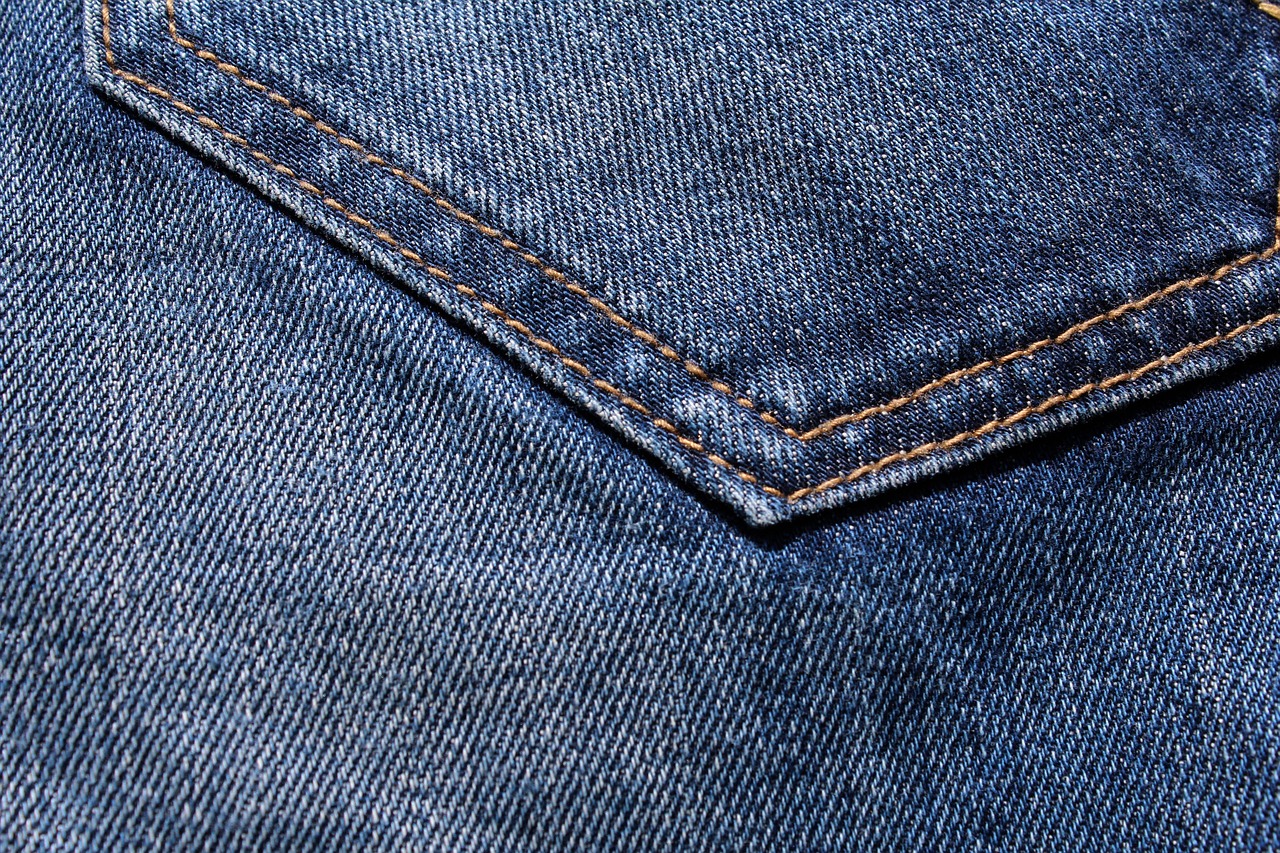
A woven fabric is built from two yarn systems. Warp yarns run lengthwise on the loom, while weft yarns are inserted crosswise. In plain weave, the yarns alternate over one and under one at each crossing. In twill, a yarn floats over or under more than one yarn before interlacing again. The next pick shifts the interlacing point, so the floats line up diagonally.
This construction is why twill can look smooth from a distance but show a clear angled line when viewed closely. The diagonal may rise from left to right or right to left, and the direction can influence both appearance and fabric behavior. In some twills the diagonal is subtle; in others, such as denim or gabardine, it is a defining visual feature.
Common twill ratios
Twill drafts are often described with ratios such as 2/1, 3/1, or 2/2. A 2/1 twill means a yarn passes over two yarns and under one before the repeat continues. A 3/1 twill creates longer floats and usually a more warp-faced surface. A 2/2 twill is more balanced, with two yarns over and two under. These numbers are not decorative labels. They describe how many interlacings occur and how much of one yarn system appears on the fabric face.
Face, back and fabric direction
Many twills have a clear face and back. Denim is a familiar example: dyed warp yarns dominate the face, while lighter weft yarns are more visible on the back. Balanced twills can look more similar on both sides, although the diagonal direction usually reverses. This matters in cutting, garment matching, upholstery layout, and quality inspection because panels cut in different directions may reflect light differently.
What twill changes in fabric performance
The diagonal structure of twill affects more than appearance. Because twill has fewer interlacing points than plain weave, yarns can often pack more closely and move with slightly more freedom. This is one reason twill fabrics are frequently associated with better drape, more body, and a softer break than a comparable plain weave made with similar yarns. The word comparable is important. A light cotton twill will not behave like a heavy wool twill, and a brushed twill will not behave like a crisp resin-finished twill.
| Performance factor | How twill weave cloth often behaves | What can change the result |
|---|---|---|
| Appearance | Shows diagonal ribs or a directional surface | Yarn color contrast, yarn twist, finishing and lighting |
| Drape | Often more pliable than a similar plain weave | Fiber content, yarn size, fabric weight and chemical finish |
| Durability | Often used where abrasion resistance and body are desired | Yarn strength, density, finishing and end use |
| Soil visibility | Texture may make light soiling less obvious than on flatter cloth | Color, surface hairiness, print design and care method |
| Dimensional behavior | Can be prone to skew or torque if poorly controlled | Weave direction, yarn twist, finishing, washing and garment construction |
Industry testing is still required when a specification includes performance claims. Fabric mass per unit area is commonly evaluated with ASTM D3776 methods. Dimensional change after home laundering is commonly associated with AATCC TM135, and skew change may be assessed with AATCC TM179. These method names should be treated as specification references, not as substitutes for testing an actual lot.
Twill weave cloth vs plain weave and satin weave
Plain, twill, and satin are often grouped together because they are the three fundamental woven structures. The difference is not only visual. Each structure manages interlacings and floats in a different way, which affects firmness, surface smoothness, movement, and snag risk.
| Weave | Basic structure | Typical visual cue | Common design reason |
|---|---|---|---|
| Plain weave | Over one, under one at every crossing | Simple grid or checkerboard surface | Firmness, simplicity and stability |
| Twill weave | Staggered floats that form diagonal lines | Diagonal ribs or wales | Drape, body, texture and durable everyday fabrics |
| Satin weave | Longer floats arranged to reduce obvious diagonal lines | Smooth, often lustrous surface | Sheen, smooth hand and dressier surfaces |
A practical comparison is denim, poplin, and satin lining. Denim is usually a warp-faced cotton twill, poplin is commonly a plain weave with a fine rib effect, and satin lining uses long floats to create a smooth surface. None of these fabric names tells the whole story by itself. Composition, construction, weight, finish, and intended use still need to be checked.
Readers exploring related structures can find more background in the weaves section, where woven construction terms can be compared across fabric categories.
Common types and applications
Denim and jean twill
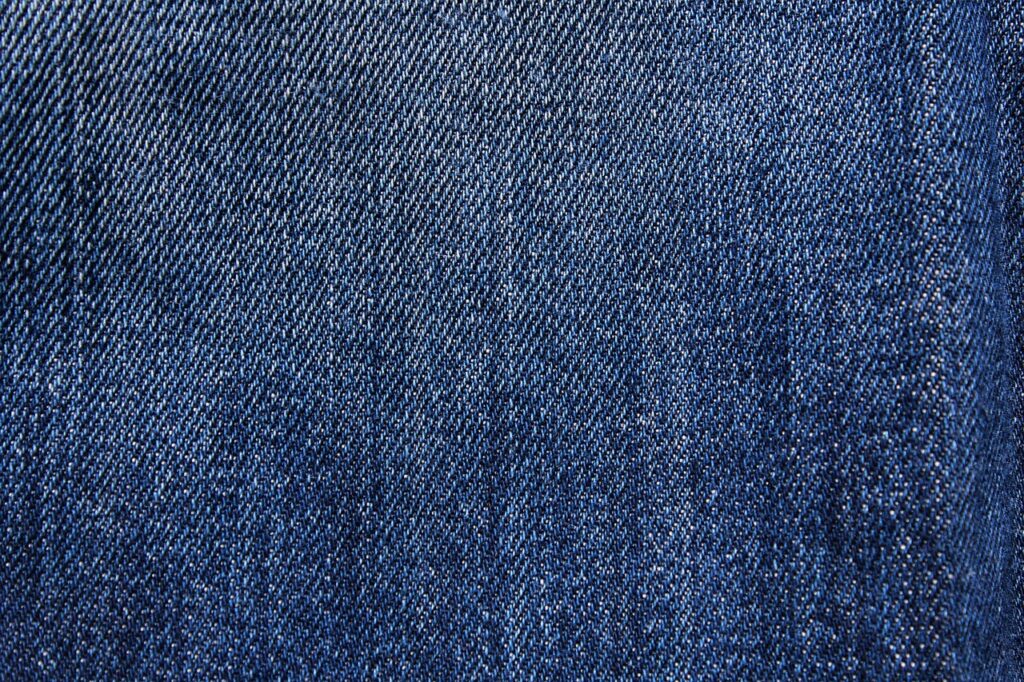
Denim is the most widely recognized twill example. It is generally a cotton twill with dyed warp yarns and undyed or lighter weft yarns. This gives the fabric a colored face, a lighter back, and a visible diagonal line. Denim weight, yarn character, dye type, finishing, and washing can produce very different results, from rigid workwear cloth to soft fashion denim.
Drill, chino and workwear twills
Drill and chino fabrics are usually associated with medium to heavier cotton or cotton-blend twills. They are used in trousers, uniforms, casual jackets, aprons, bags, and utility products because they can combine body, abrasion resistance, and a relatively neat surface. A compact twill can feel substantial without looking overly coarse, which is one reason it has long been used in practical apparel.
Gabardine, serge and suiting twills
Wool and wool-blend twills appear in tailoring, coats, uniforms, and suiting. Gabardine is known for a steep, firm twill line and a clean surface, while serge often shows a more balanced diagonal. In these fabrics, fiber quality, yarn twist, finishing, and pressing are as important as the weave itself. The twill provides the structural base, but the final character comes from the full production route. See also: Applications.
Herringbone and broken twill
Herringbone is a twill variation in which the diagonal direction reverses at regular intervals, creating a chevron or zigzag effect. Broken twill interrupts the continuous diagonal to reduce directional emphasis or alter fabric behavior. These variations are useful when designers want the body and movement of twill without a single uninterrupted wale across the fabric.
How to specify twill cloth for sourcing
For sourcing, asking only for twill weave cloth is rarely enough. The term identifies the weave family, but it does not define performance. A clear specification should connect construction details to the end use. Apparel, upholstery, bags, uniforms, bedding, and technical textiles all place different demands on the same basic weave family.
- Fiber content: State the exact fiber blend, such as 100% cotton, cotton-polyester, wool blend, recycled polyester, or stretch blend.
- Weave ratio: Identify whether the construction is 2/1, 3/1, 2/2, herringbone, broken twill, or another twill variant when known.
- Fabric weight: Specify mass per unit area, commonly in gsm or oz/yd², and align it with the intended product.
- Density and yarn count: Include ends per inch, picks per inch, yarn count, and yarn type when they are critical.
- Finish: Note whether the fabric is brushed, mercerized, peach finished, sanforized, water repellent, coated, resin finished, or garment washed.
- Performance tests: Define the required test method and acceptance level for shrinkage, skew, pilling, abrasion, colorfastness, tear strength, or tensile strength.
- Visual standard: Approve a physical swatch or lab dip because twill angle, luster, shade, and surface hairiness are difficult to judge from a written description alone.
The most reliable specification links the fabric to the final product. For trousers, dimensional stability and seam performance may be priorities. For bags, tear strength and abrasion may matter more. For bedding, softness, shrinkage, and colorfastness may lead the decision. For upholstery, abrasion, pilling, and cleanability become central.
Limitations and quality risks
Twill is versatile, but it is not automatically better than other weaves. The same diagonal floats that support drape and texture can create risks if construction and finishing are not controlled. Skew is one common concern: the fabric or garment can twist after laundering if the twill angle, yarn twist, or finishing tension is unstable. This is especially visible in trouser legs and side seams.
Longer floats can also be more exposed than the short interlacings of plain weave. In heavy-duty use, abrasion performance depends on yarn quality, fabric density, and finishing rather than on the twill name alone. A loosely woven twill may fail faster than a compact plain weave made with stronger yarn. Similarly, a soft brushed twill may feel appealing but can pill or show surface wear if the fiber and finish are not suitable for the end use.
Color and shade control also need attention. The diagonal surface can reflect light differently depending on fabric direction, so panels cut in opposite directions may look mismatched. This is not necessarily a dyeing defect; it can be a directional effect of the weave and surface finish. Marker planning and inspection standards should account for it.
Frequently asked questions
Is twill weave cloth the same as cotton twill?
No. Twill is a weave structure, while cotton is a fiber. Cotton twill is twill cloth made with cotton yarns, but twill can also be made from wool, polyester, nylon, viscose, lyocell, blends, and stretch yarn systems.
Why does twill fabric have diagonal lines?
The diagonal lines come from staggered interlacings. As each weft row shifts the over-under sequence by a regular step, the floats align into angled ribs across the fabric surface.
Is twill stronger than plain weave?
It depends on the comparison. Twill fabrics are often chosen for durable products because they can be dense, substantial, and flexible. However, strength is controlled by fiber, yarn, density, finish, and fabric weight. A weak yarn in a twill structure will not outperform a strong, compact plain weave.
Does twill shrink?
Twill can shrink if the fiber, yarn, and finishing are not stabilized before cutting or use. Shrinkage should be verified by testing, especially for garments, bedding, and washable home textiles. Buyers should specify acceptable dimensional change after laundering rather than relying on the weave name.
What products commonly use twill weave cloth?
Common uses include jeans, chinos, workwear, uniforms, jackets, coats, suiting, bags, aprons, upholstery, and some bedding fabrics. The best application depends on the full fabric specification, not only on whether the fabric is a twill.