Twill Weave Manufacturing Guide
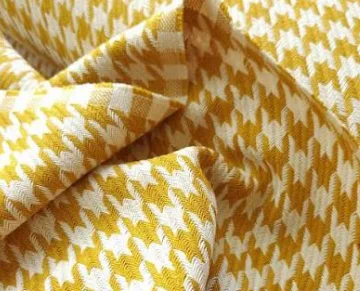
Twill weave is a very common fabric construction, known for its diagonal rib. Twill weave is very strong and flexible. It’s one of the most common weave patterns, often used in production of denim, gabardine and other industrial fabrics. The specific interlacing sequence of twill weave creates the fabric’s characteristic diagonal ribbing. In modern manufacturing twill weave is often preferred for both functional and aesthetic reasons. For instance, it hides stains and wear very well, which is why it is used in work clothes and also for upholstery. Plain weaves do not have the same properties as twill weave.
What Defines Twill Weave in Textile Manufacturing?
The characteristic of Twill weave is the diagonal lines, that are created by the weft yarns going over one or more warp yarns and then going under one or more warp yarns. The Twill pattern will then repeat itself over the fabric in a diagonal rib, either right-hand or left-hand slant. Twill weaves are identified by the number of warp yarns that are going in one direction to cross over the number of warp yarns that are going in the other direction, which is usually referred to as 2/1 Twill or 3/1 Twill etc.
Structure and Pattern Characteristics
The 2/1 twill construction is a typical example of a twill weave. Each weft thread goes over 2 warp threads and under 1 warp thread. With each row the weft shifts by one warp thread. As a result of this construction the diagonal of the twill weave is very prominent. Twill weaves have a higher thread count than plain weaves, which gives them a smooth surface and excellent drape.
Types of Twill Weaves
Types of twill weaves are classified as regular twill, herringbone, zigzag, and broken twill. Regular twill, herringbone, zigzag all have consistent diagonal lines. However, broken twill weave produces unique texture by disrupting line continuity. They are used for specific design or performance objective.
Applications Across Industries
Twill fabric can be used in garment such as jeans, chinos, and suit wear. And it is used for upholstery textiles, for industrial filter papers, and for making of composite material which are requiring mechanical property. It has balance property of softness and durability.
How Does Yarn Selection Influence Twill Weave Quality?
The yarn chosen for the piece will affect the finished fabric’s appearance and its mechanical and tactile properties. The fiber, the yarn’s twist and its fineness will determine how well the diagonal lines of the weave are visible and how strong the finished fabric will be.
Fiber Type Considerations
Twill weaves are mostly made of cotton, due to its positive properties concerning wearing comfort and air-permeability. High-quality wool twills are appreciated for their warmth and feature. Twill weaves made from synthetic fibers, such as polyester, are mainly used when high wear resistance and tensile strength are desired. Also, mixed fibers are used for two-fold qualities, which have a positive property of work wear, for example cotton-polyester mixed fiber fabrics, which are durable and also wear comfortable.
Yarn Twist and Fineness
Increasing the twist level of yarns within fabric increases the firmness of the fabric and can detract from softness. Fine yarns can produce smooth surfaces that include the subtle diagonal of the yarn, and coarser yarns can create textured surfaces that are highly aesthetic and also functional for applications such as outerwear and work wear. Achieving a balance between aesthetics and function is key.
Coloration Effects on Appearance
The weave of a textile affects how light falls on it. The peaks and troughs of the weave affect how light is able to bounce off of the surface of the material. This is part of what gives dyed twill fabrics such depth compared to flat weave fabrics. Piece-dyed denim, for example, uses different colors of dye on warp and weft. This highlights the diagonal of the warp and weft and the individual threads in the fabric.
What Are the Key Steps in Twill Weave Fabric Production?
High quality twill is produced with strict control from warping through to the finish. Each stage has a function to ensure evenness, clarity of surface and stability of dimensions.
Warping and Sizing Process
Warping is the setting up of yarns of desired density on to beams and the sizing follows. In sizing, warp yarns are coated with protective films of starch or synthetic polymers. This sizing protects the warp yarns from breakage under the forces in weaving when on tension on the loom.
Loom Settings for Twill Patterns
The weaving machine has to be set up to match the repeat of a pattern and the pick up density. The Jacquard loom allows for complex patterns, even herringbone- or zigzag-variations, by enabling individual warp threads to be controlled electronically. Also important is that the warp is at constant tension, in order to draw sharp diagonal lines without slippage.
Finishing Techniques
Fabrics can undergo a number of processes following the weaving process, depending on the end use for the fabric. These processes can include desizing, washing, singeing and calendaring. Special washing processes can be used for denim-style twill to produce a soft fabric with plenty of texture contrast, with the ribs of the twill weave rising above the surface of the fabric, and the recessed areas below. In addition to washing, processes such as sanding or abrasion can be used to create further texture and increase contrast between the raised and recessed areas.
Why Is Twill Weave Preferred Over Plain or Satin Structures?
Twill is chosen by many manufacturers because it offers the greatest balance of strength to flexibility of any of the basic weaves.
Mechanical Strength Advantage
The staggered interlacing distributes stress evenly across fibers. Compared with plain weave—which has frequent interlacings causing stiffness—twill offers improved tear resistance while maintaining pliability.
Aesthetic Versatility
A key feature of the diagonal ribs found in most woven fabrics is that they create visual depth that plain/satin weave do not. This visual interest is exploited by designers to create an array of effects including highlights or shadow gradations that are all created through the weave alone without the designer having to go to the expense of additional dyeing.
Functional Benefits in Use
This densely woven twill has superior wrinkle recovery to plain weave whilst still maintaining porosity to make a comfortable wear for casual wear such as chinos/ uniform etc. It conceals soiling well therefore makes ideal garment for wear that will be subject to heavy wear.
How Do Modern Technologies Enhance Twill Weave Production?
Automation has greatly affected how Mills produce consistent quality twills on a large scale whilst trying to reduce waste.
Computer-Aided Design Integration
We can simulate and test any kind of weave on a CAD system before we start producing. We can check and test out pick ratio’s and float length’s immediately on the CAD system without having to make trial runs on the loom.
Advanced Loom Automation
Modern air-jet or rapier looms are able to run at very high speeds. Additionally, great precision is possible when it comes to the warp thread tension as well as the insertion angle. The electronic dobby system, for example, enables a change of patterns within a split second and without any mechanical reworking. This is crucial for small-scale production runs in the field of fashion.
Sustainable Manufacturing Practices
Sizing agents made from natural polymers for eco-friendly usage have replaced traditional usage of starch-based desizing agents that generate wastewater load during desizing. Yarn made from recycled polyester is being used extensively for making cotton-twill blends to reduce the usage of virgin fibers.
What Challenges Exist in Maintaining Quality Control?
Despite the recent technological advances in weaving it is still a challenge to consistently produce articles of uniform quality within a batch, and even within large batches of similar design.
Yarn Irregularities
Variation in linear mass of received yarn lots causes variation in the diagonals, often described as ‘shade bars’ between ends. Checking the received lots for mass variation before warping is started is the main means to control this variation.
Loom Tension Fluctuations
Uneven warp tension can cause distorted ribs or skewed diagonals on finished fabrics. In modern weaving facilities warp tension is continuously monitored with optical sensors in the weft- or pickup-dropper during production runs.
Finishing Defects
Uncontrolled calendaring can cause excessive flattening of ribs; Over washing could cause diagonal clarity to be lost in washed dyed fabrics such as denim. Quality teams must weigh the finishing intensity required against the need to maintain structural integrity.
FAQ
Q1. What is the main difference between Right-Hand Twill and Left-Hand Twill fabric? A. The two types of Twill, Right-Hand and Left-Hand, travel up the fabric in opposite diagonal directions. From the right side of the fabric, Right-Hand Twill goes up the left side and down the right side, whereas Left-Hand Twill goes up the right side and down the left side. This causes one side to look smoother than the other due to yarn twist, and that is the right-hand way of spinning yarn in typical spinning practice.
Q2: Why Does Denim Use a 3/1 Twill Structure? A: The 3/1 configuration gives denim its typical firmness and the required flexibility for stress as denim garments.
Q3. Can Synthetic Fibers Replicate Cotton-Twill Comfort? A. While Synthetic fibers alone do not have the same moisture absorption as Cotton fibers. By blending Synthetic fibers with Cotton fibers, can create clothing that mimics the comfort of Cotton-Twill, while providing increased durability and crease recovery.
Q4: How Does Broken Twill Prevent Leg-Twist in Jeans? A. Broken twill prevents leg-twist in jeans by alternating the diagonal of the twill in a periodic fashion across the width of the fabric, thereby cancelling out the torque created during wear and washing that would otherwise cause the seam to twist sideways.
Q5. Is Twill suitable for technical textiles? A. Yes. The dense interlacing of twill Weaves provide high tensile strength for industrial filter tapes, protective clothing layers or as a substrate for fiber reinforcements in composites. Its high dimensional stability makes it an ideal material for these applications.