Choosing Basket Weave Fabrics
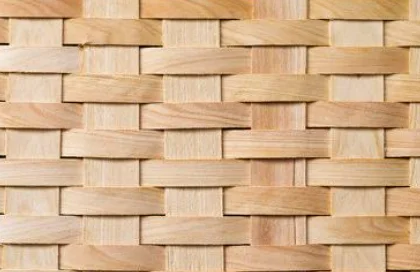
There are a variety of different basket weave fabrics that are well known for their unique woven patterns and hard wearing properties making them ideal for use in Upholstery, Fashion and Home Decor amongst many other uses. Each Basket weave fabric has its own unique look and the weaving pattern can add movement and a sense of life and rhythm to the fabric, creating a great contrast to more plain fabrics in order to add depth and variety. Basket weave fabrics are often chosen for their durability, however choosing the correct basket weave fabric will rely on a number of factors including the type of fiber, the density of the weave, the finish to the fabric and the intended use of the fabric. A professional would see the versatility of basket weave fabric, its ability to be hard wearing whilst at the same time being attractive and would choose it for a variety of applications including those of high traffic.
What Defines a Basket Weave Fabric?
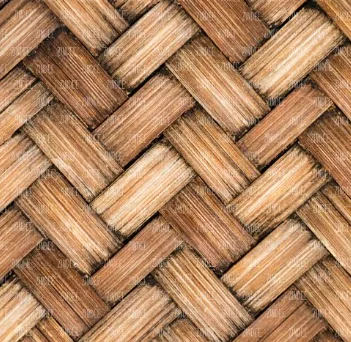
The Basket weave is a variation of the plain weave. Two or more warp ends and corresponding weft ends are woven together in groups. The resulting fabric has a deep and textured check effect.
Structural Characteristics
One of the defining characteristic of basket weave stitch is that the yarns are grouped evenly together to form a grid or net-like pattern. The 2×2 is the simplest basket weave form but there are other variations, like 3×3 or 4×4 for heavier stitches. The repetition of the pattern gives the fabric a balanced and subtle 3D structure. This kind of stitch has the possibility of being both flexible and firm depending on the weight of the yarns used.
Common Fiber Types
Basket weaves can be made of cotton, linen, polyester or a mix of fibers. Cotton Basket Weaves are very breathable and soft, often used in casual garments and home drapery. Linen Basket Weaves are crisp and have a natural sheen and are best used for interior textiles. The synthetic fibers such as polyester are very durable, abrasion resistant and colorfast and are therefore perfect for use in upholstery and for outdoor applications.
Visual and Tactile Appeal
This woven pattern provides a ‘textured’ feel to this fabric, as opposed to the smooth satin or twill, for example. Basket weave has a wonderful tactile quality that provides a lot of visual interest to this product. As light falls across the individual interstices within the weave, the varying tonal quality created by this fabric creates additional depth to the surface of the material. Basket weave creates a understated, yet very sophisticated looking product.
Why Is Basket Weave Popular in Upholstery?
Basket weave materials are amongst the harder wearing of all coverings and feature a dense, intricate weave that provides fantastic longevity whilst affording the interior designer the use of a wide variety of palettes and designs to ensure complete consistency with any relevant scheme.
As a pre-amble to the advantages of the upholstery-grade basket weave, the knit construction has denser yarn groupings which enable the fabric to be less prone to snagging and to remain breathable a quality that is critical to the long life of any furniture.
Durability and Strength
By interlacing the groups evenly across the fabric’s surface the tension is distributed also evenly. As opposed to other looser weaves, basket weave will thus prevent early wear at very points, pilling and distortion caused by repeated friction.
Aesthetic Versatility
Basket weave is a simple and neutral geometric pattern that can fit in with a variety of interior design styles, from minimalist to rustic. It can be paired with any color, either solid or patterned, and can be used as a focal point or as a texture in the background depending on the size and the finish.
Maintenance Considerations
Basket weave materials have built in balance of tension in them, and so most cannot wrinkle. However, it is always recommended to check how to best clean the basket weave material as natural fibers may require dry cleaning or hand cleaning by a professional to avoid shrinkage. Synthetic fibers may be spot cleaned with a very mild detergent solution.
How Does Yarn Density Affect Performance?
The density of a yarn is crucial to the mass, elasticity and feel of a yarn. In the realm of technical textiles as well as that of aesthetic possibilities the three factors of weight, flexibility and tactile response are very critical.
A more densely constructed area of the garment will give greater strength to the area than a more loosely constructed area. But a more densely constructed area will give less flexibility than a more loosely constructed area and the looser areas will give greater drape to the garment, but could also grab and fold and crease under stress.
High-Density Weaves
High-density basket weaves are the favored heavy-duty material for applications such as commercial seating or luggage panels. The basket weave is densely compacted meaning that it has great resistance to wear and to stretching. Its shape retention is also of a long-term nature.
Medium-Density Weaves
There are medium-density versions that are average between flexibility and form stability. Medium-density versions of materials are most frequently found in domestic market of furniture and clothes.
Low-Density Weaves
A looser weave provides superior air permeability making it suitable for summer wear such as clothing and even curtains, however it would require reinforcement at stress points due to its lower tensile strength.
What Role Do Finishes Play in Enhancing Functionality?
Finishing treatments extend the use of basket weave fabrics by altering the surface characteristics of the fabric without affecting the basic fabric structure.
Most finishes are selected based on information gathered before selecting a finish about the intended end use of the wood. Information about the amount of sunlight a finish will be exposed to and the amount of moisture it will be subjected to or the level of friction the surface will receive will help to determine whether a chemical finish process or a mechanical finish process would be best.
Protective Coatings
Coatings containing stain resistant / water repellent finishes can increase the practicality of products used within the hospitality market where spills can occur regularly. Such finishes provide an invisible layer to protect the fibers, whilst still enabling breathability to occur.
Softening Treatments
Mechanical finishing processes such as calendaring can remove surface roughness caused by thicker yarn interlacings, giving softer handle while still maintaining wear. These processes are particularly suited to garment construction.
Colorfast Dyeing Processes
Given that basket weaves are often exposed and viewable, the penetration of color from the dyeing process is critical. The solution-dyed synthetic fibers retain color in exterior exposure better than the piece-dyed natural fibers and thus are better suited for the exterior use of today’s furnishings.
How Do Designers Integrate Basket Weave into Modern Applications?
Designers are revisiting classic weaving designs and interpreting them by means of digital fabrication; yet, they are not lacking in handwoven touch and feel.
This approach combines high quality craftsmanship with industrial precision, a focus that is currently highly appreciated within the context of innovative textile development.
Fashion Industry Use Cases
There is also use of lightweight cotton-linen blends in structural items such as jackets and skirts where texture provides depth to the apparel without weight. These designs use the grid to outline the tailoring which can just be seen when wearing the garment and under certain lighting.
Interior Design Applications
Large-scale basket weave are used on cushions and wall-panels by Interior specialists in order to contrast smooth surfaces of glass, metal etc with rough tactile surfaces. The repetitive weave of a large-scale basket weave can add warmth to a space that is stripped of decor to create softness within a minimalist environment, yet still remain appropriate within the overall architecture of a space.
Industrial and Technical Uses
Reinforced polyester basket weaves not only have an aesthetic value, but also have functional applications such as filtration media or protective gear. These forms of weaves have controlled porosity and high tear resistance, a property that is inherent to grouped-yarn configurations.
How Should One Choose the Right Basket Weave Fabric?
Choosing fabric for a product to be developed involves a number of factors including environmental exposure, a user’s tactile expectations, a user’s ability to maintain the product, and the user’s budget, and should not be based solely on how it looks.
When making a decision, we weigh up a number of parameters against each other in relation to the objectives of a particular project. In a comfort-oriented interior design or performance-oriented production context, for example.
Assessing Intended Use
For constant contact pressure in upholstery, choose high-density synthetic fibers for excellent dimensional stability. While lightweight cotton/linen materials are suitable for purely decorative cushions where visual warmth is more important than wear, high-density synthetic fibers are best for upholstery that will be subjected to constant contact pressure.
Evaluating Environmental Factors
Natural fibers react to humidity in very different ways to synthetic fibers. Linen for example will absorb moisture but will swell very slightly. In contrast to this polyester is dimensionally stable and so perfect for coastal interior design or for use in outside lounge areas.
Balancing Cost Versus Longevity
Although premium blends have a higher up-front cost than others, they have a longer life which can in the long run pay off for the costs of replacing them. Many procurement specialists look at these costs during the material selection process.
FAQ
Q1: Is basket weave suitable for outdoor use for making furniture? A1: Yes. Basket weave made from solution-dyed acrylics or polyesters with outside UV resistant coatings are very suitable for outdoor use because they are very stable and do not fade.
Q2: Can basket weave fabrics be machine washed? A: It depends on fiber content; synthetic types generally tolerate gentle cycles while natural ones like linen should be dry-cleaned to avoid distortion.
Q3: What is it about basket weave that makes it stronger than plain weave? A: Basket weave is stronger because the grouped yarns of interlacing threads spread the stress to all of the interlacing threads. Plain weave spreads stress in a linear fashion along the individual interlacing points as opposed to in all the interlacing threads of a group.
Q4: Are there any eco-friendly versions of this fabric? A: Yes there are. Organic cotton as well as Recycled polyester eco-friendly versions of this traditional fabric are available, offering sustainable design while still maintaining the beautiful fabric texture that traditional designs possess.
Q5. How do you minimize fading of colored basket weaves? A. Solution-dyed fibers have pigment that is integrated into polymer chains before fiber is extruded. This results in superior colorfastness to that offered by surface dyeing found in many cheaper alternatives.