Construction Textile Benefit
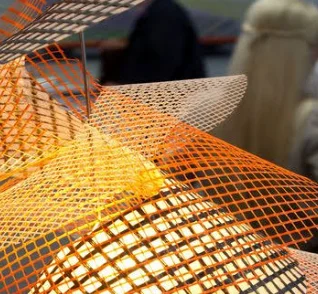
Construction textiles, have become an essential material in modern construction projects. The use of engineered fabrics in civil engineering, architectural applications as well as in environmental protection enables improved strength, durability and also increased sustainability of structures. Interaction of the material with soil, water and air is significantly changed by using construction textiles. The main advantages of using construction textiles in structures are based on the unique properties of the material, i.e. it is light weight but at the same time strong enough and allows construction friendly and efficient and cost effective long lasting structures.
What Are Construction Textiles and Why Are They Important?
Construction textiles are also known as geotextiles or architectural fabrics. These technical textiles are specifically designed for use in construction and can act as a barrier, filter, reinforcing material or protective covering depending on the application. As the world of industry continues to demand stronger, more flexible materials, the use of construction textiles is becoming increasingly important.
Definition and Classification
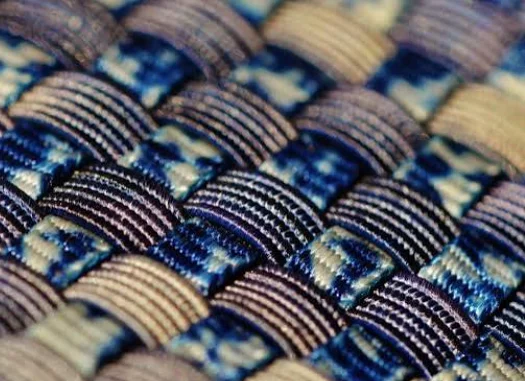
Construction textiles consist of woven, nonwoven and knitted materials from synthetic fibers, mostly polyester or polypropylene. Depending on their application in building, the corresponding textile is selected on the basis of its mechanical characteristics and its ability to resist stress brought on by the environment. Thus woven materials have the highest tensile strength and therefore are ideal for reinforcing building components. Nonwovens with their porous structure are better for filtration purposes and separation tasks whereas knitted materials are flexible.
Key Functional Roles
These textiles can fulfill many functions: separating different soil layers to prevent them from mixing up; filtering of water while keeping fine-grained particles; ensuring of drainage by guiding liquids through individual layers; and finally supporting weak subgrades by reinforcing them. As a roof or façade covering they can also function as a membrane which controls the exchange of moisture and heat.
Common Applications Across Industries
Construction textiles appear in road building, embankment stabilization, erosion control systems, tunnel linings, roofing membranes, and tensile structures like stadium canopies. Their versatility allows engineers to design efficient systems that meet both structural and environmental demands.
How Do Construction Textiles Improve Structural Performance?
Integration of construction textiles into design of engineering components affects distribution of loads on component, and its durability. Stabilizing layer of construction textiles is between different mechanical properties of materials. Such layer prevents deformation and settlement of materials over time.
Reinforcement Mechanisms
The principal function of geotextiles as reinforcement is to withstand tensile forces of the geosolids which cannot resist these forces on their own. A good example of this application in road construction is by using a woven geotextile under the surface course of a road. It will distribute the heavy loads of vehicles on the road evenly on the subgrade and prevent rutting of the surface course. The main advantage of using geotextiles as reinforcement in road construction is that it increases the structural strength of the road and extends the life of the pavement without increasing the thickness of the pavement.
Soil Stabilization Benefits
In loose soils like clay or peat, construction textiles can even enhance stability by filling the space between the soil particles and thereby restricting their excessive lateral displacement. This provides the higher load bearing capacity that is often required for foundations and for retaining walls in such weak soils.
Load Distribution Efficiency
They are designed to create uniform stress transfer through the layers of fabrics. By doing so, these unique geosynthetic layers minimize the risk of differential settlement in geosynthetic reinforced embankments and landfills. All the benefits of their long service life of decades are created to meet and fulfill their designed performance with minimal need for any maintenance.
How Do Construction Textiles Contribute to Sustainability?
Sustainability has become a central element in the planning of modern structures. Also construction textiles can contribute to this development. They help to reduce the amount of primary materials required and in addition to extend the service life of structures.
Resource Efficiency
Textile-based system have lower carbon footprint when compared with traditional solutions such as gravel or concrete. The use of less excavation and smaller amount of natural aggregates reduce the amount of carbon emission that are produced during the transport and construction phase. This is especially important in public infrastructure projects that aim to be ‘green’ and seek certifications.
Waste Reduction Through Durability
The use of the highest quality synthetic fibers gives our installations outstanding resistance to deterioration by UV radiation, by aggressive chemicals and by biological attack. Installations therefore have longer life before replacement is required. This leads to a reduction in waste produced over the lifecycle of the installation.
Support for Green Building Standards
Technical fabrics are increasingly considered in sustainable building frameworks to improve energy efficiency and environmental performance. A simple example is the use of a reflective roof membrane made of coated polyester for example to reduce cooling demand in hot climates by reflecting solar radiation.
What Are the Economic Advantages of Using Construction Textiles?
After performance benefits, cost effectiveness is probably the greatest argument in favor of using textile construction products.
Reduced Material Costs
These fabrics can replace thick layers of crushed stone or even thick concrete slabs in many applications. They save on transportation volume as well as on site work.
Lower Maintenance Expenditure
Once a geotextile system has been installed correctly and put into operation it requires minimal maintenance when compared to conventional systems of reinforcement which are prone to cracking and/or damage from erosion. This greatly reduced frequency of maintenance leads to significant savings for municipal and private operators of large infrastructure such as highways and a wide variety of drainage structures.
Faster Project Timelines
The lightweight and portable nature of geosynthetic rolls allows for them to be rapidly deployed in remote wetland or sloping construction sites where conventional heavy machinery cannot access the site. Reduced installation time enables the project to complete and be put into use earlier, meeting critical schedules and weather constraints.
How Do Construction Textiles Enhance Safety in Engineering Projects?
In addition to the human factor it is necessary to consider the structural safety during extreme weather, flood or earthquakes. The safety of construction textiles also has to be evaluated.
Erosion Control Systems
In the framework of coastal protection or stabilized river banks subject to high flow velocities, nonwoven geotextiles prevent soil loss and permit the passage of water. The geotextile functions as a flexible layer of armor geosynthetics behind boulder protections, rockfill shore protection, sandbags or others and moves with a fluid like quality and does not fail in a sudden manner during extreme storm events.
Slope Stabilization Techniques
Reinforced mats made from high-tenacity polyester yarns can be used on unstable slopes prone to landslides to stabilize the surface vegetation layer and to lock-in the deeper soil layers by mechanical interlocking with the soil particles. Thus on very steep slopes also during heavy rainfalls no displacement of the slope can occur.
Protective Barriers Against Environmental Stressors
Architectural membranes on building façades protect internal building structures from UV radiation and from moisture penetration whilst remaining breathable to prevent deterioration caused by condensation in the building over time.
What Challenges Exist When Implementing Construction Textiles?
Although many advantages have been identified for the adoption of green building practices for new buildings, there are also a number of real practical problems facing designers and practitioners that relate particularly to design integration and long term monitoring.
Quality Control During Manufacturing
The uniformity of fiber quality and the precise pore size distribution of the fabric matrix are crucial for performance consistency. Uncontrolled variations in fiber quality could cause inconsistent filtration performance and possible premature wear and tear underground. As the underground installation cannot be easily inspected for damage after backfilling has been completed, it is vital that all possible measures are taken to ensure consistent fiber quality and matrix pore size distribution.
Compatibility With Local Soil Conditions
Soil types can interact differently with synthetic additives and significantly affect the long term stability of the polymer within the soil. Thus, prior to widespread application on very large areas such as highway or embankment slopes, pre-installation trials on a representative sample from the site in question will be necessary.
Skilled Installation Requirements
Proper placement without wrinkles or tension imbalances determines whether intended functions like separation or drainage actually perform effectively long term. Training field crews adequately ensures these details aren’t overlooked during fast-paced construction phases driven by schedule pressure rather than precision craftsmanship.
FAQ
Q1: What are the common materials used in construction textiles? A: Polyester (PET) and polypropylene (PP) are the most common materials used in construction textiles. These two materials have a high strength-to-weight ratio and do not absorb moisture or are not attacked by microorganisms.
Q2. Can construction textiles be recycled after use? A. Yes. Modern construction products contain a large percentage of recyclable polymers and can be recovered at end-of-life by a number of mechanical processes. They can then be re-extruded into new fibers.
Q3. Are there standards covering quality assurance? A. Yes there are. ISO 10318-1 sets out terminology and then there is ASTM D4595 a test method for tensile testing of drillstrings. The advantage for manufacturers around the world is that all quality is tested and rated in exactly the same way.
Q4: How long will geotextile reinforcement be good for? A: Geotextile reinforcement can maintain its functional properties for over 50 years when correctly installed in a below ground application and protected from UV exposure.
Q5. How do construction textiles affect groundwater flow patterns? A. They can control or ‘regulate’ the flow of groundwater by controlling the hydraulic conductivity of the overall composite. Allow controlled release of seepage to prevent dangerous hydrostatic pressure build up behind retaining structures.