Geotextile Applications in Civil Engineering
Modern engineering design is taking advantage of the geosynthetics, particularly of geotextiles, which have become an important component of our infrastructure projects. Geotextiles are porous or permeable textile structures made of natural and/or synthetic fibers, used for soil stabilization, drainage, filtration and reinforcement applications in civil engineering construction. As part of the structures, geotextiles have become an integral component that improves the structures’ stability, extends the structures’ life and makes the structures’ construction more cost effective and environmentally friendly. Importantly, appropriate geotextile must be selected and properly installed to optimize the structures’ performance.
What Are the Primary Functions of Geotextiles in Civil Engineering?
Geotextiles can perform a number of functions. These can include; acting as a separator, filter, reinforcement or a drain. The function that the geotextile is designed to perform will depend upon the application for which the geotextile is to be used. In addition, the function that the geotextile is to perform will be affected by the type of project for which it is to be used as well as the soil that it will be used in.
Separation Function in Road Construction
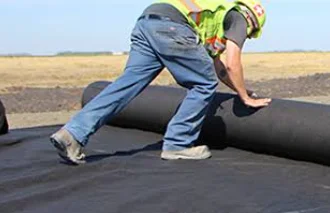
Geotextiles are used in road construction to prevent the subgrade soil from mixing with the above layers of aggregate. This can cause rutting and/or deformation under load. By separating the different layers of material nonwoven geotextiles prevent such problems occurring. They are also permeable which allows water to drain through the geotextile and thus prevent any water logging occurring in the below subgrade soil. An example of the use of geotextiles in road construction would be building a highway across a weak clay subgrade. Nonwoven geotextiles are commonly used for such applications and provide a stable base course that is cost effective to maintain.
Filtration Function for Hydraulic Structures
Filtration is another critical role of geotextiles in civil works such as dams, canals, and retaining walls. The fabric allows water to pass through while preventing fine soil particles from being washed away. Engineers typically select nonwoven needle-punched fabrics for this function because their pore structure balances permeability with particle retention. This helps prevent internal erosion or piping failures behind retaining structures.
Reinforcement Function in Embankments
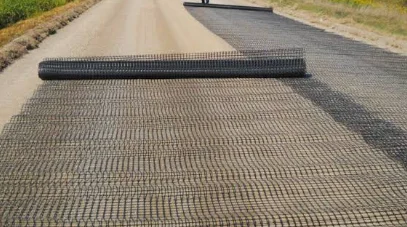
Geotextiles may be used for reinforcement. The great tensile strength of geotextiles can be used to improve the strength of weak soils. For the support of embankments on poor foundations, woven geotextiles can be used to improve settlement. Geotextiles are especially suitable for coastal and flood-prone areas where the subgrade has a low strength.
How Do Geotextiles Contribute to Soil Stabilization?
Soil stabilization with geotextiles is one of the earliest and widest used applications of geotextiles. By improving the transfer of loads through the soil and reducing the shear resistance within the soil between individual layers, geotextiles can modify the properties of the soil. Depending on the application, the ground as a whole can be made to perform better.
Load Distribution and Stress Reduction
Geotextiles are designed to distribute loads across a greater area when laid between soft subgrade and granular fill. This helps to prevent localized failure and makes for a more stable structure under heavy traffic or structural loads. By distributing stress more evenly through the fill, geotextiles reduce long-term settlement and extend the life of the pavement.
Mitigation of Differential Settlement
Geotextiles have the capability to maintain a uniform transfer of load and thus prevent any excessive differential settlement. In applications with variable subsoil such as alternate layers of silt and sand, geotextiles are thus ideal for applications such as a railway track bed. Any uneven settlement could cause problems with alignment or cause excessive vibration.
Erosion Control on Slopes
For slope stabilization projects, geotextiles are combined with vegetation or rock armor to control surface erosion. They hold soil particles together during rainfall events while allowing moisture infiltration necessary for plant growth. This dual effect enhances both mechanical stability and ecological restoration of slopes.
Why Are Geotextiles Essential in Drainage Systems?
The design of the drainage for an infrastructure system can mean the difference between a successful long-lasting system and a short-lived failure due to water pressure or clogging.
Subsurface Drainage Layers
Geotextiles function as filters that are placed around a number of perforated pipes, or a French drain in a gravel trench. Their function is to stop soil entering into the drain and to allow the drain to function continuously at optimum flow capacity. In this situation, the geotextile functions to stop the finer soils from pouring into the drain, whilst allowing water to escape from the surrounding ground and flow down into the drain, and then be collected at the end of the pipe.
Vertical Drains for Consolidation
During ground improvement of soft clay deposits, prefabricated vertical drains (PVDs) that are provided with geotextile covering can speed up the consolidation process considerably by shortening the drainage path of the water flowing out of the pores. Embankments and also airport surfaces can be constructed within a short period of time by utilizing PVDs in soft soils.
Drainage Behind Retaining Walls
Geotextile behind retaining structures prevent backfill clogging of drains by separating the soil from the gravel filter. After years of service the same pressure release is still effective.
How Are Geotextiles Used in Pavement Design?
Modern pavement systems increasingly rely on geosynthetics to face the challenges posed by traffic and the environment.
Base Course Stabilization
Flexible pavements utilizing woven geotextiles in the base course of a pavement lock down the aggregates to resist lateral spreading under cyclic loading. A major function of geotextiles in base courses is to contain the base course material and to assure adequate drainage to prevent rutting over time.
Reflective Crack Control
Geotextile interlayers placed between old asphalt surfaces and new overlays delay crack propagation caused by thermal movement or fatigue stresses. These interlayers act as stress-absorbing membranes that prolong pavement service life without adding significant thickness.
Moisture Barrier Enhancement
Some composite geotextiles are designed as moisture barriers within pavement systems and are a combination of an impermeable membrane and a nonwoven geotextile. Such geotextiles can prevent groundwater from rising up through the base course in cold weather and may withstand many freeze–thaw cycles without losing strength.
What Factors Influence the Selection of Geotextile Materials?
When selecting the correct geotextile there are a number of technical parameters related to site conditions and intended use that must be taken into account.
Mechanical Properties
The key properties that affect a fabric’s ability to withstand installation damage or normal operational stress are Tensile strength, Elongation at break, Puncture resistance and Seam strength. Woven polypropylene fabrics have very high tensile properties and are therefore well suited to reinforcement applications.
Hydraulic Characteristics
Permeability and apparent opening size (AOS) of geotextiles are parameters determining the ability of a geotextile to allow water to pass through without blocking. For applications, where high flow rates are needed and the geotextile shall at the same time have to withstand large soil forces, nonwoven polyester geotextiles are preferred.
Durability Against Environmental Exposure
Resistance to ultraviolet radiation, chemical degradation, and biological attack affects long-term performance outdoors. UV-stabilized synthetic fibers extend service life under direct sunlight exposure common in slope protection applications.
How Do Geotextiles Support Sustainable Construction Practices?
The environmental benefits afforded by geotextiles are closely aligned with sustainable engineering objectives including resource efficiency and reduced ecological footprint.
Material Efficiency and Waste Reduction
Reinforcing weak soils in place rather than filling with imported fill reduces a project’s consumption of natural resources such as in situ soils, aggregates and cement-treated bases. This approach also reduces greenhouse gas emissions associated with the transport and processing of these alternative fill materials.
Longevity of Infrastructure Assets
Geotextile-reinforced systems have a greater lifespan and thus require less maintenance due to resistance to deformation and erosion. This leads to lower lifecycle costs and less disturbance during repair work.
Support for Green Infrastructure Solutions
A great application of geotextiles in urban stormwater management are permeable pavements and swales designed to infiltrate stormwater. The use of geotextiles to isolate different layers of fill whilst maximizing infiltration through the base course is recognized as good practice in sustainable drainage worldwide.
FAQ
Q1. What polymers are used for making geotextiles in manufacturing? A. Polypropylene (PP) and polyester (PET) are the most commonly used polymers for geotextiles. These materials have high tensile strength and good chemical resistance and are suitable for use in harsh field conditions.
Q2. Can natural fibers be used as geotextiles? A. Yes. There are used temporary for erosion control as biodegradable geosynthetics made of jute or coir in cases where no long term durability is required but ecology compatibility is a prime requirement.
Q3: How long will synthetic geotextiles last underground? A: A typical synthetic geotextile will maintain its design functions for 50 years or more after installation, depending on the polymer used in the fabric and the design exposure conditions.
Q4: What tests are performed before using a geottextile on-site? A: Standard laboratory tests include tensile strength measurement (ASTM D4595), puncture resistance (ASTM D6241), permittivity (ASTM D4491), and apparent opening size (ASTM D4751).
Q5: Are there any international standards regarding geosynthetic applications? A: Yes. In order to ensure geosynthetic application within civil engineering in an appropriate manner, there are currently international standards that have been developed. For instance, within the scope defined by ISO TC221 “Geosynthetics”, design methods as well as required test methods and specifications for geosynthetic products are developed and are broadly applied within the various fields of civil engineering.