Soil stabilization geotextile selection guide for civil engineering applications
What a soil stabilization geotextile does
A soil stabilization geotextile is a permeable geosynthetic fabric installed between weak subgrade soil and aggregate, fill or armor stone. In a ground system, it helps keep layers separated, permits controlled water movement, limits aggregate loss into the subgrade and, in designs that account for it, may provide tensile support under load.
For roads, temporary access routes, embankments and construction platforms, the fabric is most effective when it is selected for the site soil, water condition, aggregate section, construction traffic, installation method and expected service life. It should not be treated as a one-product cure for poor ground. Public references from FHWA, AASHTO, the International Geosynthetics Society, ISO terminology documents, ASTM test methods and EPA construction stormwater guidance support the same basic principle: performance depends on matching the geotextile function to the site condition.
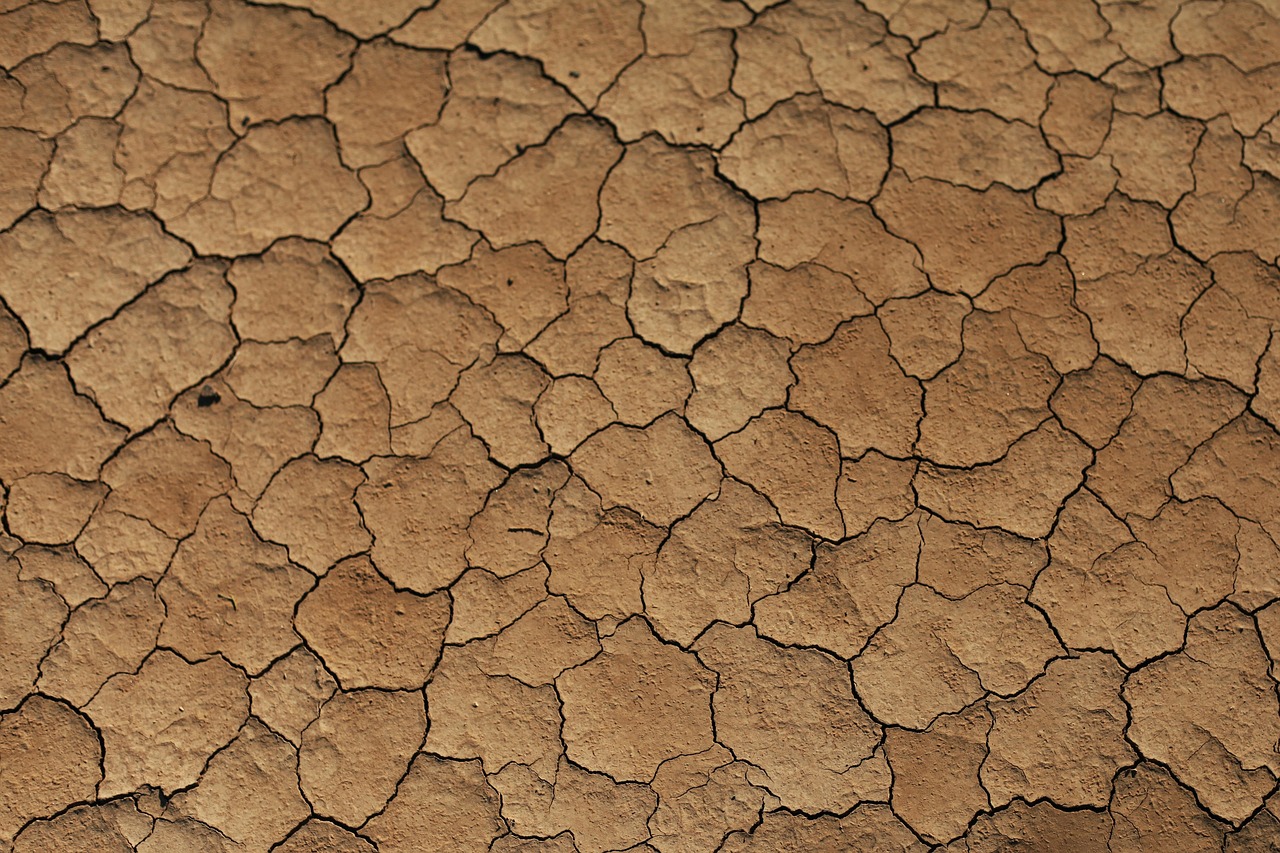
In civil engineering practice, soil stabilization usually means improving the ability of a weak or variable subgrade to support construction and traffic loads. A geotextile can be part of that improvement, especially where soft, wet or fine-grained soils would otherwise mix with aggregate, pump fines upward, retain excess water or lose bearing capacity under repeated wheel loading.
This article focuses on practical selection and use. For more topics across textile and geosynthetic application areas, visit the Applications section.
The functions that make stabilization work
Soil stabilization geotextile is often described as a single material, but field performance comes from a combination of functions. The main functions are separation, filtration, drainage and reinforcement. A project may rely heavily on one function and only secondarily on another, and different fabrics do not perform these functions in the same way.
Separation
Separation is the core function in many road and working platform applications. The geotextile is placed between the subgrade and aggregate so the two materials do not intermix. Without separation, traffic and compaction can push aggregate down into soft soil while fines migrate upward into the base layer. That process can lead to rutting, aggregate contamination, reduced drainage capacity and repeated placement of maintenance aggregate.
For low-volume roads, haul roads and construction access, separation may be the main reason for using a geotextile. The fabric helps preserve the designed aggregate layer by keeping it cleaner and more structurally consistent during service.
Filtration
Filtration means the geotextile allows water to pass while retaining soil particles that need to remain in place. This matters where the subgrade is wet or where hydraulic gradients may move fines toward a drainage layer. Compatibility is the key point: if openings are too large, fines may pass through; if openings are too small, the fabric may clog or restrict flow.
Engineering references commonly evaluate filtration using properties such as apparent opening size, permeability and permittivity, along with soil gradation data such as D85. These values should be verified by the project designer because filtration performance depends on both the fabric and the soil.
Drainage
Drainage is related to filtration, but it is not the same function. Some nonwoven geotextiles can move water within the plane of the fabric and help dissipate pore water pressure in limited conditions. However, a geotextile should not be used as a substitute for a properly designed drainage layer, ditch, outlet or geocomposite drain where significant water flow is expected.
In stabilization work, drainage decisions should answer three practical questions: where water will enter, how it will pass through or along the system, and where it will safely exit. If the design cannot answer those questions, the geotextile alone will not solve the water problem.
Reinforcement
Reinforcement occurs when tensile resistance in the geosynthetic helps distribute load and limit deformation. Woven geotextiles can provide tensile strength, while geogrids are often used when aggregate interlock and high stiffness are central to the design. In many soft subgrade applications, a geotextile provides separation and filtration first, with reinforcement as an additional benefit. Where reinforcement is the controlling requirement, engineers often compare geotextile, geogrid and geocomposite options rather than assuming one material type is sufficient.
Where soil stabilization geotextile is commonly used
The same basic functions appear in several civil engineering applications, but the design priorities change by use case. A temporary construction road may place more emphasis on survivability and fast installation. A permanent pavement base usually requires closer review of long-term separation, filtration and aggregate thickness.
| Application | Primary purpose | Selection emphasis |
|---|---|---|
| Unpaved access roads and haul roads | Reduce rutting and aggregate contamination over weak subgrade | Separation, survivability, overlap, aggregate thickness and construction traffic |
| Paved road base and subbase | Maintain base quality and reduce upward migration of fines | Separation, filtration compatibility and long-term durability |
| Construction working platforms | Create a more stable surface for equipment movement and material placement | Subgrade strength, puncture resistance, aggregate size and installation damage risk |
| Embankment foundations | Support placement over soft or wet soils as part of a broader ground improvement design | Subgrade shear strength, drainage path, consolidation behavior and design verification |
| Riprap and erosion control layers | Retain soil beneath stone while allowing water relief | Filtration, puncture resistance, stone size and hydraulic conditions |
| Drainage trenches and edge drains | Keep drainage aggregate open while preventing soil migration | Apparent opening size, permittivity, clogging risk and soil gradation |
These examples show why soil stabilization geotextile should not be reduced to a generic fabric category. A roll property that is adequate in one application may be unsuitable in another because installation stress, hydraulic demand and soil behavior are different.
How to select the right geotextile for stabilization
Selection should start with the site, not the catalog. A responsible specification defines the intended function, soil conditions, water condition, loading environment and installation method before choosing a fabric type or property level.
Define the soil and water conditions
Subgrade strength, soil gradation, plasticity, moisture condition and groundwater behavior are the foundation of the selection process. Fine-grained soils with high moisture content can pump under repeated loading. Granular soils may require a different filtration approach. Organic soils, peat, very soft clays and unstable fills may require ground improvement beyond a single geotextile layer.
For stabilization design, engineers typically review subgrade shear strength or bearing capacity together with expected rut depth and aggregate thickness. The geotextile can help preserve the aggregate layer, but it does not remove the need for adequate fill depth and compaction control.
Choose woven, nonwoven or a composite system
Woven geotextiles are often selected where higher tensile strength and separation are important. Woven slit-film products can be effective in some separation applications, but filtration and hydraulic compatibility must be checked carefully. Monofilament or multifilament woven products may offer different flow and strength characteristics.
Nonwoven geotextiles, commonly needle-punched, are often used where filtration, drainage and conformability are important. They can wrap drainage aggregate, sit beneath riprap or separate subgrade and base layers while allowing water flow. However, their lower stiffness compared with some woven products or geogrids may limit their role where reinforcement controls the design. See also: Coatings.
Composite systems combine functions. A geogrid with a geotextile can pair aggregate interlock with separation and filtration. A geocomposite drain may be more appropriate than a simple fabric where in-plane flow is a critical requirement. The selection should follow the dominant problem, whether that problem is mixing, water, rutting, drainage or reinforcement.
Specify measurable properties
A useful specification does not stop at the words woven or nonwoven. It should identify measurable properties and the test methods used to verify them. Common geotextile properties include grab tensile strength, wide-width tensile strength, puncture resistance, trapezoid tear strength, seam strength, mass per unit area, apparent opening size, permittivity, permeability and ultraviolet resistance.
ASTM methods frequently associated with geotextile evaluation include D4632 for grab breaking load and elongation, D4595 for wide-width tensile properties, D4751 for apparent opening size, D4491 for water permittivity and permeability, D4533 for trapezoid tearing strength and D5261 for mass per unit area. Project specifications may also reference AASHTO M 288 for highway geosynthetic applications, including drainage, separation, stabilization, erosion control, temporary silt fence and soil structures.
When comparing products, designers and buyers should check whether reported values are minimum average roll values, maximum average roll values or typical values. This distinction matters because acceptance criteria should be based on a defined statistical basis, not only on marketing data.
Installation checks that protect performance
Even a correctly selected soil stabilization geotextile can lose value if it is damaged, contaminated or poorly covered during construction. Installation is not a minor field detail; it is part of the design.
- Prepare the subgrade. Remove sharp debris, large protrusions, standing water where practical and unsuitable loose material. Avoid overworking wet subgrade before placement.
- Handle rolls carefully. Store geotextile rolls wrapped and off the ground when possible. Protect them from mud, chemicals, equipment damage and unnecessary ultraviolet exposure.
- Place with correct orientation and overlap. Follow project drawings for direction of placement, shingling on slopes and overlap dimensions. Soft ground and low strength soils usually require larger overlaps or sewn seams than firm subgrade.
- Avoid wrinkles and tension voids. The fabric should lie flat enough to maintain contact, but it should not be stretched so tightly that it bridges depressions and tears during aggregate placement.
- Place aggregate from the edge or advancing front. Dumping directly onto exposed fabric can puncture or displace it. A controlled aggregate placement method helps reduce installation damage.
- Limit traffic on exposed fabric. Construction equipment should generally run on placed aggregate rather than directly on the geotextile unless the specification allows otherwise.
- Repair damage before cover. Tears, holes and displaced seams should be patched or replaced according to the project specification before the next layer is placed.
The most common field problems are straightforward: insufficient overlap, fabric pulled apart by equipment, punctures from angular aggregate, clogged fabric from muddy handling, and inadequate cover thickness for construction traffic. Each problem reduces one of the functions the geotextile was selected to perform.
Limits, risks and when another system may be needed
A soil stabilization geotextile is a useful component, but it has limits. It cannot turn an unsuitable subgrade into a stable foundation without enough aggregate, drainage and construction control. It also cannot compensate for missing geotechnical investigation where soil conditions are highly variable.
Several conditions call for additional review. Very soft organic soils may require excavation, replacement, staged construction, preload, vertical drains, chemical stabilization or reinforcement stronger than a simple separator fabric. High groundwater or artesian pressure may require a drainage system with positive outlets. Heavy repeated traffic may require a thicker aggregate section or a geogrid-reinforced design. Sharp rock fill may require a more robust nonwoven cushion or a higher survivability class.
Clogging is another risk. If the opening size and flow capacity are not compatible with the soil, the fabric can blind or allow soil loss. Chemical exposure, long sunlight exposure before cover and high installation damage can also reduce performance. For construction stormwater compliance, geotextiles, mats and erosion control fabrics may be part of best management practices, but they do not replace permit planning, inspection or maintenance obligations.
A practical specification follows this order: define the function, verify the soil, design the aggregate and drainage system, and then choose the geotextile. Reversing that order often leads to overdesign in easy conditions and underperformance in difficult ones.
Frequently asked questions
Is soil stabilization geotextile the same as landscape fabric?
No. Landscape fabric is generally used for weed control and light separation in landscaping. Soil stabilization geotextile for civil engineering is specified for mechanical, hydraulic and durability properties such as strength, puncture resistance, apparent opening size and permittivity. Substituting landscaping fabric for engineered geotextile can create performance and liability problems.
Should I use woven or nonwoven geotextile for stabilization?
It depends on the dominant function. Woven geotextiles are often considered where tensile strength and separation are important. Nonwoven geotextiles are often preferred where filtration, drainage and cushioning are important. If reinforcement is the main goal, a geogrid or a geogrid-geotextile composite may be evaluated. Soil gradation, water flow and construction stress should drive the decision.
Can geotextile reduce the amount of aggregate needed?
In some designs, a geotextile can help preserve aggregate thickness by preventing contamination and loss into the subgrade. However, aggregate reduction should be based on an accepted design method and project-specific conditions. It should not be assumed from the presence of a fabric alone.
Does geotextile stop water?
Most stabilization geotextiles are permeable, so they are designed to let water pass in a controlled way while retaining soil. They are not waterproof barriers. If containment or waterproofing is required, the design may involve geomembranes or other geosynthetic systems instead.
What is the most important specification item?
There is no single universal item. For separation, survivability and strength may dominate. For filtration and drainage, apparent opening size and permittivity are critical. For installation over angular aggregate, puncture and tear resistance matter. The most important specification item is the one tied to the project’s controlling failure risk.