How to Choose Protective Coatings
Deciding on the correct protective coating for specific applications is a technical issue which affects the lifespan of assets, as well as maintenance and operating costs and safety. The best protective coating is one that has been chosen with consideration for a number of different criteria, including the environment, the substrate and performance criteria. Most agree that in making this decision the resistance to corrosion, chemical resistance and application method are key factors to ensure a long lasting coating.
What Are the Key Factors When Selecting Protective Coatings?
Choosing protective coatings involves weighing protection level, application conditions and life-cycle cost. Interrelation of the three criteria e.g. the high-performance epoxy very well resists chemical influences, however curing has to be done controlled.
Environmental Conditions and Exposure
More than any other single factor environmental exposure determines coating performance. A coating in a coastal storage facility is attacked by salt spray, in an industrial plant by acidic vapors or high humidity. On an offshore oil installation coatings are exposed to ultraviolet radiation and are immersed in sea water for long periods. An engineer classifies an exposure area by means of the ISO 12944 categories in order to select an appropriate coating system.
Substrate Material Compatibility
When it comes to preparing surfaces for coating different substrates such as steel, concrete and aluminum are generally best prepared using different methods and then coated using different primers. Steel surfaces are generally best blast cleaned using abrasive such as grit or shot to create a surface with the correct adhesion profile. While concrete surfaces require the use of a primer that is moisture tolerant to prevent blistering of the coating from underneath. Using the wrong coating on a surface can lead to it delaminating prematurely or even allow underfilm corrosion to occur.
Maintenance and Life-Cycle Cost
Coating cost is rarely a simple case of buying the cheapest to start with. The long term pattern of maintenance and ease of repair is a much more important factor than initial cost and it is often high-build polyurethane or fluoropolymer type coatings that give the lowest cost over a long term – especially when downtime is taken into account over many years.
How Do Performance Requirements Influence Coating Choice?
The performance targets defined by the specifications decisions made throughout the specification process are driven by the performance expectations defined by the end user. For industrial end users such as customers of industrial coatings, this may often involve first setting target values for performance such as abrasion resistance or chemical stability, and then selecting from a range of candidate coating systems to achieve these targets.
Corrosion Resistance Levels
There are significant differences in corrosion protection afforded by different coating chemistries. Sacrificial corrosion protection of steel substrates is provided by a zinc-rich primer. Epoxy intermediates, on the other hand, form a strong, insoluble film that provides a complete barrier to wetting by water. However, for structures such as marine platforms and bridges, a multi-layer system combining the two approaches is typically more effective.
Chemical and Thermal Resistance
High performance coatings are specified for use in chemical processing plants and power stations in order to resist aggressive solvents and withstand the high temperatures associated with processing. Epoxy novolac coatings offer resistance to strong acids at up to 120°C, whilst a range of silicone-based topcoats are available to provide thermal shock resistance on exhaust stacks and other furnace related equipment.
Mechanical Durability
For high traffic areas such as production floors, warehouse floors, chemical plant floors, and equipment tracks, we have specially designed abrasion resistant floor coatings. These polyurethane coatings and polyaspartic coatings will retain their gloss and color even after being subjected to extreme wear from constant forklift traffic, as well as from abrasive wear from welding, grinding and other equipment.
Why Does Surface Preparation Matter So Much?
The very best coatings will inevitably fail if they have been applied to poorly prepared surfaces. Ensuring a surface is clean ensures the greatest possible adhesion, and prevents the possibility of hidden corrosion cells being created under the coating film.
Methods of Surface Cleaning
Common surface cleaning techniques for different substrates are steel abrasive blasting, concrete acid etching and solvent wiping of non-ferrous metals. The surface cleaning technique chosen must remove dirt, grease, paint, etc. from the surface without damaging the substrate.
Surface Profile Requirements
By specific roughness profile of a surface the coating film is mechanically anchored. For critical applications like pipes and storage tanks for infrastructure there are acceptable cleanliness grades as specified by standard SSPC-SP10.
Moisture and Contaminant Control
Unwittingly leaving behind some residual moisture or chloride contamination can find its way to the surface months or years later to create some awful osmotic blistering. It’s good to have a hygrometer and some salt test kits around to check if you are ready to paint a coat of primer.
Which Types of Protective Coatings Are Most Common?
Protective coatings are classified within the industry by the resin used in the coating and by the environmental conditions in which the coating will be used. Each resin type has particular attributes that make it more suitable for dealing with certain problems than others.
Epoxy Coatings
Epoxies are typically used in industrial applications where excellent adhesion and chemical resistance are required. The solid film formed by an epoxy coating is dense and prevents water penetration. It may however degrade by chalking when exposed to UV-radiation, unless coated with a polyurethane coating.
Polyurethane Coatings
There are many choices for finishes, and flexible but tough polyurethanes have weathering capabilities second to none. Used as topcoats for out door systems where color retention is important, polyurethanes are applied as topcoats to airport hangars and bridges.
Zinc-Rich Primers
Zinc-rich primers are used for protection of steel surfaces even after scratching. The most common applications for such primers are marine, offshore and structural steel projects where corrosion protection is to be sustained for long periods of time.
How Does Application Method Affect Performance?
The method of application of a coating has as much influence on the coating film’s uniformity and adhesion as the coating’s formulation. Inadequate application can result in complete waste as well as early failure.
Brush and Roller Application
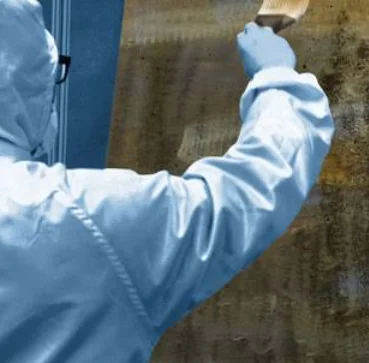
Small-scale maintenance work are frequently executed by means of brushes and rollers in places where a spray application is not appropriate due to spatial restrictions. These types of tools enable exact application, however, work at a lower rate of coverage.
Airless Spray Systems
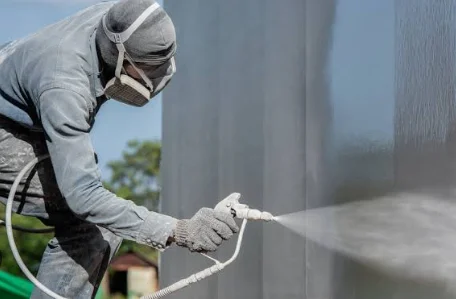
Airless spraying is good for fast coverage of large surfaces and providing consistent thickness. Airless is suited for industrial painting lines, shipyards, etc. with primary objective of high productivity. However, operator must be well trained for safe use.
Thermal Spray Metalizing
Surface preparations for extremely exposed environments such as offshore wind towers and subsea pipelines are typically primed with a thermal spray metalizing coating of molten zinc or aluminum, which is then top coated with an organic material. It has been proven to last for decades.
What Role Do Standards and Testing Play in Coating Selection?
Reliability is ensured by the standards. By testing the chosen systems against the criteria for these standards they are checked for their performance on different suppliers and in different regions before they are deployed in the field.
International Standards (ISO 12944)
ISO 12944 categorizes corrosion into C1 to CX condition classes, representing increasing severity of environmental attack. These categories are further supported by coating design and thickness requirements, including minimum dry film thicknesses and layer numbers for each of the condition classes.
Laboratory Performance Tests
By simulating years of exposure in just weeks using an accelerated test such as the standard salt spray test (ASTM B117), we are able to test and compare the different formulations you have created in a real, objective manner prior to spending large amounts of money in full production.
Field Inspection Protocols
During application, the wet-film thickness is measured with film thickness gauges and after drying the film thickness as well as the degree of curing is tested for by hardness tests according to ASTM D3363 on site in order to check compliance with the applicable specifications.
FAQ
Q1: How long will Protective Coatings last? A: The service life of Protective Coatings can vary from five years in extreme marine environments to twenty plus years with advanced fluoropolymer coatings and proper maintenance.
Q2: Can different coating types be combined? A: Yes, multi-layer systems are available. Common examples for such multi-layer systems are zinc primers / epoxy-intermediates / polyurethane-topcoats.
Q3. What causes early coating failure? A. The early coating failure can be caused by several common factors such as: bad surface preparation, wrong mixing ratio, high humidity during coating curing, and/or wrong coating layer combinations.
Q4: Are there any eco-friendly protective coatings available? A: Waterborne epoxies as well as high-solid polyurethane coating dispersions reduce VOCs significantly while maintaining the required industrial performance.
Q5: How should coated surfaces be inspected after application? A: Visual checks for defects followed by dry-film thickness measurements confirm uniform coverage; additional adhesion pull-off tests validate bond strength before service use.