Plain Woven Textile vs Twill Which Fabric Structure Fits Your Product Best?
What Makes Plain Woven Textile So Common?
When you source a plain woven textile, you are working with one of the most basic fabric structures in the Weaves category. It does not look special at first sight, but that plain grid is the reason buyers still use it for shirts, sheeting, canvas, pocketing, filters, printed bases, and many everyday fabrics that need to hold their shape.
Stable 1/1 Interlacing Pattern
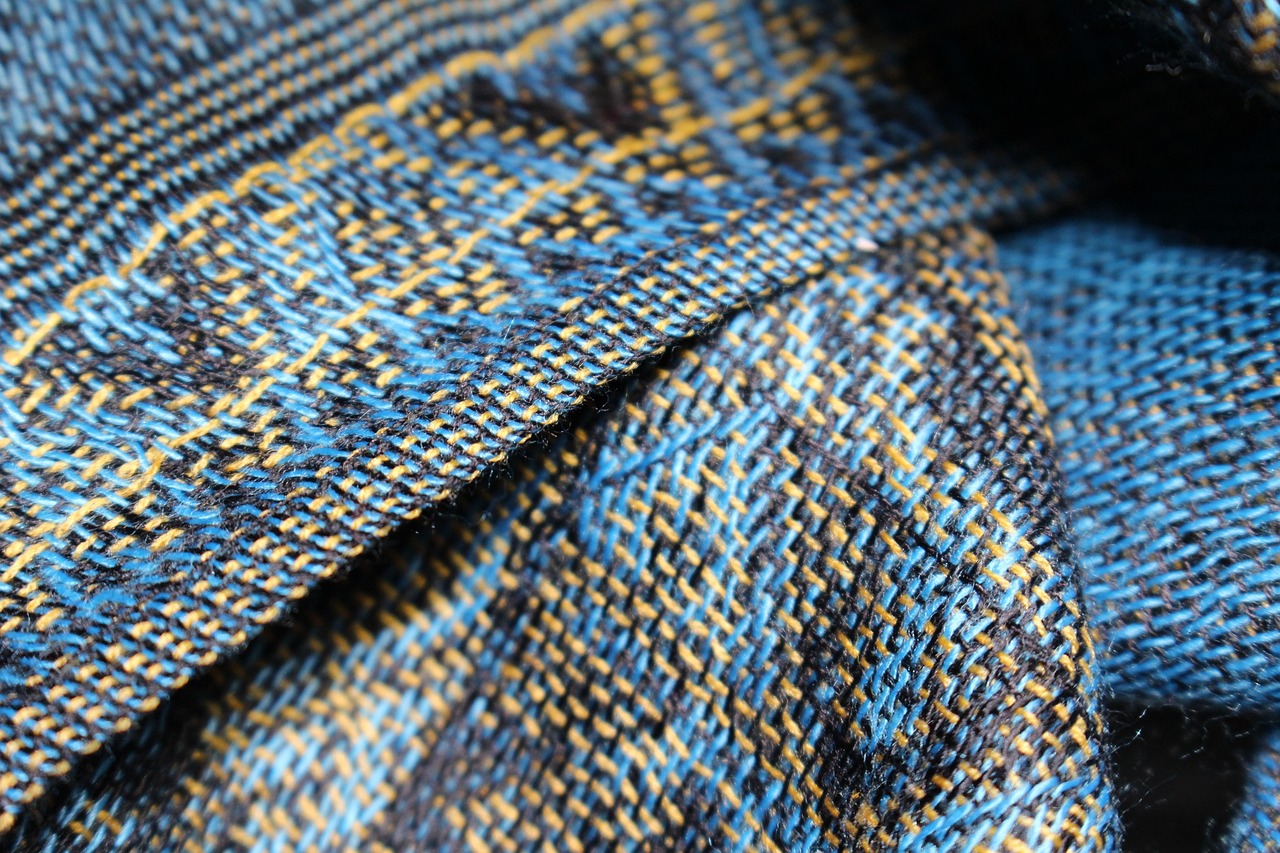
A plain weave uses a 1/1 repeat. One warp yarn goes over one weft yarn and then under the next, while the next yarn works the other way. CottonWorks by Cotton Incorporated describes this repeat as two ends and two picks, which is the shortest repeat among the main woven structures. This small repeat gives the cloth many crossover points, so the yarns stay in position during cutting, sewing, and normal use. (cottonworks.com)
Balanced Surface on Both Sides
In most plain weave fabrics, the face and back look almost the same. You do not get the diagonal ribs of twill or the long shiny floats of satin, so the surface is easier to read and easier to handle in production.
This is useful when the fabric will be dyed, printed, coated, or used on both sides. A pocket lining, for example, does not need a dressy face; it needs a clean surface that cuts well and runs smoothly under the sewing machine.
Firm Hand with Low Yarn Movement
Because each yarn crosses the opposite yarn often, the fabric usually has a firm hand. It may not drape like satin, and it may not bend as softly as some twill fabrics, but it resists distortion better.
That is why many mills still use plain weave as a base fabric for finishing trials. It gives the technician a known starting point, and in bulk production that kind of control is often more useful than a fabric that only looks good on a hanger.
How Does Plain Weave Compare with Twill and Satin?
Choosing between plain weave, twill, and satin is not about naming one structure as the best. It depends on the job of the final product. If a garment needs a soft fall, plain weave may feel too crisp. If the fabric needs to stay square, print clearly, or reduce seam distortion, plain weave often becomes the safer option.
Less Drape but Better Shape Hold
Plain weave has more interlacings than twill and satin, so the cloth normally feels firmer and has less drape. CottonWorks notes that plain weave fabrics are very stable and tend to have fewer issues with skew, seam slippage, picking, and snagging compared with looser structures.
That point matters in real sourcing work, especially for broadcloth, chambray, canvas, and sheeting. Buyers may accept a little less softness if the fabric keeps its shape through cutting, sewing, packing, and washing. (cottonworks.com)
Clearer Surface for Printing and Coating
A flat, regular grid helps when you print stripes, small florals, labels, or technical markings. The ink sits on a more even surface, and the print repeat is easier to control.
For coated fabrics, the plain base can also reduce unwanted texture. That does not mean every plain weave prints well by default, because yarn hairiness, absorbency, pre-treatment, and heat setting still need to be checked before bulk.
Different Look from Diagonal or Glossy Fabrics
Twill shows diagonal lines, while satin uses longer floats and gives a smoother shine. Plain weave has a plainer look, and the small grid is easy to see under a pick glass.
This appearance works well for casual shirts, tote bags, outdoor shade cloth, and simple home textiles. If the buyer wants a luxury shine, another structure is usually better; if the buyer wants a clean and steady fabric, plain weave fits the brief.
Which Fibers Work Best in Plain Woven Textile?
Plain weave is a structure, not a fiber. It can be made with cotton, linen, polyester, nylon, rayon, aramid, glass fiber, or blends. Fiber choice affects softness, strength, moisture behavior, color yield, price, and care. The weave gives the grid, while the yarn decides much of the final fabric character.
Cotton and Linen for Natural Texture
Cotton plain weave is widely used in shirting, poplin, muslin, calico, canvas, and sheeting. It can feel dry, breathable, and familiar in the hand, which is why many apparel and home textile buyers still request it.
Linen plain weave usually shows more slub and a crisp texture. For sample checking, natural fibers often show the warp and weft clearly, so it is easier to judge the weave and yarn behavior before moving to lab testing.
Polyester for Strength and Quick Drying
Polyester plain weave is often chosen when the product needs strength, quicker drying, crease resistance, or a lower material cost. It is common in apparel linings, banners, bags, flags, uniforms, and outdoor fabrics.
According to the Textile Exchange 2025 Materials Market Report, global fiber production rose from about 125 million tonnes in 2023 to 132 million tonnes in 2024, and polyester made up 59% of total global fiber output. That market background explains why polyester plain weave remains easy to find across many supply chains. (textileexchange.org)
Blends for Practical Trade-Offs
A cotton-polyester plain weave can balance comfort and easy care. Nylon-cotton can add abrasion resistance for workwear, while rayon blends can make the fabric softer but may need tighter shrinkage control.
When you compare blends, do not judge by fiber content alone. Ask for yarn count, density, weight, shrinkage after washing, tear strength, and colorfastness, because two fabrics with the same 65/35 blend can feel and perform very differently.
Where Does Plain Woven Textile Fit in Product Sourcing?
Plain weave works across many markets because the structure is easy to read and easy to develop. It can be made light like voile or heavy like canvas. It can be kept open for breathability or packed tight for durability. The right choice depends on the end use, not on the weave name alone.
Shirting and Casual Apparel
Poplin, broadcloth, chambray, voile, and lawn are common plain weave choices for shirts and light garments. Buyers usually check clean color, low skew, stable shrinkage, and a smooth seam line.
A men’s shirt fabric at around 100 to 130 gsm behaves very differently from a 250 gsm canvas, even though both may be plain weave. That is why fabric weight and density should always be listed beside the weave name in the spec sheet.
Home Textiles and Utility Goods
Sheeting, pillow covers, curtains, tablecloths, aprons, and tote bags often use plain weave. The reason is not complicated: the cloth cuts square, prints well, and is easy to sew.
For home goods, it is important to see how the fabric changes after washing. A sample that looks flat on a table can still pucker after finishing if yarn tension, sizing removal, or shrinkage control has not been handled properly. See also: Applications.
Industrial Bases and Support Fabrics
Plain weave is also used as a base for coated, laminated, filtered, reinforced, or composite fabrics. In these orders, the buyer may care less about softness and more about tensile strength, aperture control, thermal stability, or coating adhesion.
A plain surface can make later processing more even. Still, the mill should test the final finished fabric and not only the greige base, because coating, heat, and chemical treatment can change the result.
Which Specs Should You Check Before Buying?
A plain woven textile order can go wrong when the spec is too loose. Saying only plain weave cotton fabric leaves too much room for different yarns, weights, widths, and finishes. A useful purchase sheet should tell the mill what the fabric must be, how it will be tested, and what tolerance is allowed.
Yarn Count and Thread Density
Yarn count affects thickness, surface, strength, and price. Thread density, often shown as ends per inch and picks per inch, affects cover and firmness.
A balanced plain weave may use similar yarns and similar density in warp and weft. An unbalanced fabric may use more warp ends or heavier weft yarns for a certain hand, and neither option is wrong as long as it is written clearly.
GSM, Width, and Shrinkage
GSM tells you the fabric weight, while width affects marker efficiency and cutting waste. Shrinkage affects garment fit and home textile size, so it should be tested in the same way the finished product will be washed.
For apparel, many buyers test shrinkage after one wash and again after repeated washing. For home textiles, length and width stability can be even more important, because a small width shrinkage can become a big claim on a fitted sheet or curtain panel.
Finishing and Testing Requirements
Finishing changes the final hand and sometimes changes the performance more than the weave itself. Mercerizing, brushing, calendering, water repellency, resin finishing, enzyme washing, and coating can all move the fabric away from the greige sample.
Before bulk production, ask for a lab dip, a pre-production sample, and a test report where needed. The test should match the final finish, because testing an unfinished base fabric does not always show the risk in the delivered goods.
- Confirm fiber content and blend ratio.
- Check ends per inch, picks per inch, GSM, and usable width.
- Request shrinkage, colorfastness, tear strength, and seam slippage tests for the final finish.
- Compare the fabric under daylight and store light, especially for pale shades.
- Keep one approved cutting as the sealed reference sample.
Can Plain Woven Textile Support Lower-Waste Decisions?
No weave can solve textile waste by itself. Still, a stable fabric can help a buyer make fewer wrong decisions. If a fabric lasts longer, cuts more cleanly, and matches the approved sample, it can reduce returns, rejected panels, and incorrect bulk orders. That is not a perfect sustainability story, but it is a real factory-floor issue.
Durability Starts Before Cutting
The U.S. Environmental Protection Agency reported that textile generation in municipal solid waste reached 17.03 million U.S. tons in 2018. The same EPA table showed 2.51 million tons recycled and 11.3 million tons landfilled.
These figures are not specific to plain weave, but they show why longer service life, accurate sourcing, and better product planning matter. A fabric that fails in wear or arrives off-spec creates waste before the product even reaches the customer. (epa.gov)
Mono-Material Choices Can Help Sorting
Textile Exchange also reported in its 2025 Materials Market Report that less than 1% of the global fiber market in 2024 came from pre- and post-consumer recycled textiles. For buyers, that means recycling infrastructure is still limited in many places.
A single-fiber plain weave, such as 100% cotton or 100% polyester, may be easier to sort than a complex blend. The actual result still depends on the local system, dyeing route, finishing chemistry, and any coating applied to the fabric. (textileexchange.org)
Sampling Prevents Wrong Bulk Orders
Waste often starts with a weak sample approval process. A swatch looks fine, but the bulk fabric arrives with a different weight, shade, hand, or shrinkage.
For plain weave, make sure the approved sample uses the same yarn, loom setting, dyeing route, and finish planned for bulk. It may sound fussy, but it saves money and reduces avoidable claims.
FAQ
Q1: What Is a Plain Woven Textile? A: It is a woven fabric made with a simple over-one, under-one interlacing of warp and weft yarns. The structure forms a stable grid with a clean surface, and the face and back often look similar.
Q2: Is Plain Weave Stronger than Twill? A: Not always. Plain weave has more interlacings and good dimensional stability, while twill can give better drape and abrasion performance in many workwear fabrics. Fiber, yarn, density, and finish decide the final strength.
Q3: Is Plain Woven Textile Good for Printing? A: Yes, it is often good for printing because the surface is flat and regular. For better results, check yarn hairiness, absorbency, pre-treatment, and colorfastness after washing.
Q4: What Products Commonly Use Plain Weave? A: Common uses include poplin shirts, chambray, muslin, calico, canvas bags, sheeting, curtains, linings, pocketing, coated bases, and some technical fabrics.
Q5: What Should You Ask a Supplier Before Ordering? A: Ask for fiber content, yarn count, ends and picks per inch, GSM, width, finish, shrinkage, colorfastness, tear strength, seam slippage, and a sealed pre-production sample.